Visualping

Best Alternatives to Visualping in 2026

https://www.visualping.io

The best alternatives for automated website change monitoring deliver pixel-precise visual tracking, code-level change detection, and robust API capabilities. Programmatic tracking platforms serve developers, compliance officers, and market researchers who require rapid alerts when external web pages update. Teams deploy these tools to automate data extraction, capture competitor movements, and monitor regulatory compliance without tedious manual checks.

To surface the most reliable choices, PeerPush ranks alternatives based on sustained community engagement over time, tracking ratings, bookmarks, and click-throughs rather than temporary launch spikes. Top-tier options differentiate themselves through secure API endpoints, web dashboards, and transparent subscription structures. Every product profile on PeerPush utilizes structured, normalized data and controlled vocabularies to ensure both human operators and generative AI utilities locate the exact platform they require.

This clean classification system supports frictionless tool discovery by aligning functional requirements with deployment capabilities. With options ranging from simple cloud alerts to headless browser automation, choosing the right utility depends on notification format and execution speed.

All Alternatives to Visualping

Comparison of alternatives to Visualping, sorted by PeerPush community rank.
ProductPricing
OriginBrief
Subscription from $33
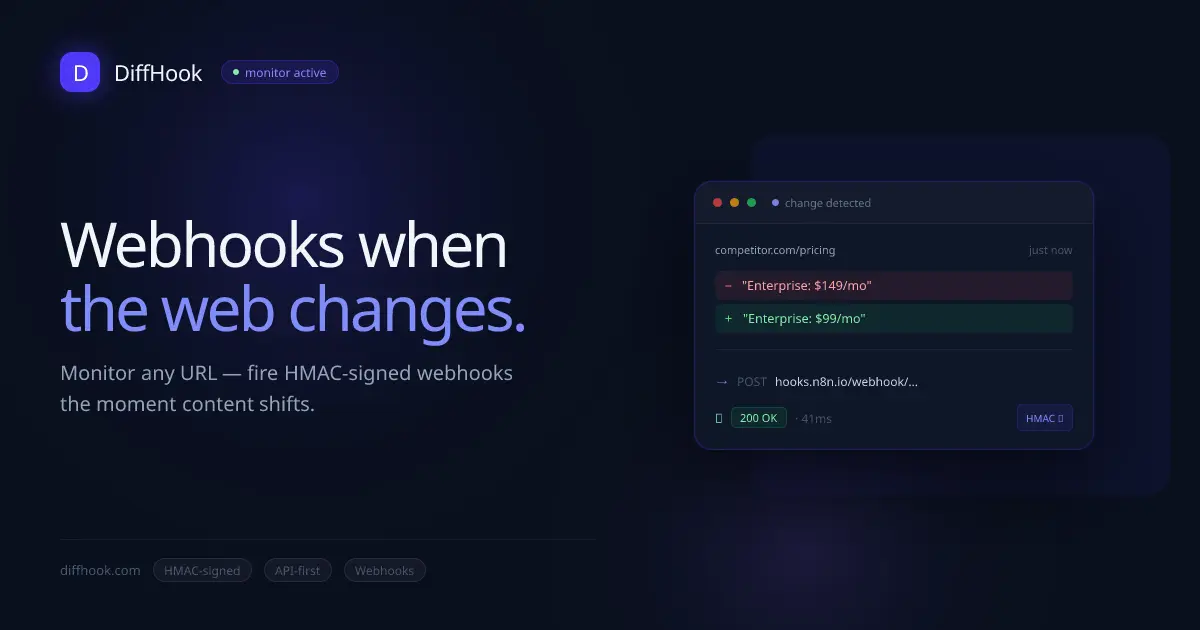
DiffHook
Subscription

What to look for

  • Prioritize webhook support to trigger automated downstream workflows instantly upon detection.
  • Evaluate the flexibility of subscription tiers to match your team execution budgets.
  • Assess developer documentation to confirm how easily the API integrates with your existing tech stack.
  • Select platforms offering cloud-based web dashboards for non-technical team members to configure alerts.
  • Verify that the tracking engine handles complex javascript rendering to avoid false alerts.

Frequently Asked Questions

Choosing depends on your automation requirements. Web-based monitors work well for users who need quick visual alerts and simple dashboard setups. Developers requiring programmatic control, custom webhooks, and automated data processing should select API-first options, which offer deeper workflow integration and superior scaling capabilities.
Reliable solutions feature precise element selection, Javascript execution handling, and false-positive prevention. They deliver alerts via multiple channels such as email, Slack, or webhook payloads. Top monitors also provide detailed historical side-by-side comparison interfaces for reviewing historical page status modifications over time.
Scaling web tracking typically involves moving to tiered subscription plans that charge based on check frequency and platform resources consumed. Many services offer startup tiers that expand into high-volume API packages, aligning cost directly with the frequency of your monitoring requests and bandwidth needs.
PeerPush ranks change detection tools by sustained community engagement over time. We analyze active indicators like ratings, reviews, bookmarks, and click-through rates instead of brief, easily manipulated launch-day spikes. This continuous evaluation ensures you discover stable utilities with proven user satisfaction.
Yes, because the PeerPush catalog is fully machine-readable. We structure and normalize all product data using controlled vocabularies for target audiences, platforms, and subscription pricing. This allows generative AI assistants to instantly parse product criteria and recommend the ideal monitoring system based on your specific prompts.
The top community-ranked alternatives to Visualping are listed below, ordered by engagement, features, and user feedback from the PeerPush community.
Alternatives to Visualping on PeerPush are available on Web, API. Filter by platform to find the best match for your needs.
Alternatives are ranked by the PeerPush community through upvotes, engagement, and user feedback. Products with higher community engagement and more active build-in-public updates tend to rank higher.