
Berserk
Scalable Observability Database
curl -fsSL https://go.bzrk.dev | bashDetails
- Categories
- Target Audience
- Pricing
- Freemium from $500
- Featured in
- Alternatives
 Datadog alternatives
About Berserk
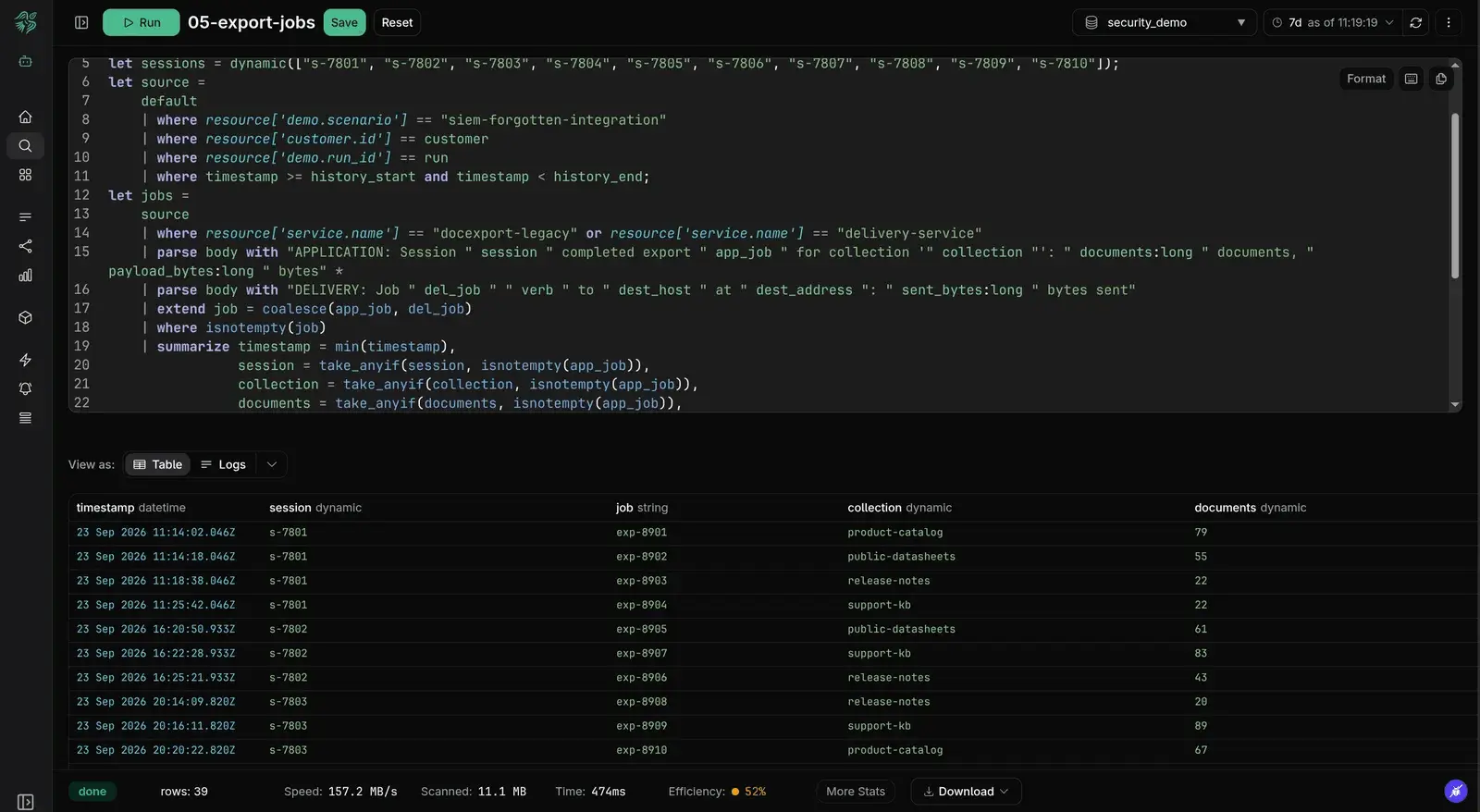
Berserk is a self-hosted or managed, high-performance observability platform built natively for OpenTelemetry. Schemaless and compatible with with structured or unstructured telemetry data. Modern development teams and AI tools face three massive challenges with traditional observability and monitoring platforms: AI tools lack runtime context: Smart AI coding assistants (like Claude Code) are excellent at writing code, but they are completely blind to what happens when that code actually runs. They cannot see application logs, traces, or errors in real time unless you manually copy and paste them.Extremely expensive data retention: Traditional tools (like Datadog or Elasticsearch) require expensive managed storage and complex database clusters. This forces teams to aggressively delete old data after 14–30 days just to keep costs under control.Rigid schemas and high maintenance: Setting up log indexing, managing database schemas, and running complicated migrations takes valuable engineering hours away from building actual features.How Berserk WorksBerserk solves these issues by building a high-performance, native bridge between your own cloud storage, your telemetry data, and your development/AI tools. 1. Data Ingestion (Native OpenTelemetry)Berserk accepts data directly via OpenTelemetry (OTel), the open industry standard for observability. Any logs, traces, and metrics generated by your applications can be piped directly into Berserk without requiring proprietary software development kits (SDKs) or vendor-specific agents. 2. Storage Architecture (Zero-Lockin Object Storage)Instead of relying on a complex, expensive operational database, Berserk stores all incoming data directly within your own cloud infrastructure (such as AWS S3, Google Cloud Storage, or Azure Blob).Data is stored in a highly compressed, optimized format.You maintain 100% ownership and control over your data.Retention becomes practically infinite because raw cloud object storage is incredibly inexpensive. 3. Execution & Query Engine (Rust + KQL)The core of Berserk is written completely from scratch in Rust for maximum throughput and minimal CPU/memory consumption.Users query their telemetry using KQL (Kusto Query Language), allowing you to slice and dice millions of logs instantly.The engine requires zero schema migrations. It automatically handles unstructured text and deeply nested JSON structures on the fly. 4. The AI Bridge (Model Context Protocol) This is Berserk's standout capability. By natively implementing the Model Context Protocol (MCP), Berserk acts as a plug-and-play knowledge source for AI agents. When a system error occurs, an AI assistant can independently execute KQL queries against your actual production or staging logs.The AI reads the exact stack traces, diagnoses the root cause, and proposes the specific code fix directly in your editor—completely automated.Would you like to see a practical example of a KQL query used in Berserk, or should we look at how to hook up an AI agent to read your system logs?
Screenshots
Reviews (0)
No reviews yet. Be the first to rate this product!
Comments (0)
No comments yet. Be the first to share your thoughts!