
Buglyst
LeetCode for debugging real-world codebases

Details
- Use Cases
- HiringSkill BuildingBug Tracking
- Target Audience
- DevelopersEngineering ManagersRecruiters
- Pricing
- Freemium from $5
- Platforms
- Web
Discovery signals
How AI and people discover Buglyst on PeerPush
About Buglyst
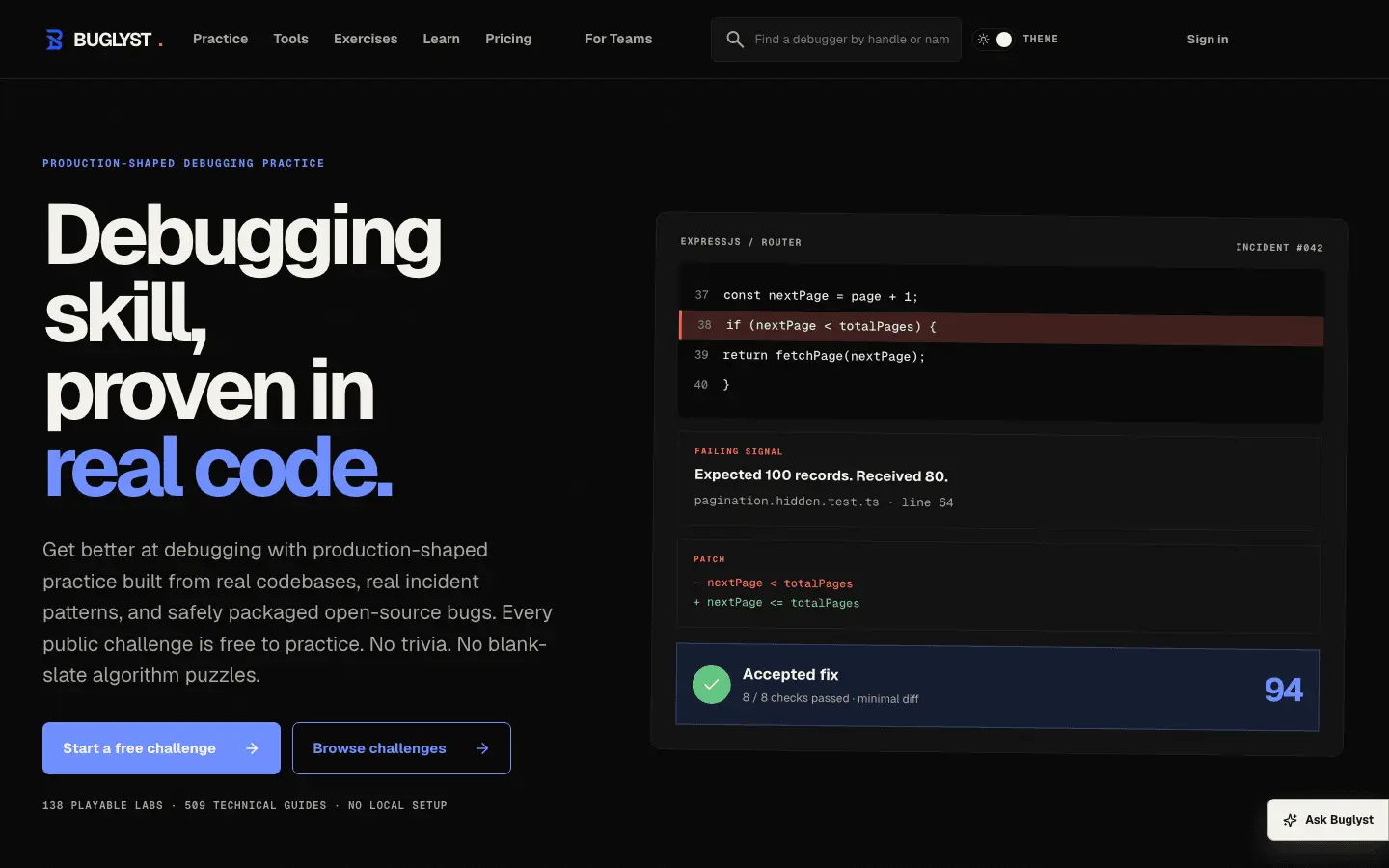
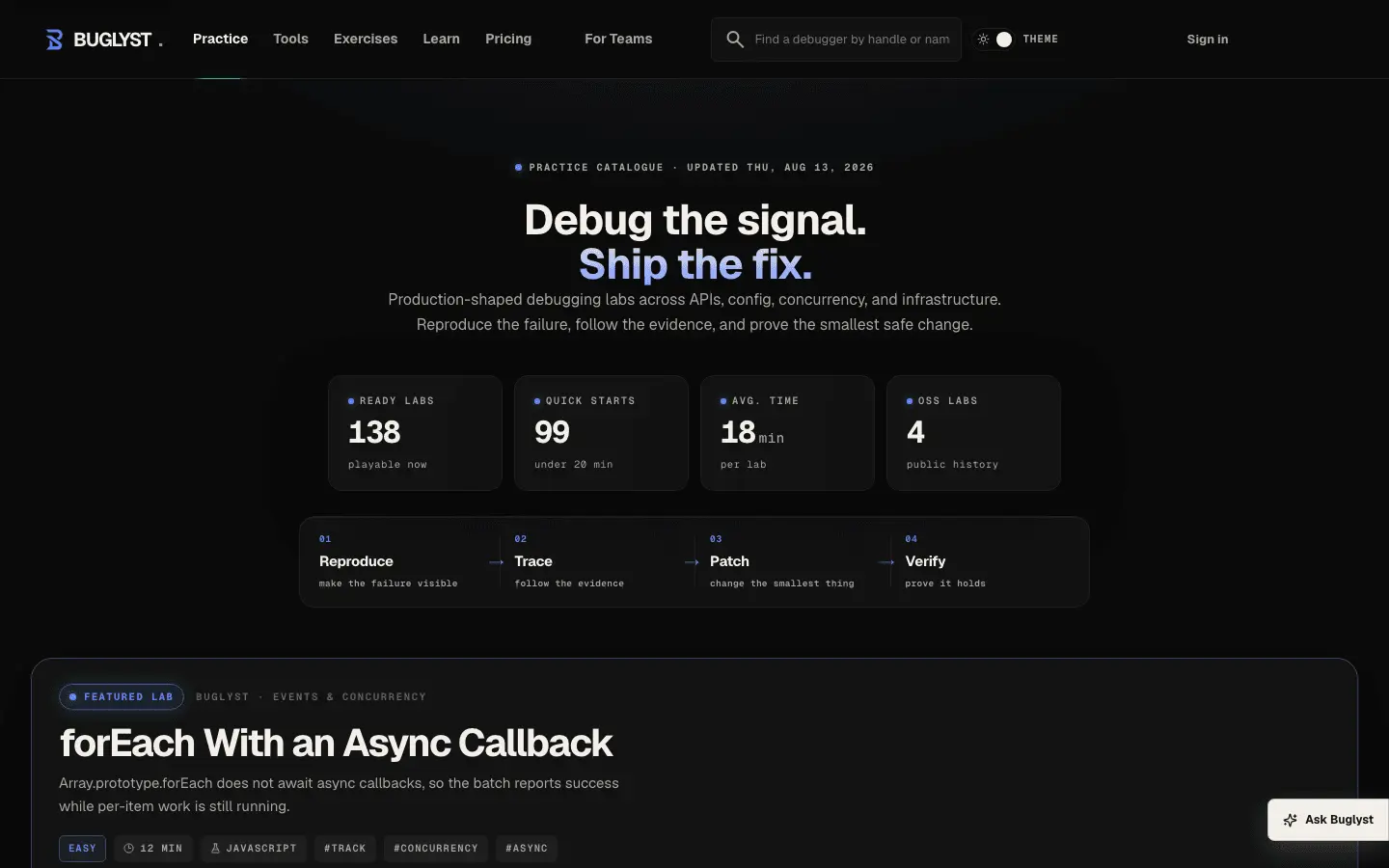
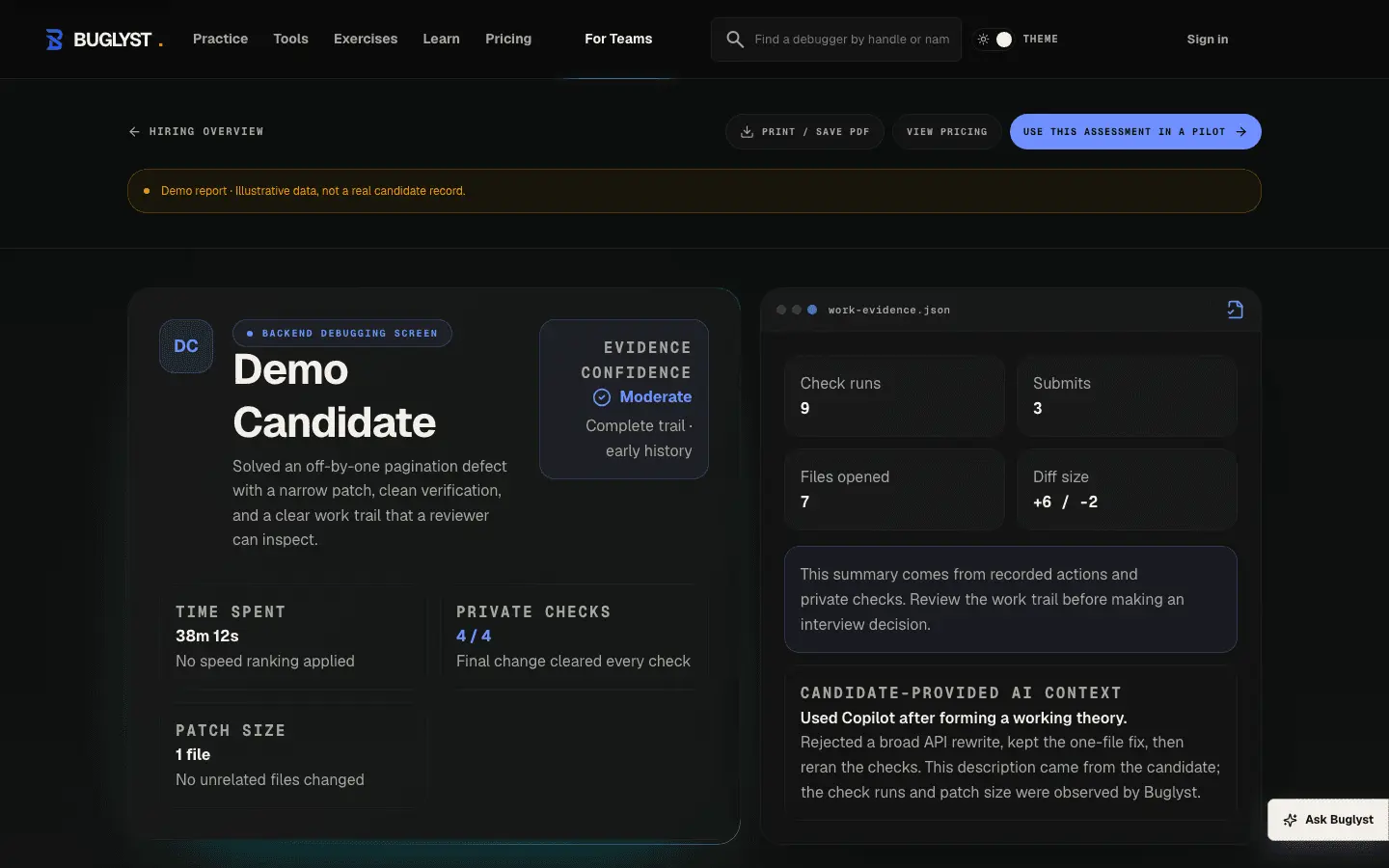
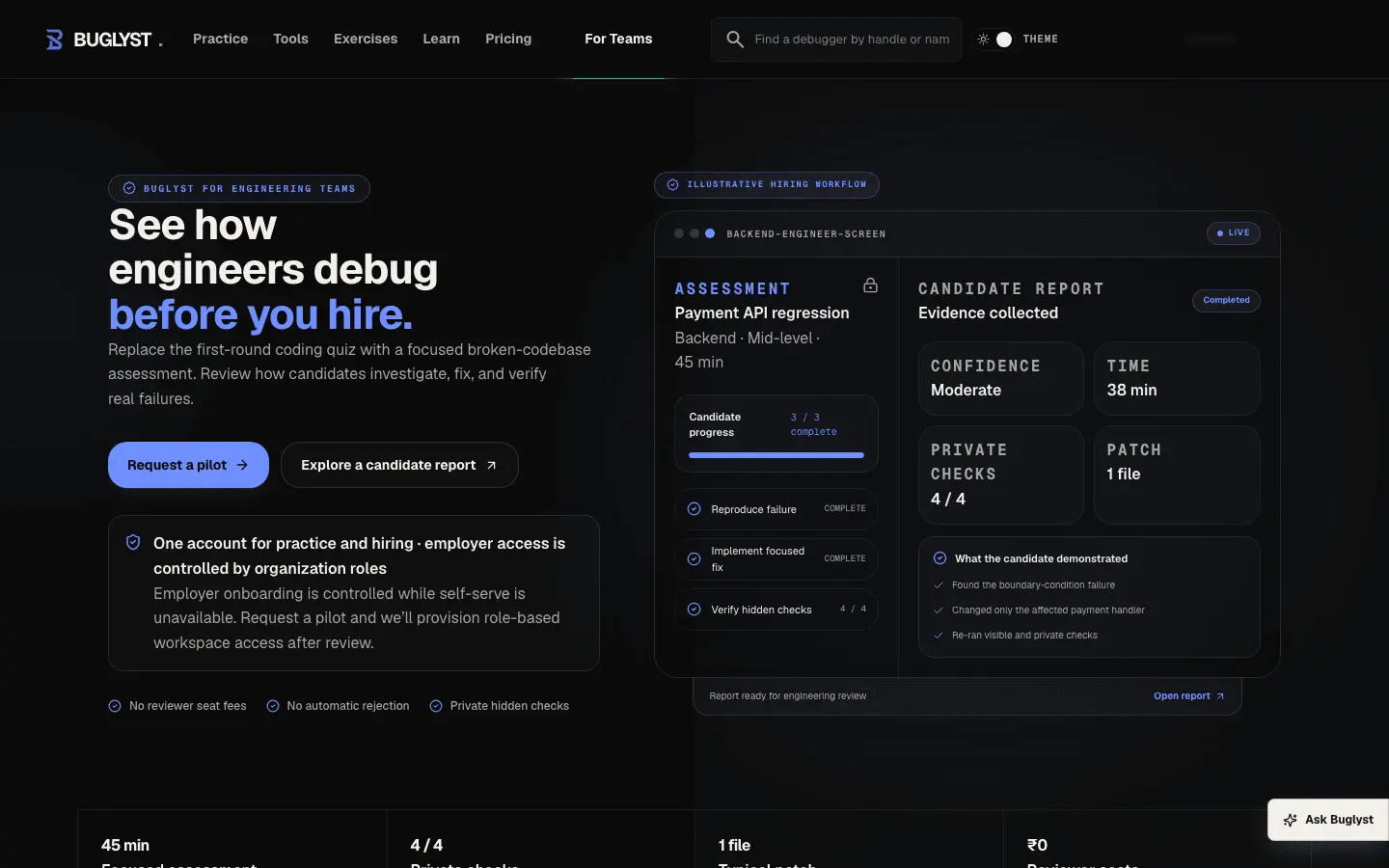
Buglyst is a hands-on platform for practicing and assessing real-world software debugging. Instead of solving isolated DSA or algorithm problems, developers work inside unfamiliar, intentionally broken codebases with realistic failing signals, production-style symptoms, tests, logs, and bugs that must be investigated, patched, and verified. Each challenge is designed to feel closer to day-to-day engineering work: inspect the codebase, open relevant files, understand what is failing, form a hypothesis, make a focused fix, run checks, and prove the issue is resolved. Buglyst helps developers practice skills that traditional coding platforms rarely measure well, such as reading unfamiliar systems, debugging existing code, identifying root causes, making minimal changes, and validating fixes. Practice challenges cover a broad range of software failures across backend, frontend, infrastructure, DevOps, platform engineering, and security. Topics include APIs, HTTP, CORS, authentication, caching, concurrency, configuration, environment variables, databases, SQL, CI/CD, Kubernetes, networking, Java, Spring Boot, JavaScript, Node.js, Python, deployment failures, stale state, race conditions, production incidents, and more. Developers can track attempts, solves, challenge history, activity, and progress over time. Public profiles showcase practical debugging work rather than only algorithm-solving history. Buglyst also includes a Learn library with debugging guides, diagnostics, failure-mode playbooks, checklists, verification guides, and technical articles. These resources explain common engineering problems and help users move from “something is broken” to a structured debugging approach. The Tools section provides browser-based utilities for common developer workflows, including API response diffing, JSON schema validation, Java stack-trace cleanup, Spring bean wiring diagnostics, environment-file comparison, configuration drift analysis, Kubernetes YAML validation, CrashLoopBackOff troubleshooting, SQL error explanation, query-plan analysis, CORS troubleshooting, JWT decoding, CI log summarization, rollback planning, retry/backoff calculation, error-budget calculation, log redaction, secret-leak scanning, incident timeline generation, and bug-reproduction templates. Ask Buglyst is the platform’s contextual AI debugging assistant. It uses Buglyst’s own structured knowledge, challenge catalogue, tools, guides, and approved public content to answer debugging questions, explain technical concepts, recommend relevant challenges, find tools, and help users decide what to inspect next. On challenge pages it acts as a debugging coach, giving progressive hints and explanations without immediately revealing the solution. Signed-in users can also receive recommendations based on their own practice history. Public challenges include community features where developers can discuss investigation approaches, ask questions, reply, vote on useful contributions, view official Buglyst Team hints, and publish solution write-ups after completing a challenge. For engineering teams, Buglyst supports practical technical assessments. Instead of evaluating candidates only through DSA questions or résumé screening, teams can assess how someone investigates an unfamiliar codebase, interprets evidence, narrows down a failure, changes the right code, and verifies the result. This makes Buglyst useful for technical hiring, debugging assessments, software engineering interviews, and practical skill evaluation. Buglyst is built for software developers, backend engineers, frontend engineers, full-stack developers, DevOps engineers, SREs, platform engineers, students, interview candidates, recruiters, hiring managers, and engineering teams. In short, Buglyst is a real-world debugging practice platform, LeetCode alternative for debugging, developer learning platform, troubleshooting resource, developer tools suite, contextual AI debugging assistant, community for debugging discussions, and practical technical assessment platform. If you are looking for realistic coding interview preparation, production debugging exercises, software troubleshooting challenges, Java or Spring debugging practice, API debugging, Kubernetes troubleshooting, backend debugging, real bug-fixing exercises, developer skill-building, or practical engineering assessments, Buglyst is designed for that.
Screenshots
Reviews (0)
No reviews yet. Be the first to rate this product!
Comments (1)
Built Buglyst after realizing how different real debugging feels from solving DSA questions. I wanted a place to practice unfamiliar codebases, production-style failures, and actually finding the fix.