
CiteRoute
Generative engine and agent observability platform
Details
- Categories
- Target Audience
- Platforms
- Featured in
Discovery signals
How AI and people discover CiteRoute on PeerPush
About CiteRoute
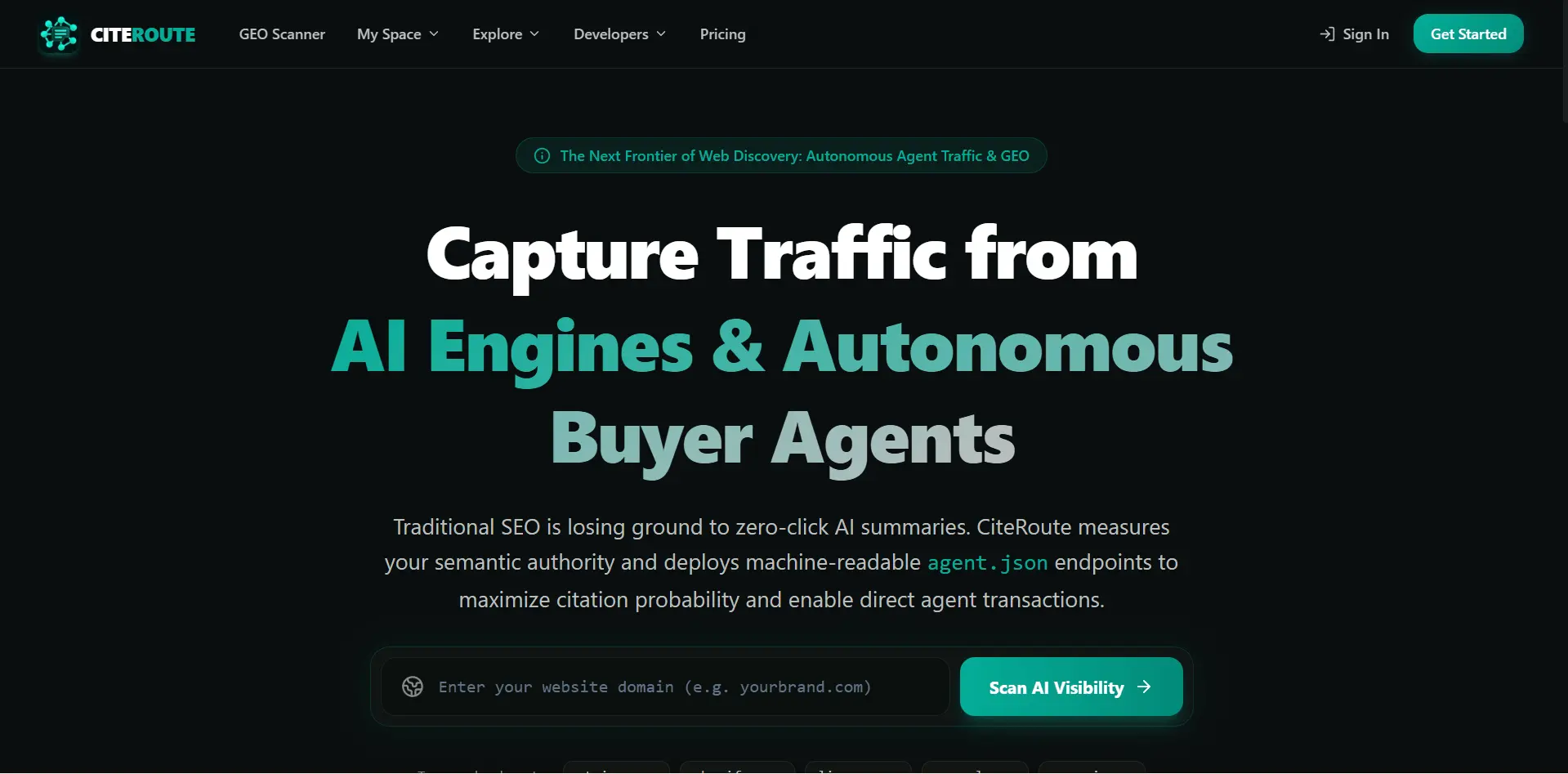
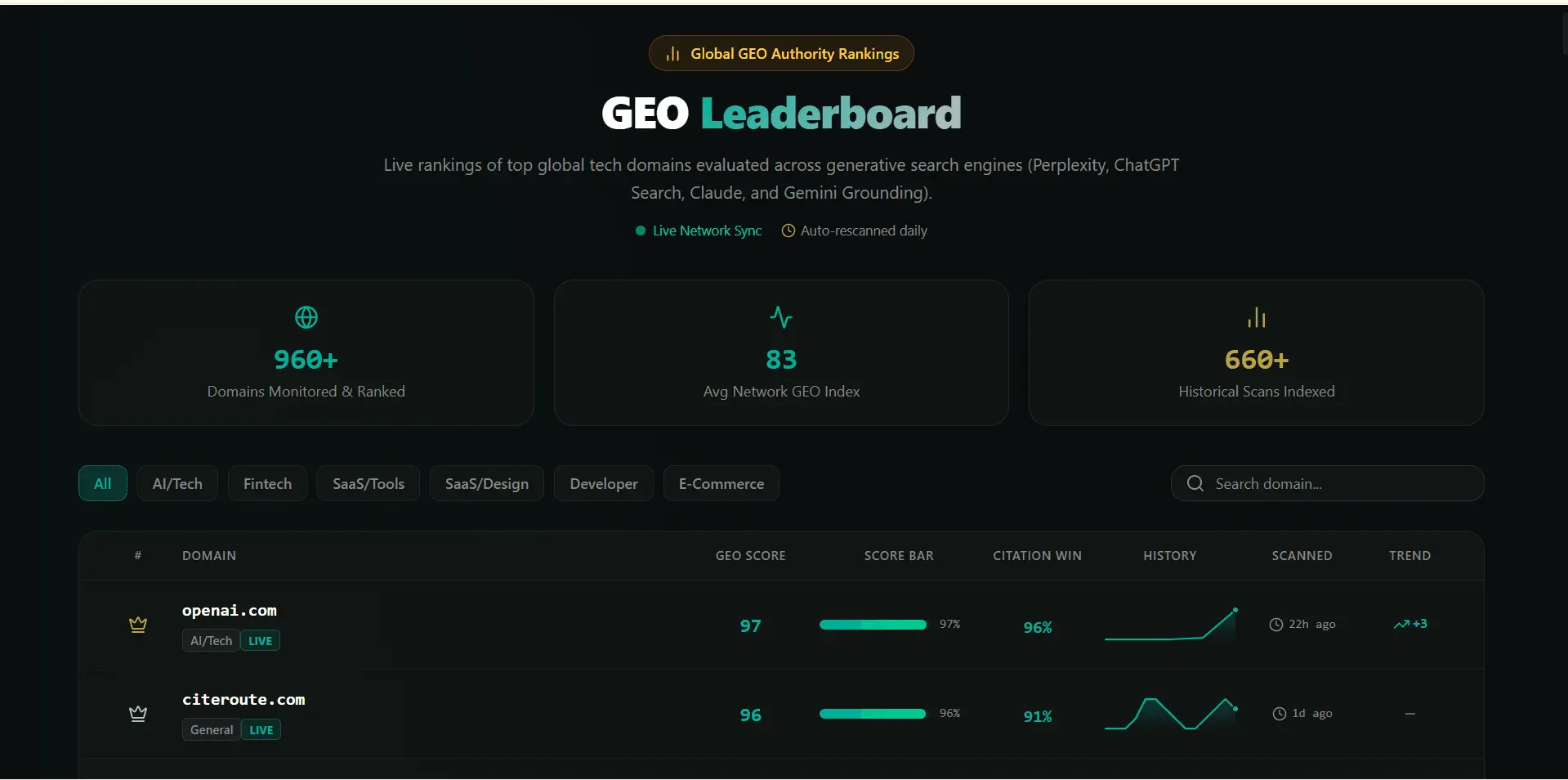
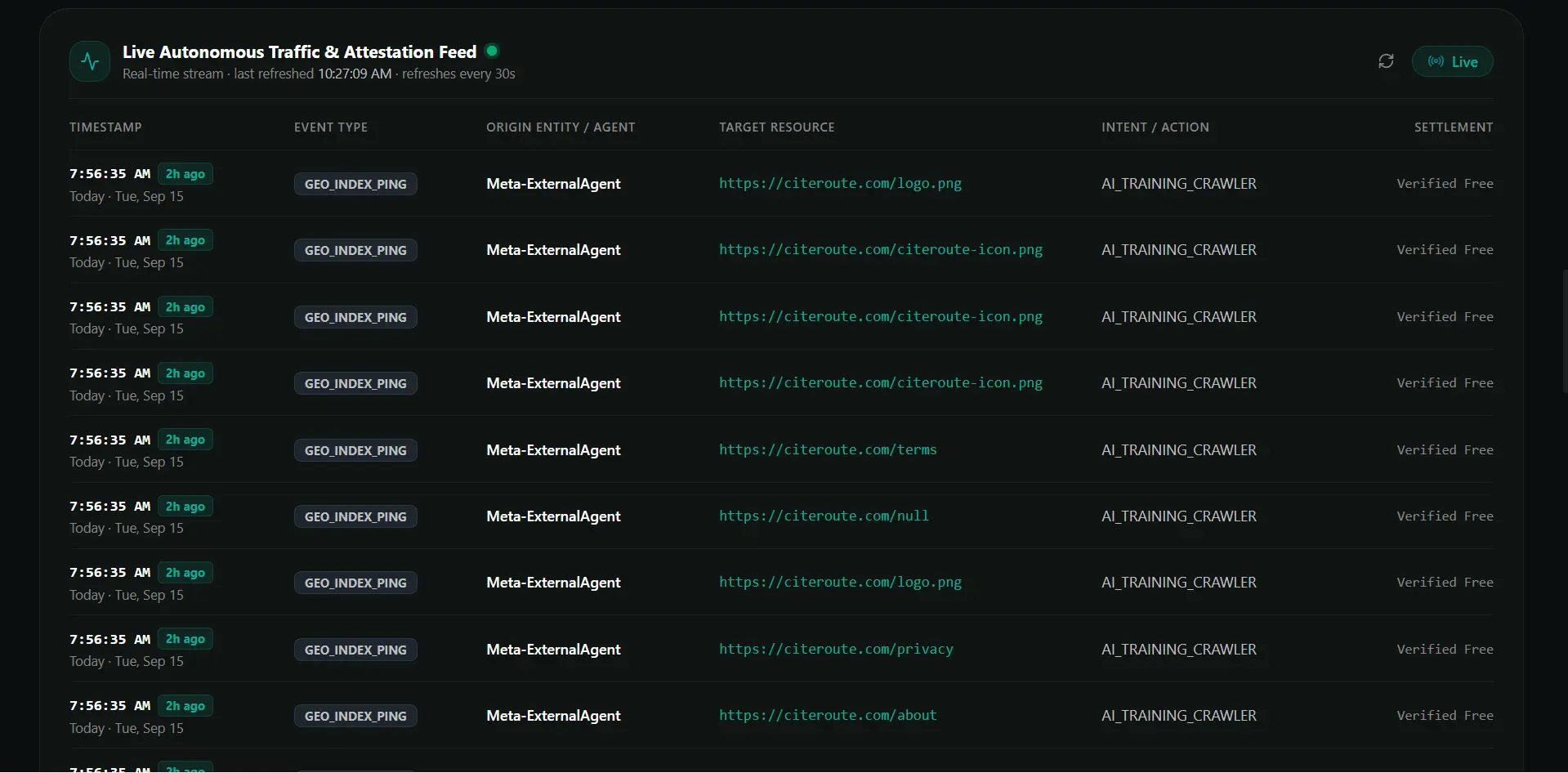
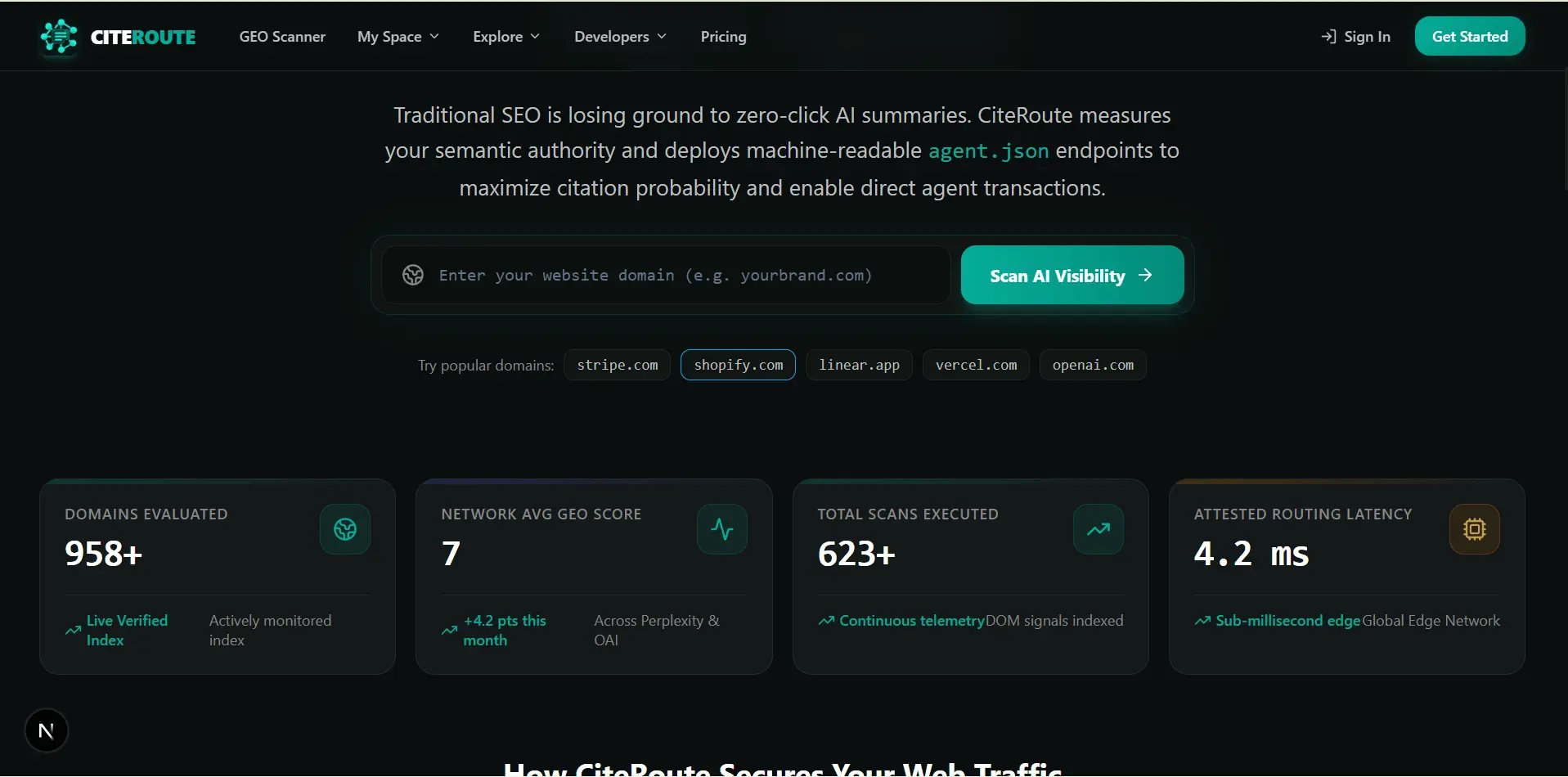
For nearly three decades, the fundamental contract governing the open web was clear: publishers and businesses invested in high-quality digital content, search engines indexed it, and algorithms routed human visitors through blue hyperlinks. Monetization strategies, digital marketing playbooks, and sales funnels were built entirely around this human-in-the-loop paradigm. Today, that foundational contract has fractured. The open internet is undergoing its most profound transformation since the invention of the graphical web browser, transitioning rapidly from an ecosystem of human browsing to an automated post-search economy powered by generative engines and autonomous software agents. Search portals no longer act as simple directories pointing users toward relevant websites. Instead, generative platforms such as ChatGPT Search, Perplexity, Google Gemini, and Claude synthesize answers directly inside conversational interfaces. When prospective customers seek software recommendations, technical troubleshooting, product comparisons, or financial advice, modern AI engines ingest hundreds of sources behind the scenes and output comprehensive, synthesized conclusions. In this emerging zero-click environment, users get the exact information they require without ever visiting the original publisher’s domain. At the same time, autonomous software agents are independently researching solutions, evaluating real-time pricing, and executing purchases programmatically. If your digital presence is built solely for human viewports, your business is invisible to the primary arbiters of future internet commerce. Under this new reality, website operators face a destructive phenomenon known as the silent crawl drain. Every single day, hundreds of AI crawlers and automated scraper bots ingest vast quantities of proprietary research, technical documentation, product catalogs, and editorial analysis. These crawlers consume valuable server bandwidth, trigger database queries, and exhaust edge compute resources, yet they yield zero pageviews, zero ad impressions, and zero direct revenue. Worse, generative models frequently summarize proprietary data while omitting author citations, brand attribution, and inbound referral links. Until now, website owners faced an impossible choice: block AI crawlers entirely and vanish from generative discovery, or leave their infrastructure open to uncompensated, unmonetized data harvesting. CiteRoute was engineered to solve this dilemma by providing the critical infrastructure layer for the post-search economy. CiteRoute is a specialized observability and agent commerce platform that transforms incoming AI bot traffic from a silent infrastructure drain into a high-converting growth and distribution channel. Instead of viewing artificial intelligence as an adversarial threat to be blocked or a black box to be ignored, CiteRoute provides web properties with the precise telemetry, optimization algorithms, and machine-readable protocols needed to actively monitor, influence, and monetize every interaction with modern AI models. To achieve this, CiteRoute delivers a comprehensive suite of purpose-built features starting with edge bot telemetry and real-time fingerprinting. Deployed seamlessly through lightweight edge SDKs or DNS proxies across Cloudflare, Vercel, and AWS, CiteRoute inspects incoming web requests with sub-millisecond latency. The platform accurately identifies and categorizes bot traffic, separating human users and malicious scrapers from legitimate generative indexers like GPTBot, ClaudeBot, PerplexityBot, and Google-Extended. This gives website operators granular visibility into exactly which sections of their site are being read by AI engines, how often content is ingested, the size of the ingested token payloads, and how crawl patterns shift over time as foundation models update their training datasets and retrieval-augmented generation pipelines. The platform pairs this telemetry with an automated Generative Engine Optimization audit engine. While legacy SEO focuses on keywords and backlinks, GEO focuses on semantic authority, entity recognition, and prompt prominence. CiteRoute continuously audits how major generative engines represent a domain across thousands of industry-specific prompts and queries. The platform calculates a proprietary GEO index that tracks how often a brand is cited as a trusted source, evaluates whether generative summaries contain factual hallucinations about pricing or features, and benchmarks the brand’s generative share of voice against direct market competitors. Complementing the audit engine is CiteRoute’s Content Citation Optimizer, which helps marketing and editorial teams engineer their content specifically for neural retrieval. Modern foundation models do not reward traditional keyword stuffing; instead, their neural architectures prioritize high informational density, distinct entity relationships, unambiguous factual assertions.
Screenshots

Reviews (0)
No reviews yet. Be the first to rate this product!
Comments (0)
No comments yet. Be the first to share your thoughts!