
Matimo
Build governed AI agents with human-in-the-loop oversight
Details
- Categories
- Target Audience
- Pricing
- Freemium
- Alternatives
 n8n alternatives
 Lindy AI alternatives
 crewai alternatives
Discovery signals
How AI and people discover Matimo on PeerPush
About Matimo
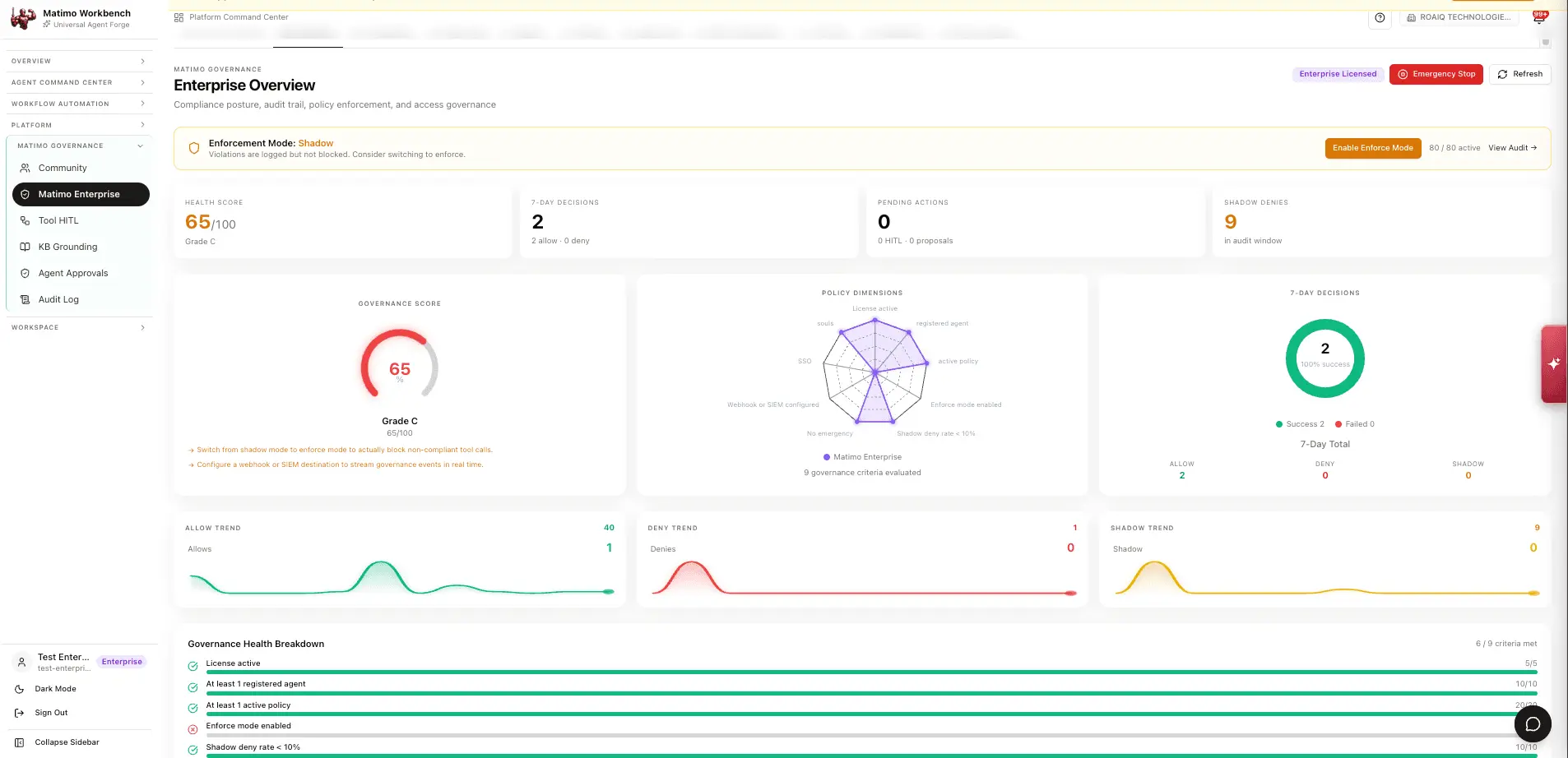
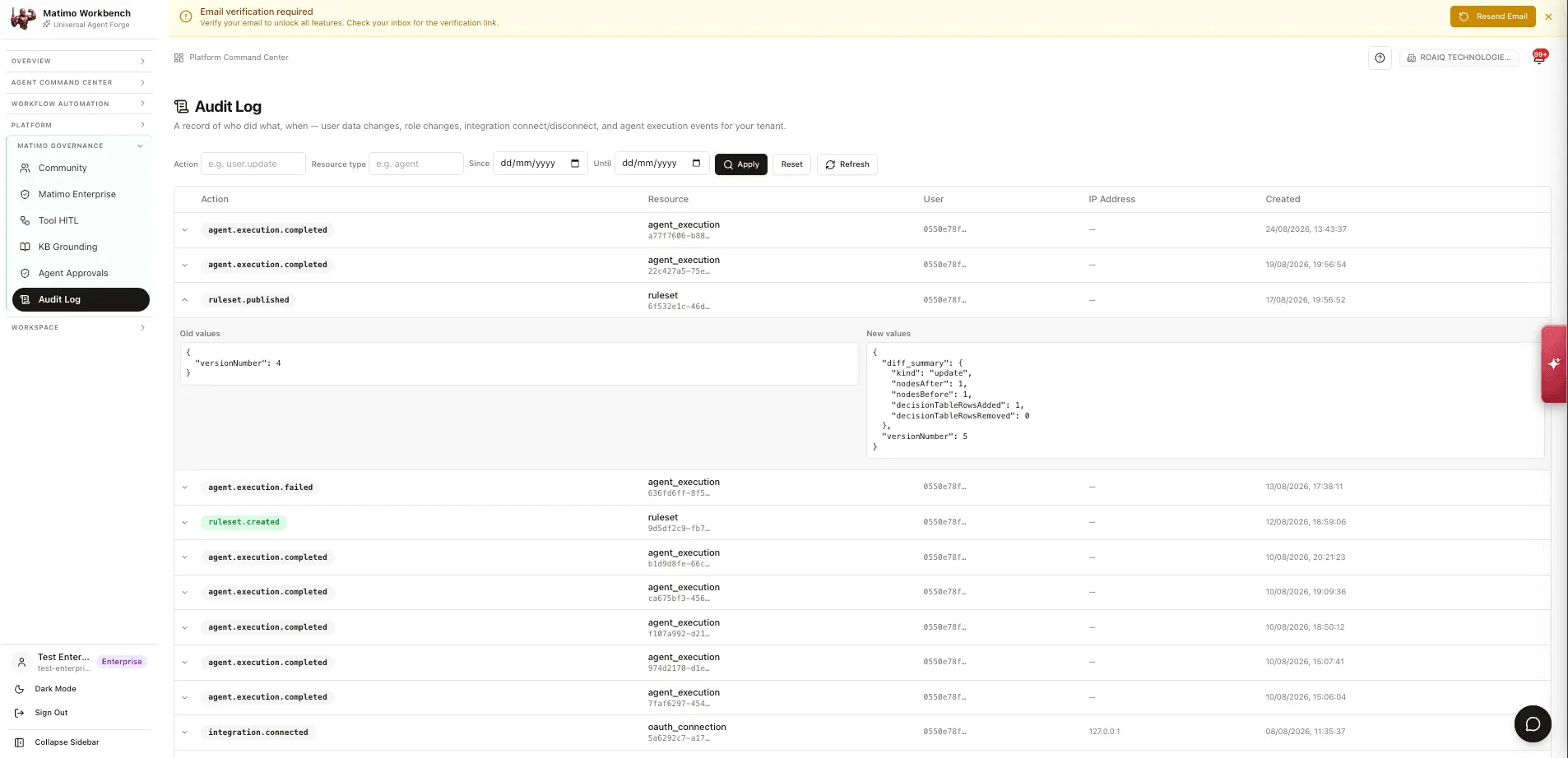
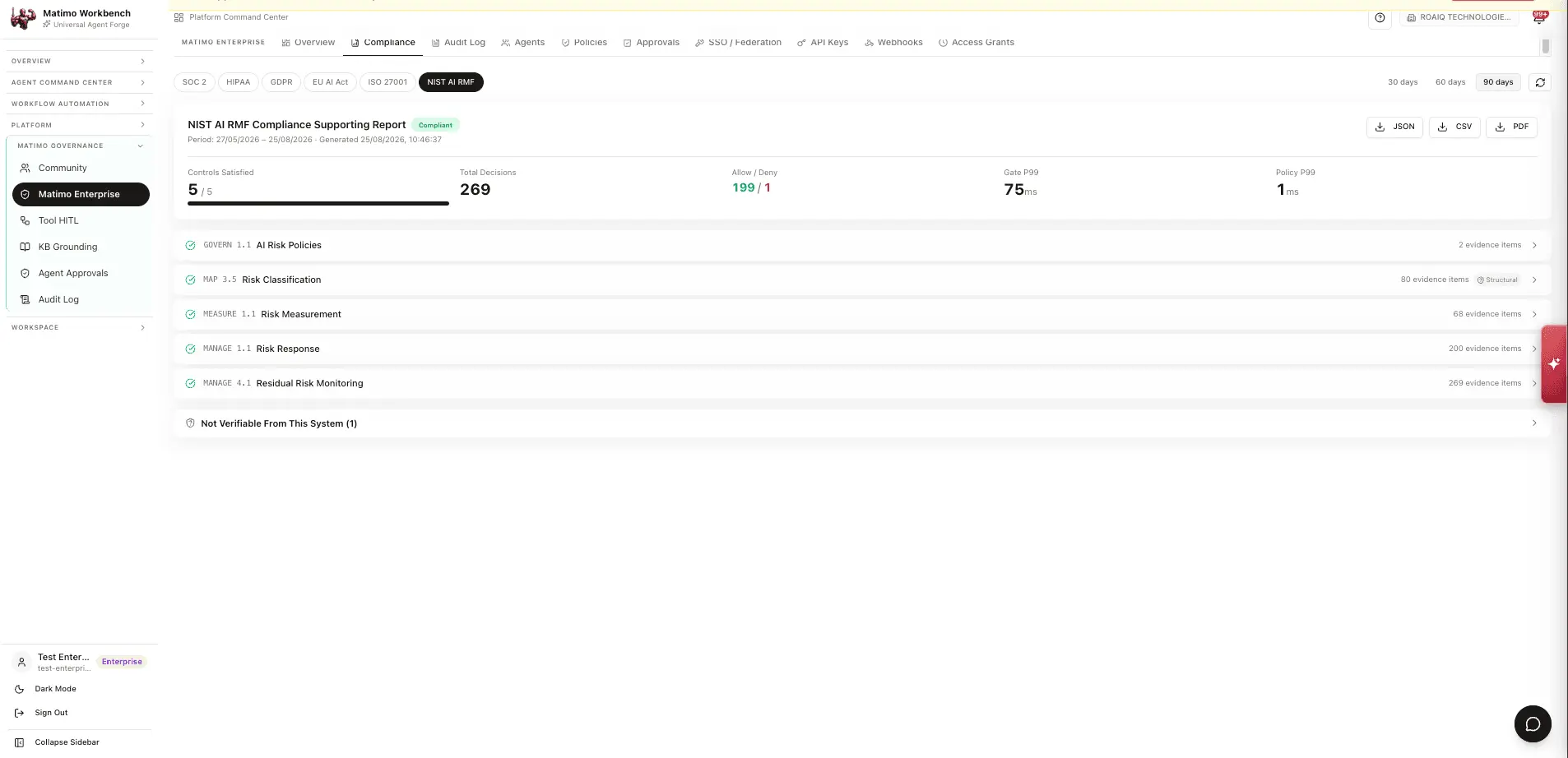
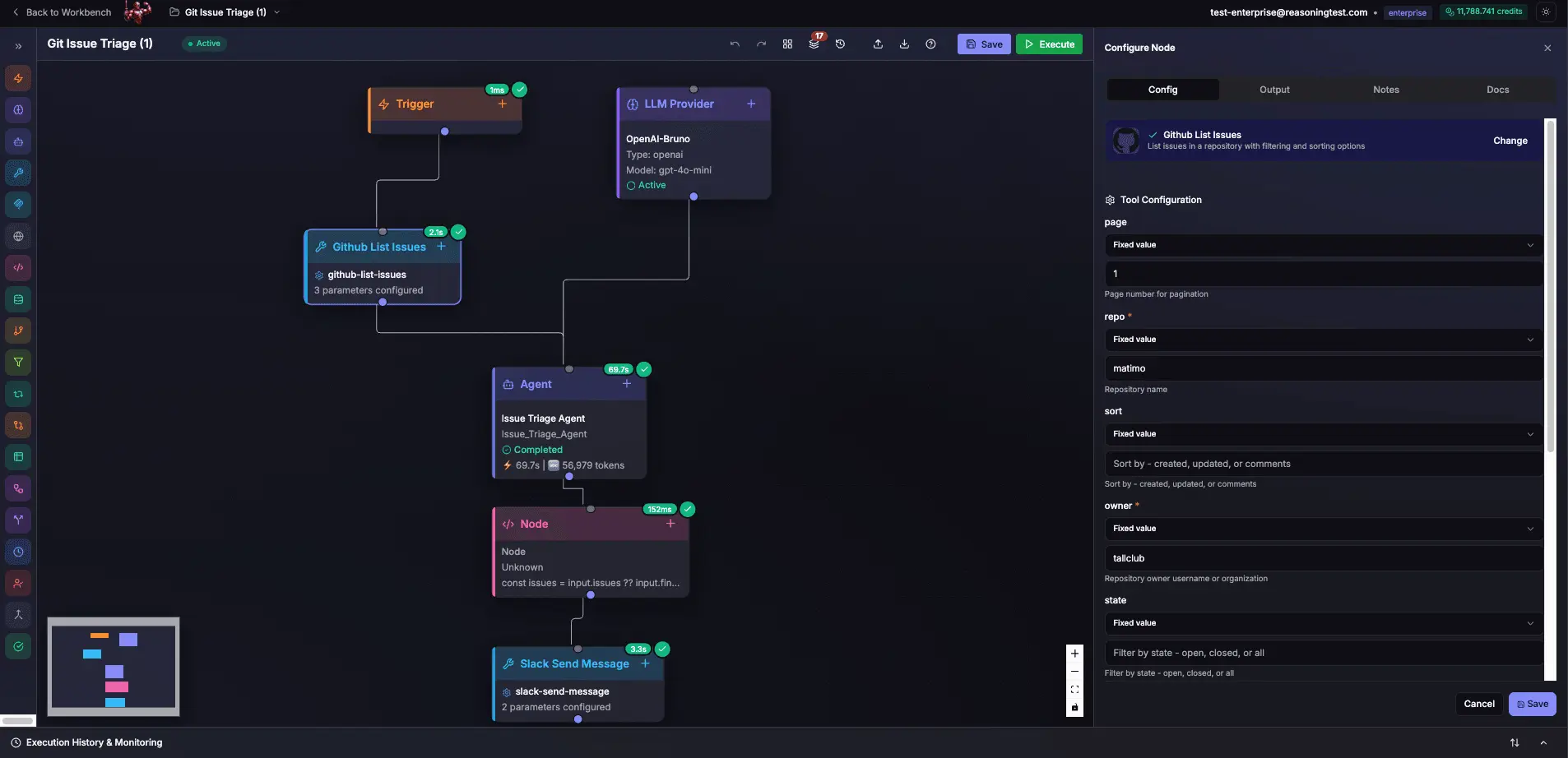
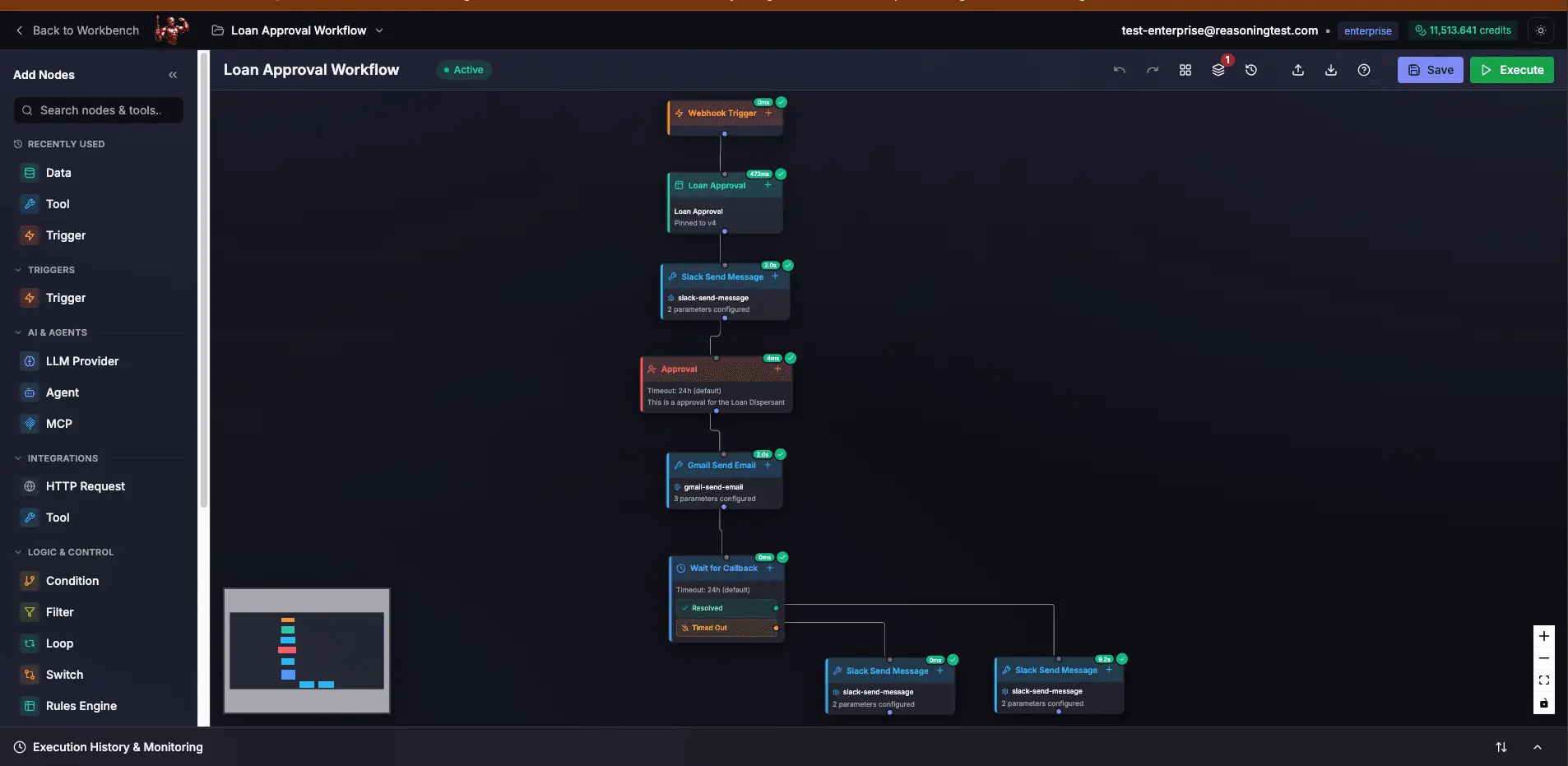
The Matimo Suite is four products that work together to let any business build, run, and govern AI agents without code, and without the blind trust that usually comes with "autonomous." Each product does one job. Here's what each one is, and how you'd actually use it. Matimo OSS - Is the tool layer an open-source foundation everything else runs on: an SDK that defines what an agent is allowed to do. It ships the actual tool integrations over 130 native actions across ten providers (GitHub, HubSpot, Slack, Notion, Microsoft, Gmail, and more) plus a governed catalog of 449 additional actions through Composio. It also defines skills (packaged domain knowledge an agent can draw on) and the policy engine that decides whether an action needs a human's sign-off before it runs. Who touches it directly: developers extending Matimo with a custom tool, or teams running Matimo OSS standalone in their own stack outside the hosted platform. Most business users never open it they benefit from it every time an agent successfully sends a Slack message or updates a CRM record, because Matimo OSS is what made that action possible and policy-checked in the first place. Matimo Workbench : Where agents live, The Platform. It's the multi-tenant home for every agent your company builds: where agents get created, configured with an LLM provider, given a budget cap, deployed to a chat widget or a Slack channel, and billed for what they use. Workbench is also where the sixteen reasoning-engine strategies live — the actual decision-making logic (ReAct, Tree of Thoughts, dynamic planning, and simpler fixed-sequence flows) an agent runs on. Who uses it: an ops lead spinning up a customer-support agent and pointing it at a knowledge base; an admin setting a hard dollar ceiling so an agent can never overspend; a finance team watching usage and billing roll up per tenant. This is the day-to-day product — the one your team logs into. Matimo Studio: How you build, the visual canvas: drag nodes, connect them, and you have a working multi-step agent workflow, with no code. A trigger node, a reasoning step, a tool call, a conditional branch, a rules-engine decision table, an output wired together visually. It's how a non-technical operations person builds something that used to require an engineer and a sprint. Who uses it: the person who knows the process, not necessarily the person who can code it. A support manager building an escalation flow. An HR coordinator building an onboarding sequence that checks a form, calls a tool, and waits for approval before proceeding. Matimo Governance: The Trust layer, is what makes the other three defensible to a compliance officer or a regulator. Every agent action, from any product in the suite, writes to a hash-chained, tamper-evident audit log. High-risk actions, the ones a policy flags route to a human-in-the-loop approval queue before they execute, not after. And when it's time to prove all of this to an auditor, Governance generates a Compliance Supporting Report across six frameworks (SOC 2, HIPAA, GDPR, the EU AI Act, ISO 27001, NIST AI RMF), with per-control evidence and an explicit list of what it can and can't verify. Who uses it: a compliance or risk team in banking, healthcare, insurance, or legal, who needs to answer "what did this agent do, and who approved it" on demand, not after an incident. How they fit together The flow, in practice: Matimo OSS defines what actions exist and whether they need approval. Matimo Workbench is where an agent is built with those actions, given a model provider and a budget, and put to work. Matimo Studio is the visual layer non-engineers use to design that agent's logic instead of writing it. Matimo Governance sits underneath all of it, logging every action and enforcing every policy so the same agent a support manager built in an afternoon in Studio is provably auditable to a bank examiner.
Screenshots
Reviews (0)
No reviews yet. Be the first to rate this product!
Comments (2)
Your approval queue addresses a real issue in agent workflows. If a tool permission expires or is revoked while an action waits for approval, does execution recheck the current policy, or use the policy from when it was queued?
Hello Makers, We built Matimo to make AI agents easy for anyone to use, and reliable enough to fit into real, predictable workflows, not just freeform chat. Would love your thoughts. - Cheers Sajesh