
Orla
The autopilot for company money, inside the mandate you sign

Details
- Target Audience
- Pricing
- Freemium from $25
- Featured in
Discovery signals
How AI and people discover Orla on PeerPush
By AI reads among Fintech tools
227 AI reads in the last 30 days, ranked against every Fintech tool listed.About Orla
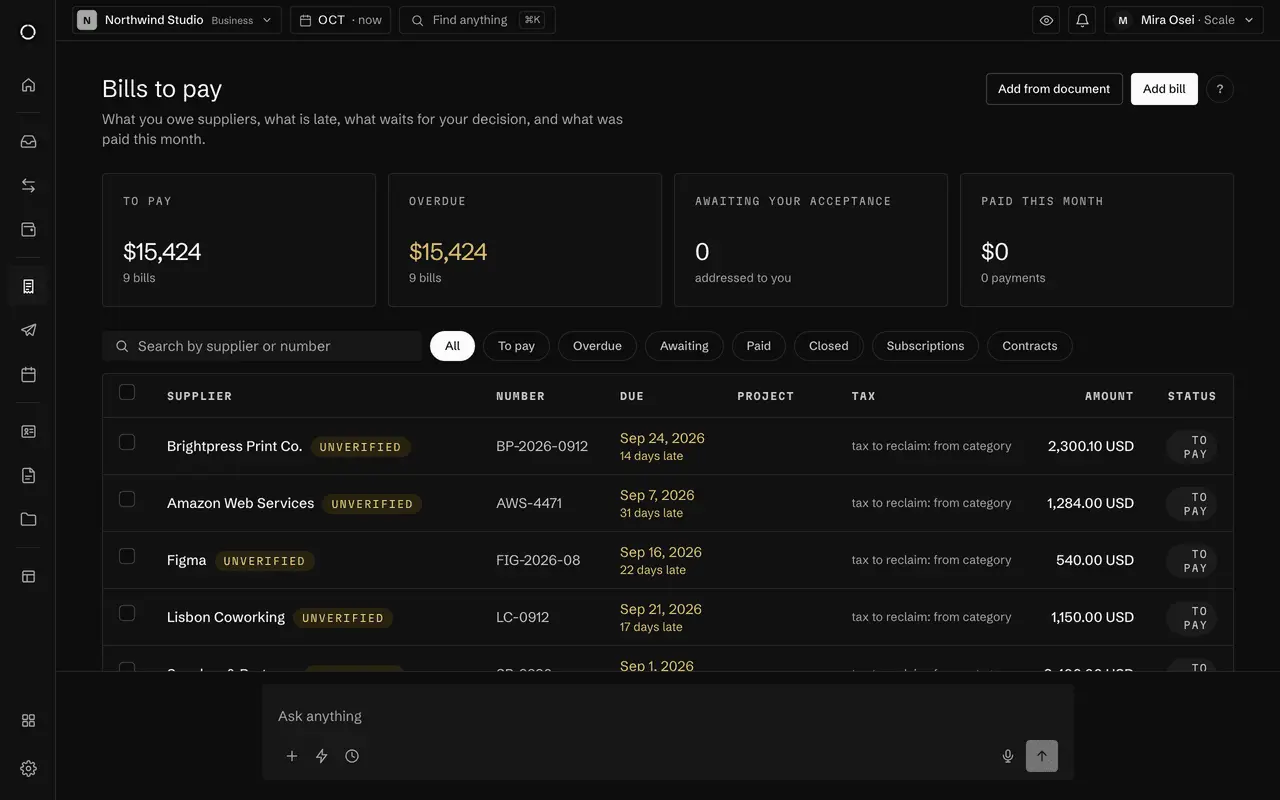
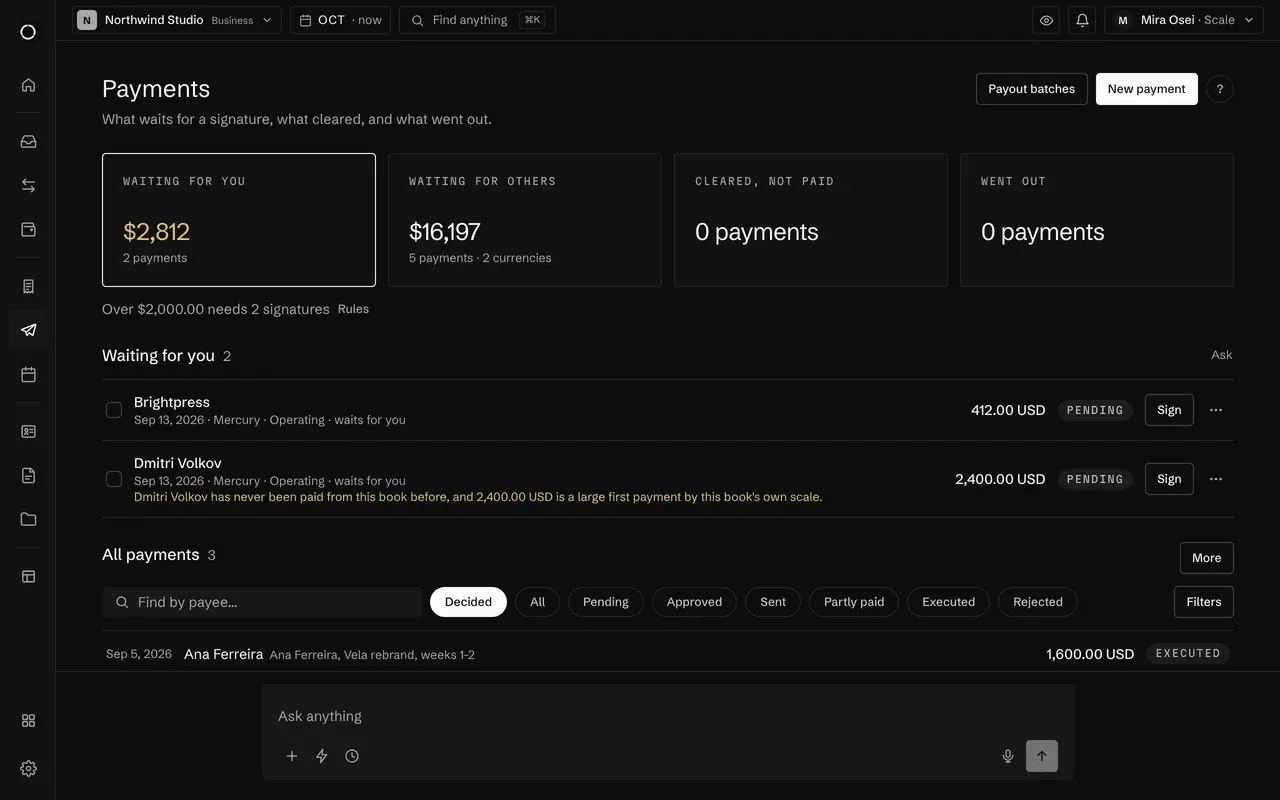
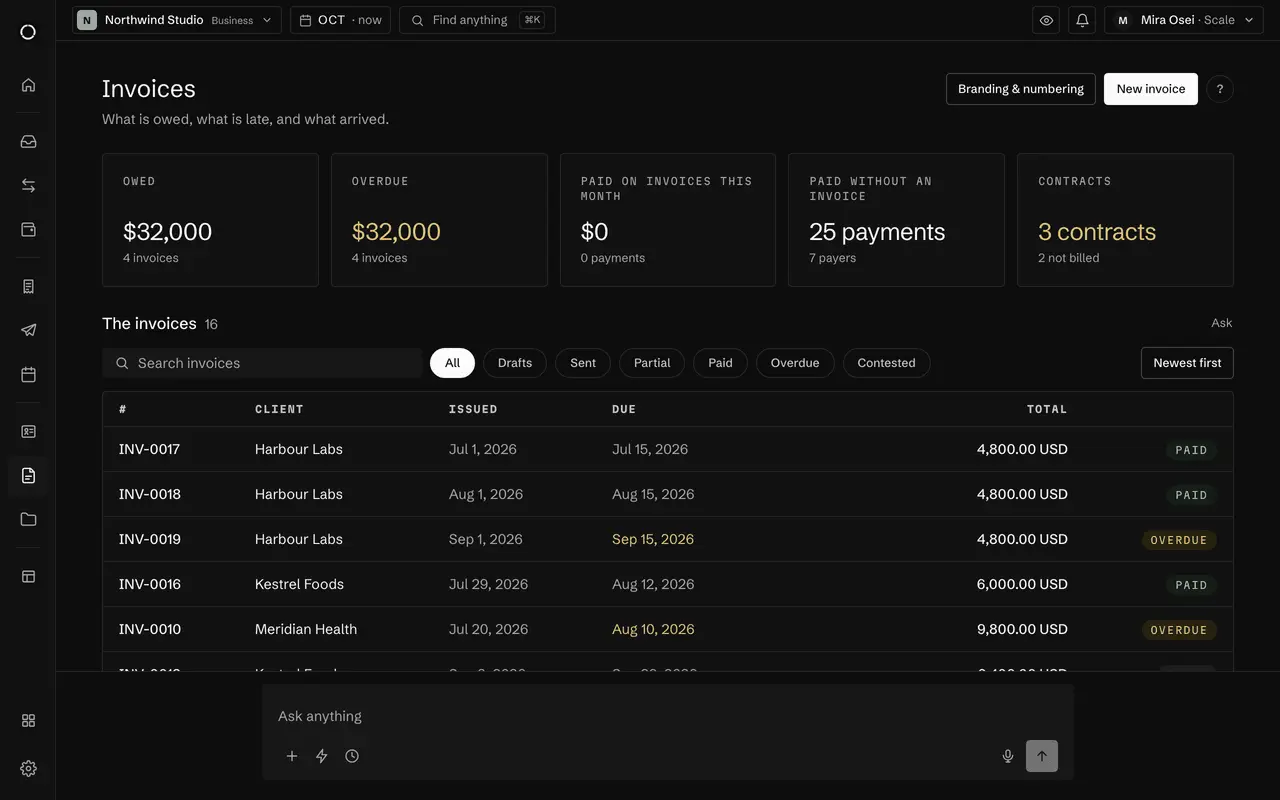
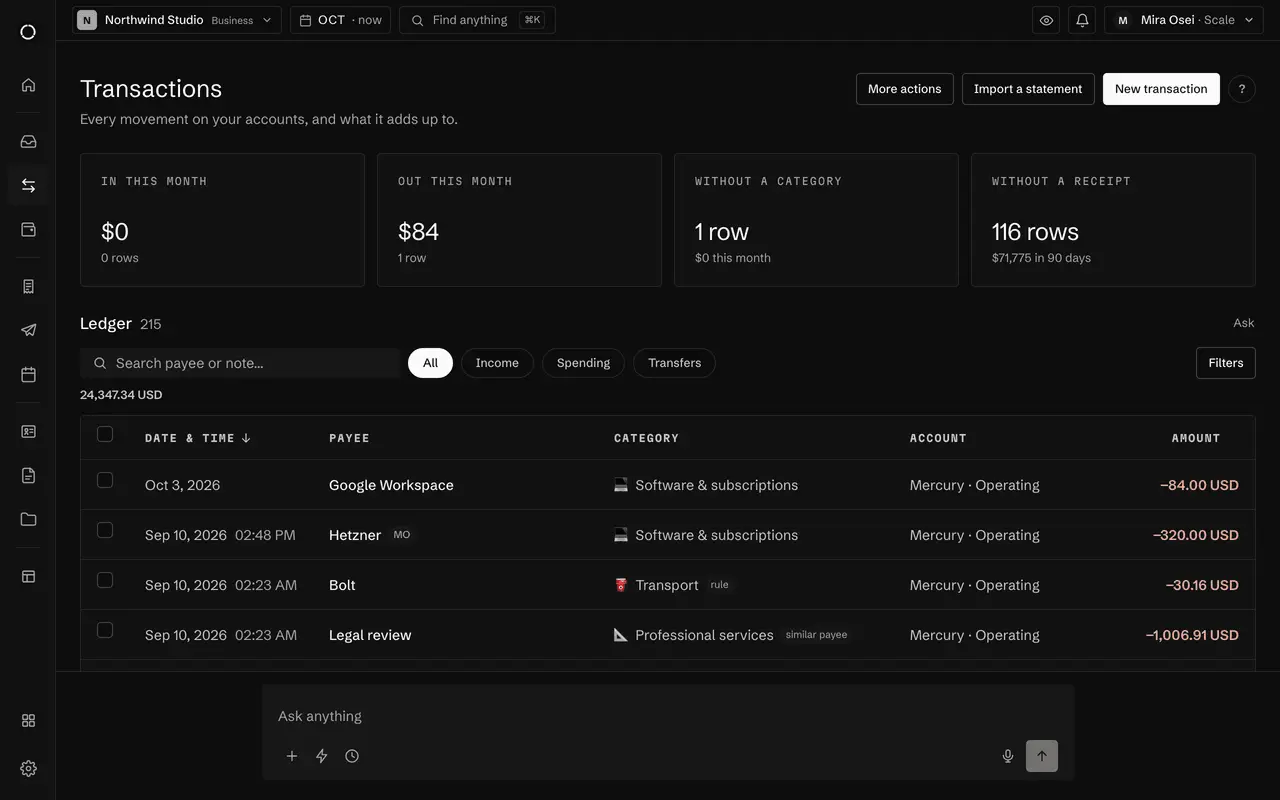
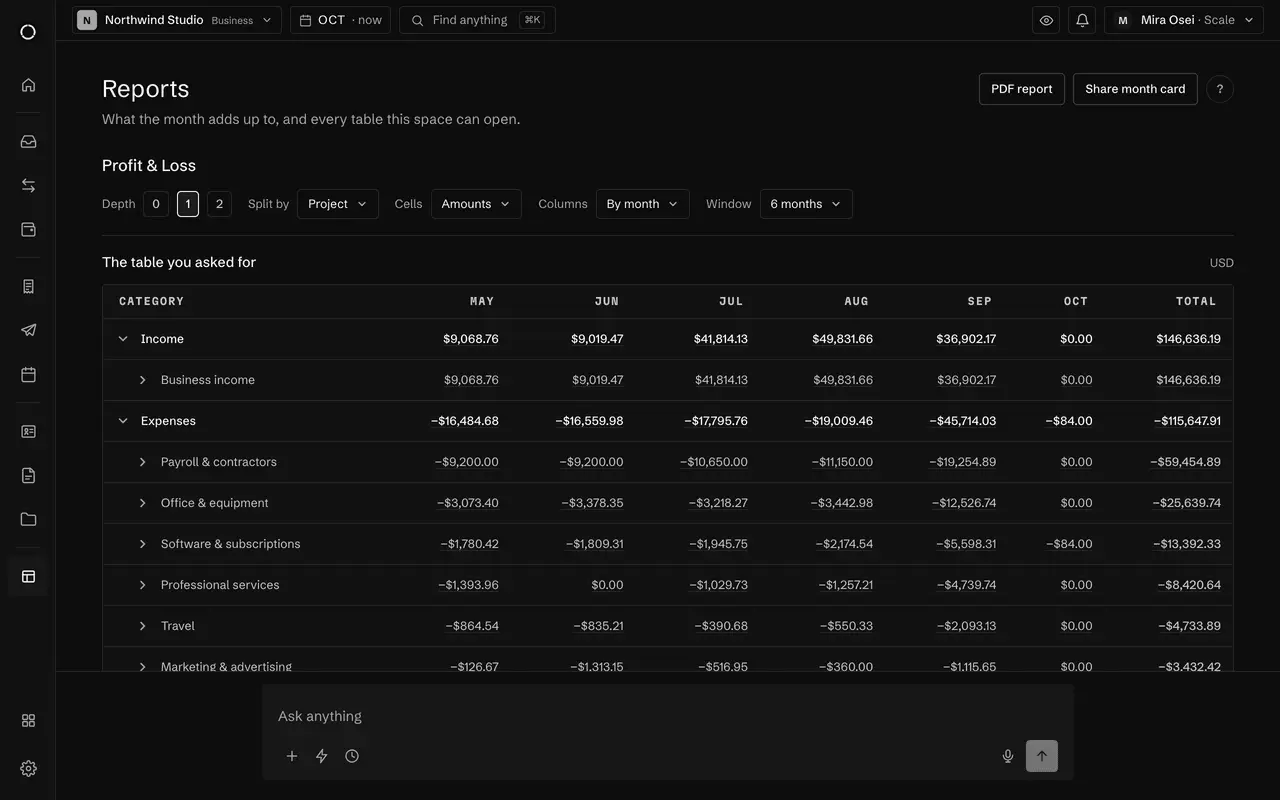
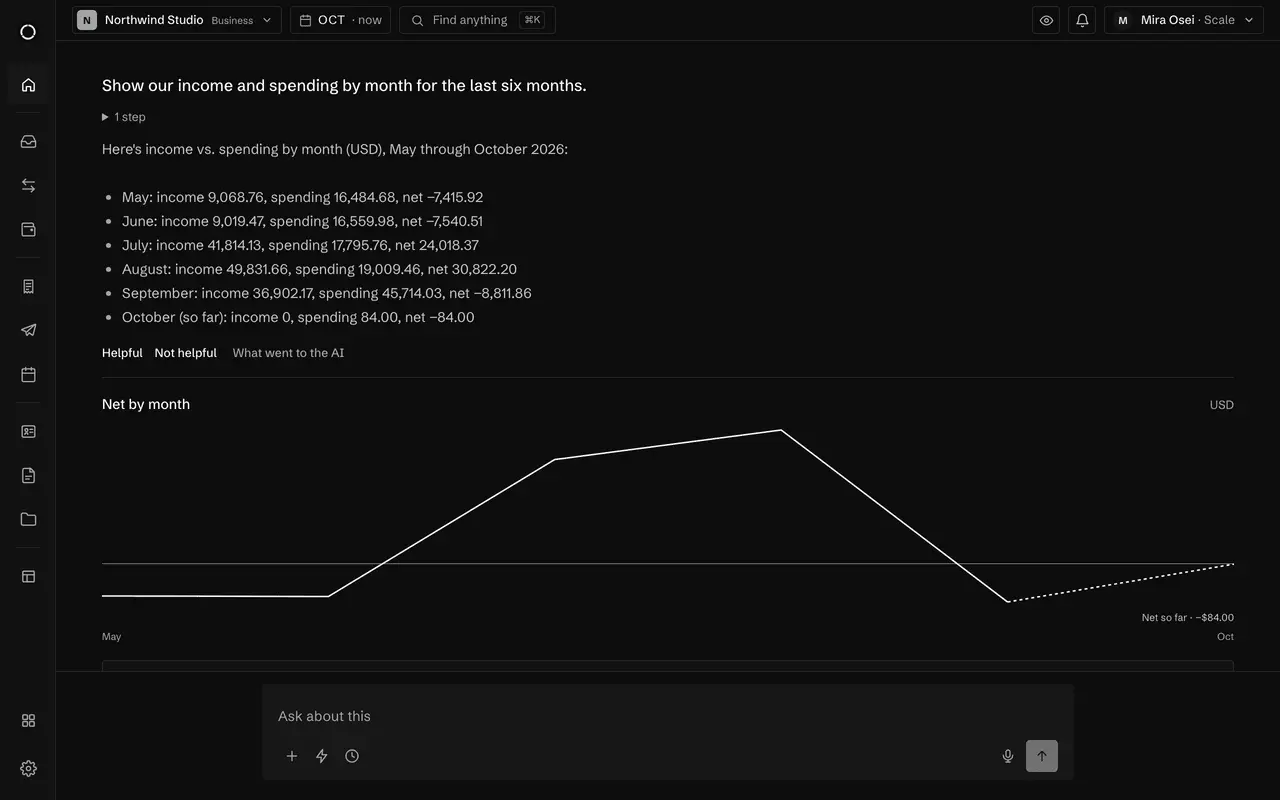
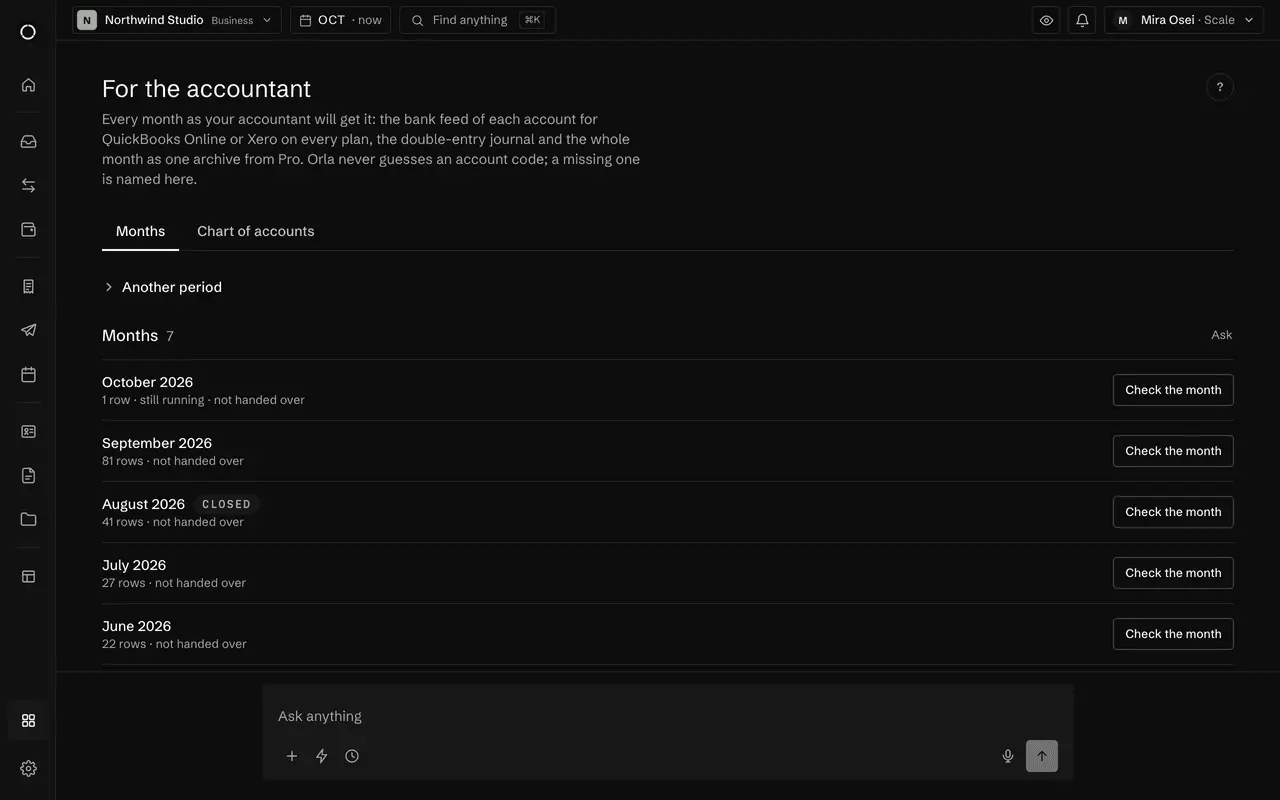
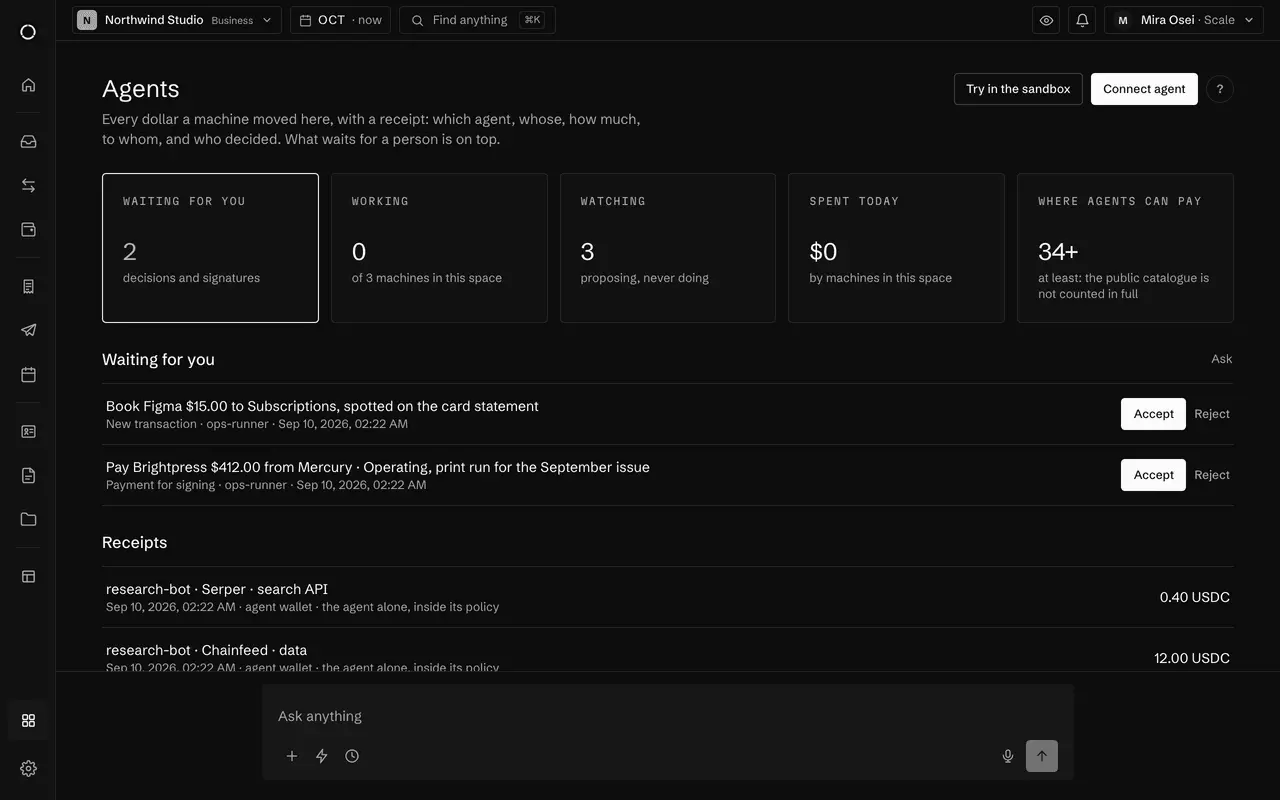
Orla is the autopilot for a company's money. Your team signs the mandate, Orla works inside it. The mandate is the set of rules you write once: approval thresholds with the number of signatures each one needs, a ceiling on each virtual Visa card, twenty permission switches on each member, and a ceiling for every AI agent you connect. Nothing past those rules moves without a person's signature. Inside the mandate, the paperwork runs by itself. A supplier's PDF, forwarded to the space's own mail address, becomes a draft with the supplier, the amount and the due date already in it. Rules file transactions as they arrive, with suggestions drawn from how you sorted the same payee last time. An invoice you issue marks itself paid when the money lands. A contract can carry the invoicing schedule, so the monthly invoice goes out without anyone remembering it. Past the mandate, Orla asks the right person, and everything waiting for a decision sits in one list on the web and the phone. Payout batches of up to 200 rows go through the signatures you set. An Accountant seat reads everything and prepares the paperwork but can never move money. Your own AI agent, connected by key or through MCP, proposes payments, or pays from its own wallet only inside the ceiling you set. Banks connect through open banking, read-only. Exchanges connect through read-only API keys (Binance, Bybit, OKX, Kraken, Coinbase) or by address (Hyperliquid); wallets by address on Bitcoin, EVM chains, TRON and Solana; sales platforms through their own reports. A trade is priced at the minute it happened, a transfer between your own accounts is matched by hash and kept out of income, and cost basis survives a swap. The only balances Orla holds are the ones you top up yourself: the card balance and an agent's wallet. Ask a question in plain words and the answer comes back as a card built from the same rows the reports use: a figure with its chart, a checklist with a tick per row, a draft email you edit and send. Routines run on a schedule to Telegram, Slack or email. The month closes here with a lock and a fingerprint, and leaves as the files your accountant opens: a journal CSV that Xero and QuickBooks import, VAT periods as PDF and CSV, a FIFO capital gains report by lot. Orla does not file anything anywhere. Two-factor sign-in, passkeys, a security log and device sessions come standard. Personal, family and group spaces sit beside the company's. Four languages: English, Spanish, Portuguese and Russian. Free to start, prices on the site, paid by card or in USDT and USDC.
Product Video
Watch a video demo of Orla.
Screenshots
Reviews (1)
Average 5.0 out of 5
Based on 1 review

Comments (4)
Great idea for crypto users. Any thoughts on a mobile app for this any time soon?
Refusing exchange keys with trading or withdrawal rights—and encrypting wallet keys in the browser—is sensible. How do you reconcile hourly exchange sync with exchange-to-wallet transfers when constructing FIFO capital-gains history?
The gap this fills for crypto-native users is huge - most traditional budgeting treats crypto as one opaque line item. Being able to track stablecoin income, exchange balances, and wallet holdings all in one workflow removes constant manual
I built Orla because my own budget stopped adding up: part of my income arrives in stablecoins, savings sit on an exchange, and every budgeting app treated that as one number I had to update by hand.