
RevitaHub
Your county, your vote on what gets built next

Details
- Follow on
- Categories
- Use Cases
- Target Audience
- Pricing
- Freemium from $12.5
- Platforms
Discovery signals
How AI and people discover RevitaHub on PeerPush
By AI reads among Proptech tools
108,552 AI reads in the last 30 days, ranked against every Proptech tool listed.About RevitaHub
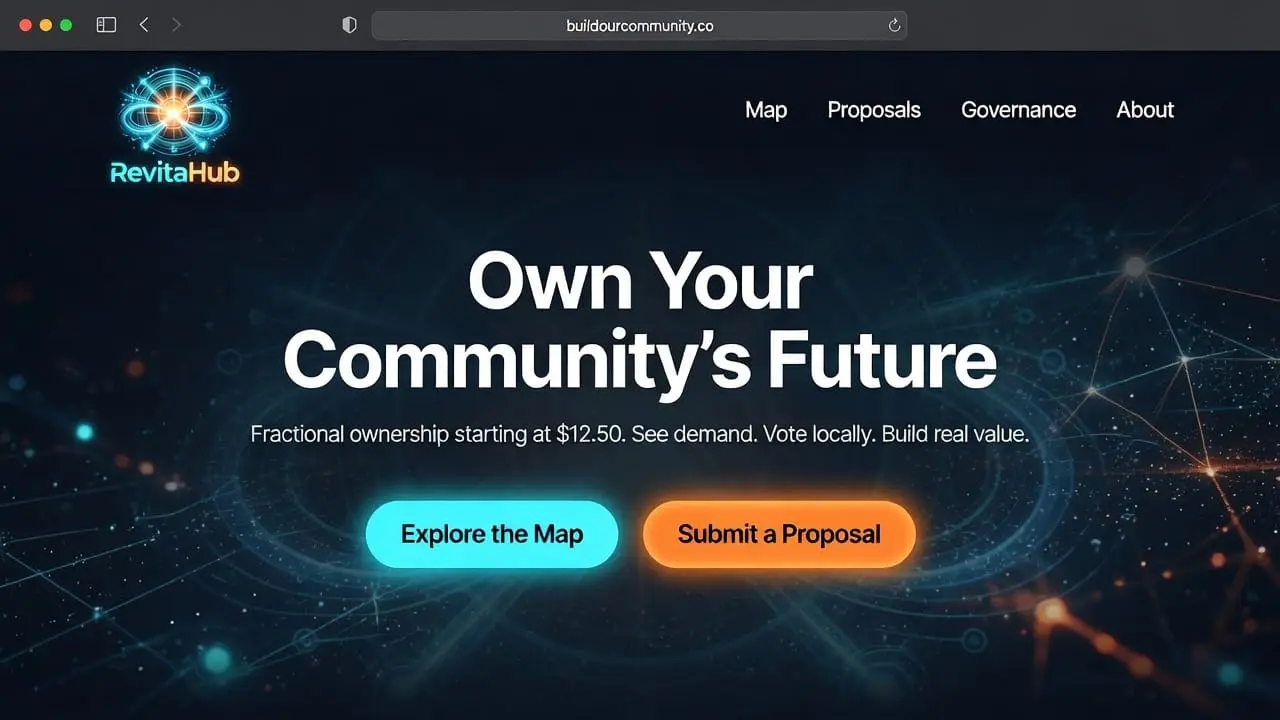
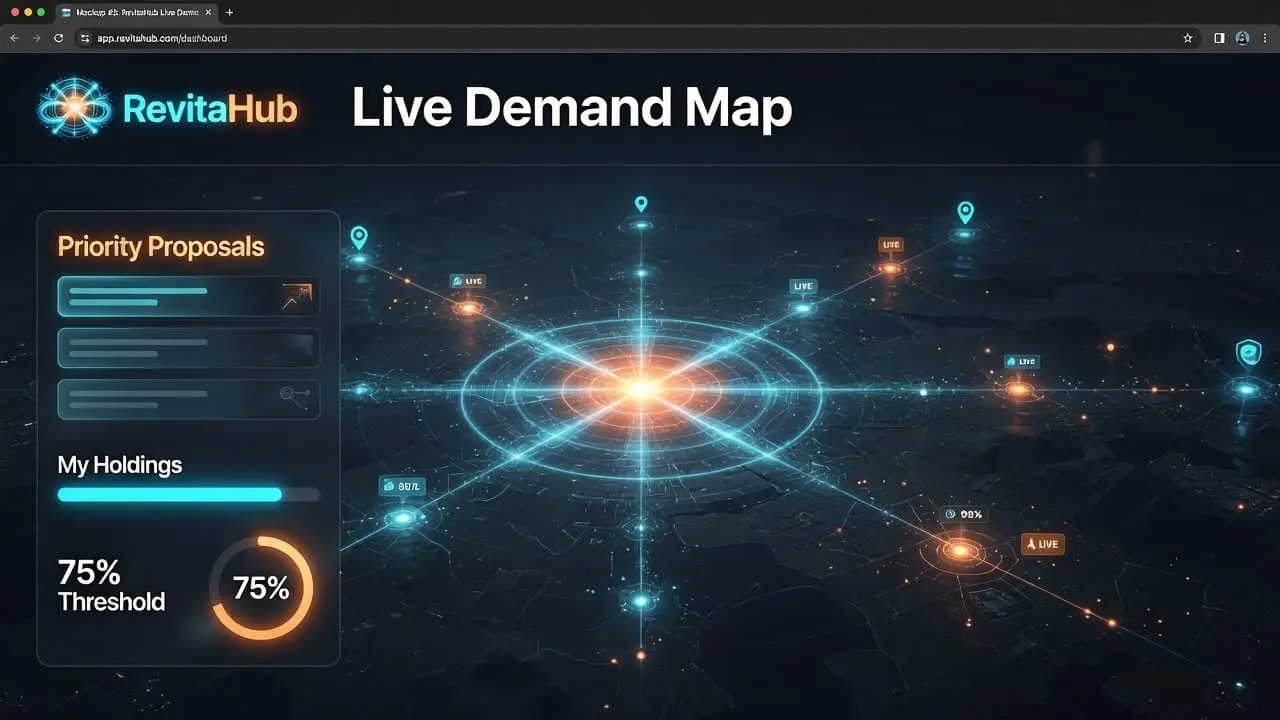
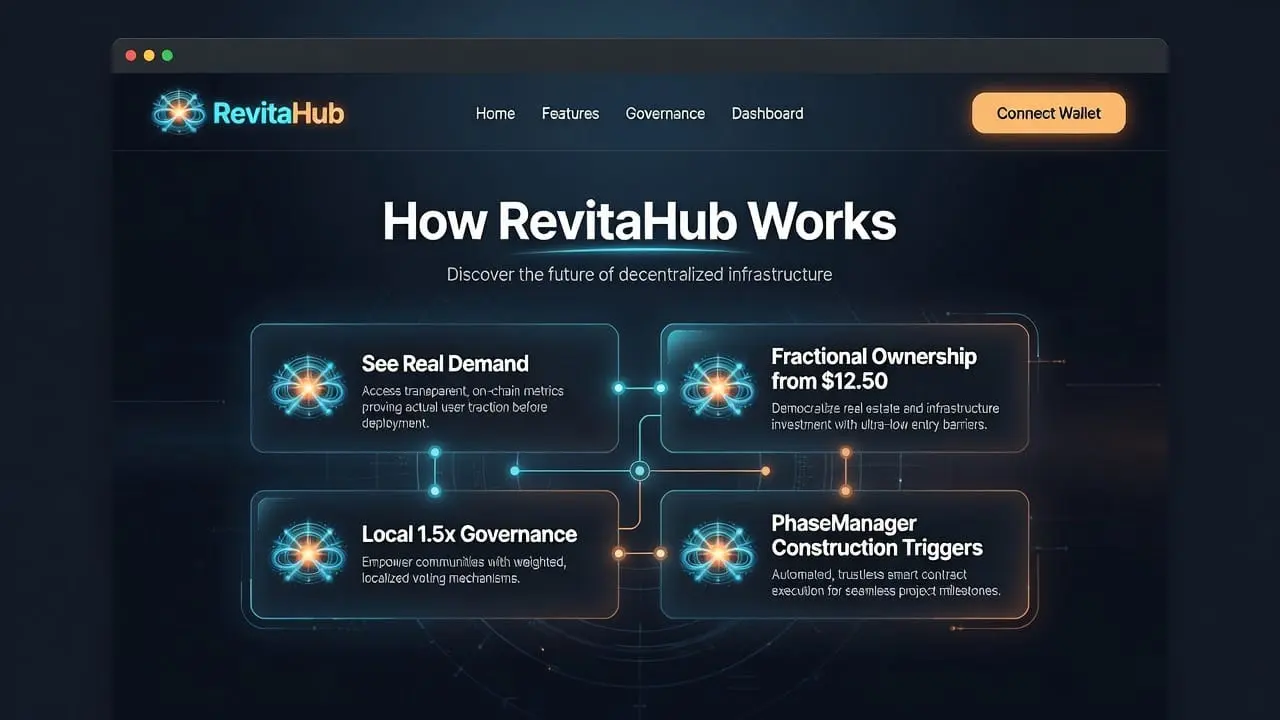
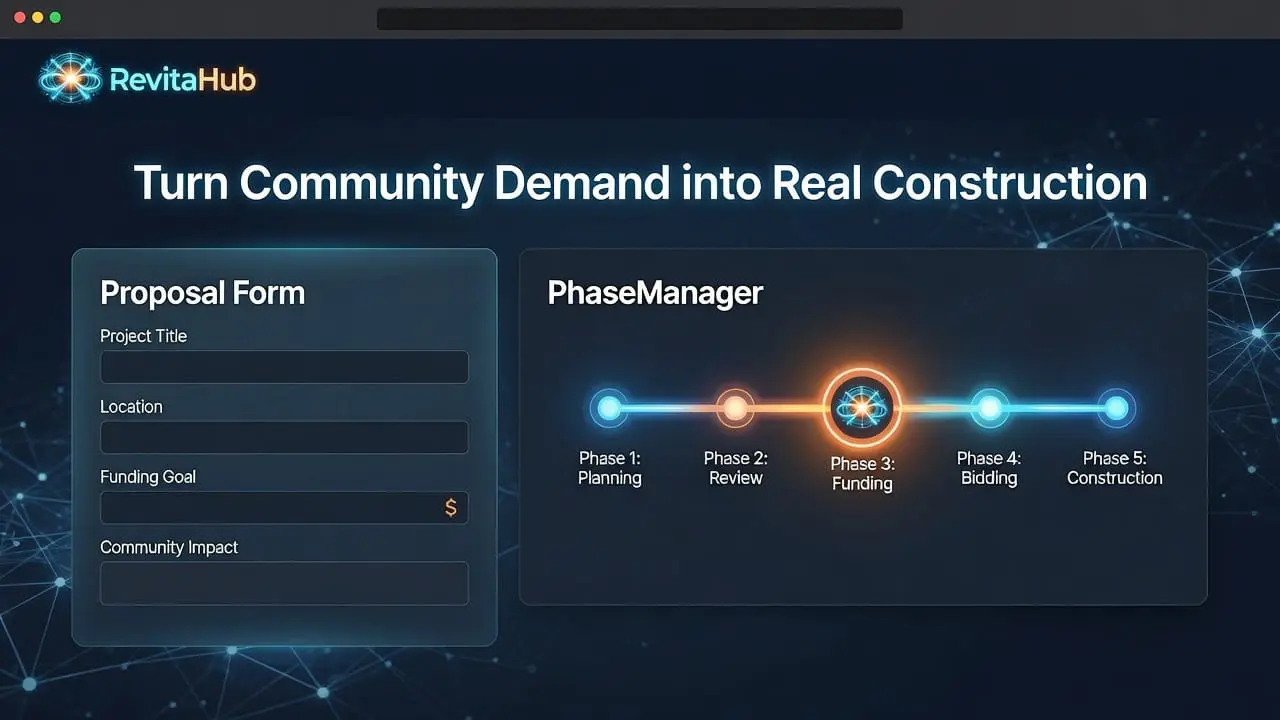
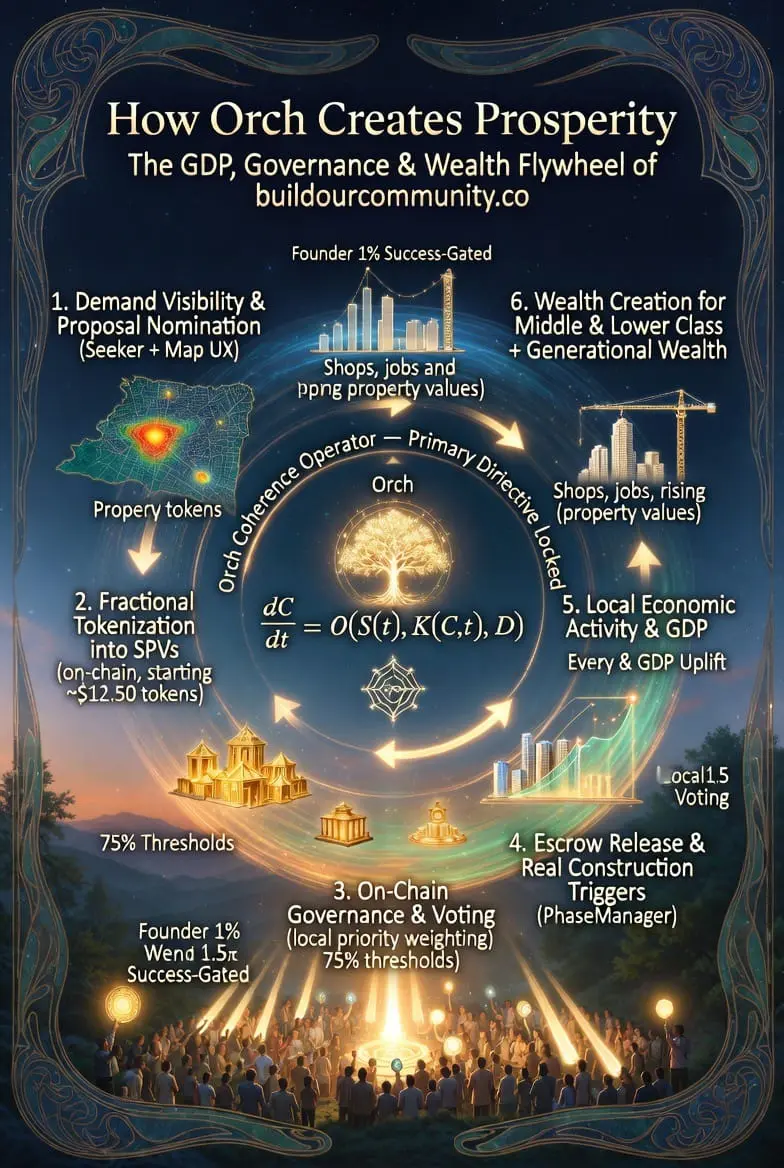
Build Our Community (RevitaHub) is a civic platform where the people who live in a place get the first say in what gets built there. Residents nominate local projects, such as housing, small business space or community facilities, and vote on which ones matter most. Local voices carry the most weight. Votes from verified county residents count 1.5 per token, compared with 1.0 for others in the state and 0.75 for the rest of the US. New projects open to the county first, then the state, and only then the whole country. Every proposal shows realistic costs and financing scenarios up front, alongside a live city model inspired by Jay Forrester's Urban Dynamics. It's a SimCity-style view of how housing, jobs and businesses affect each other over time, so people can see the likely effects of a choice before they make it. Projects only move forward with clear resident support and the property owner's agreement. We're in active development and piloting first in Canton / Cherokee County, Georgia. Follow along at buildourcommunity.co.
Product Video
Watch a video demo of RevitaHub.
Screenshots
Reviews (8)
Average 4.9 out of 5
Based on 8 reviews


This is a truly impressive and ambitious project. Bringing together real estate, community governance, blockchain technology, and fractional ownership into one platform is no small feat. There’s clearly a lot of thought and technical complexity behind this—really exciting to see!

This is a seriously ambitious project. The combination of real estate, community governance, on-chain technology, and fractional ownership makes it incredibly complex from both a technical and product perspective. Impressive work!


Comments (3)
Interesting mix of a demand map and on-chain governance. What threshold of community demand typically triggers a fractional ownership opportunity, and who vets the projects?
@nckbrz (1/5) Great question, thanks for asking. Nothing moves forward because of a single number. A project only advances when residents themselves nominate it and vote it up, and the property owner agrees.
@nckbrz (2/5) Votes from verified residents of the county count the most: 1.5 per token, compared with 1.0 for people elsewhere in the state and 0.75 for the rest of the US.
@nckbrz (3/5) Once residents choose a project, there's one fixed 365-day window to bring it together. If it doesn't come together in that window, it doesn't proceed.
@nckbrz (4/5) On vetting: every proposal shows realistic cost estimates and financing scenarios up front, so people can judge the numbers for themselves.
@nckbrz (5/5) We're still finalizing the formal review steps and legal structure, and we'll share them publicly before anything goes live. We're piloting first in Canton / Cherokee County, GA.
The governance and fractional ownership focus is intriguing for community-led projects; clearer examples of member benefits would make the model easier to evaluate.
Interesting