
Tickclip
TickClip is a buyer-first AI shopping intelligence platform

Details
- Follow on
- Categories
- Target Audience
- Pricing
- Freemium
- Platforms
Discovery signals
How AI and people discover Tickclip on PeerPush
By AI reads among AI tools
1,734 AI reads in the last 30 days, ranked against every AI tool listed.About Tickclip
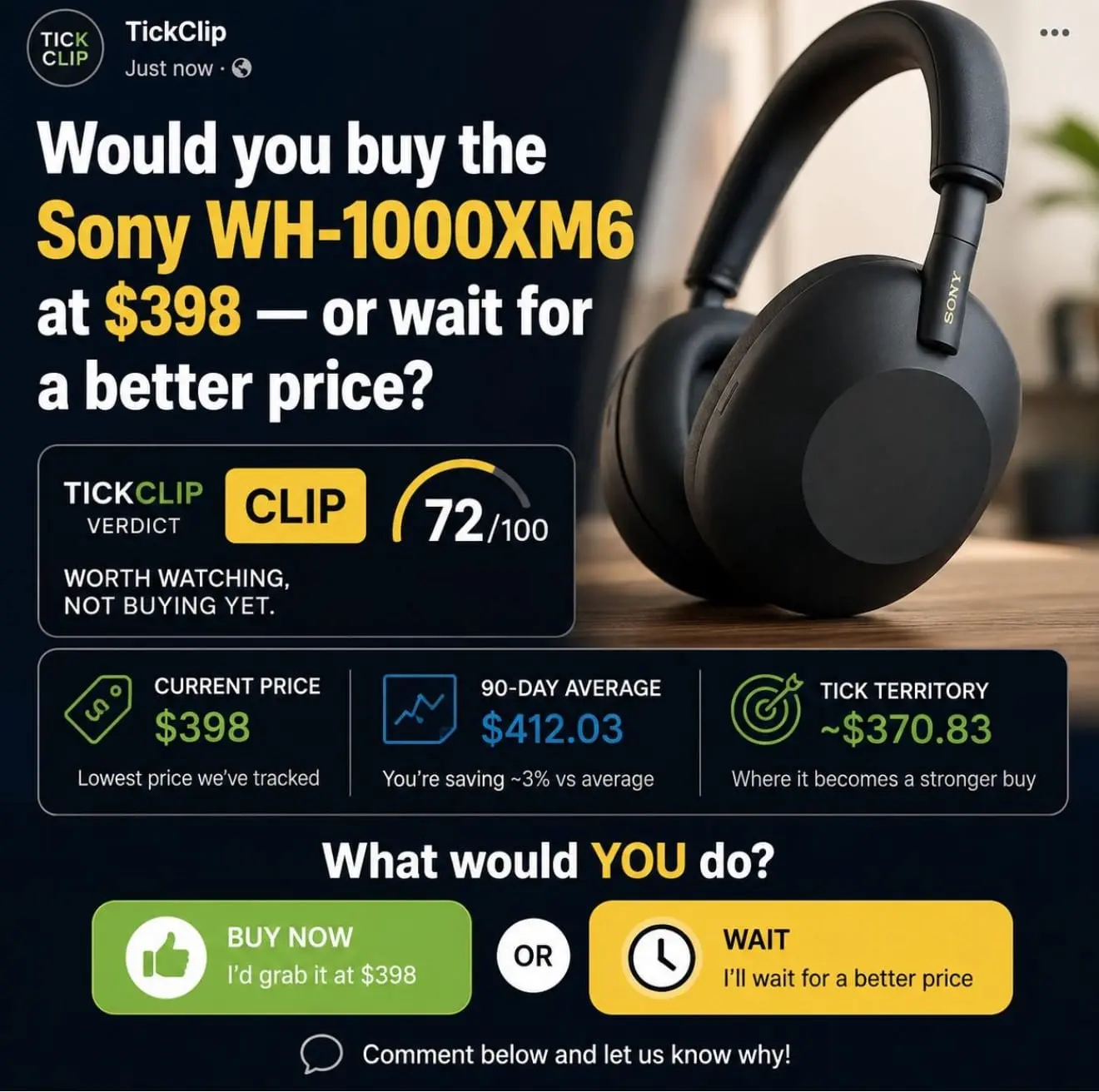
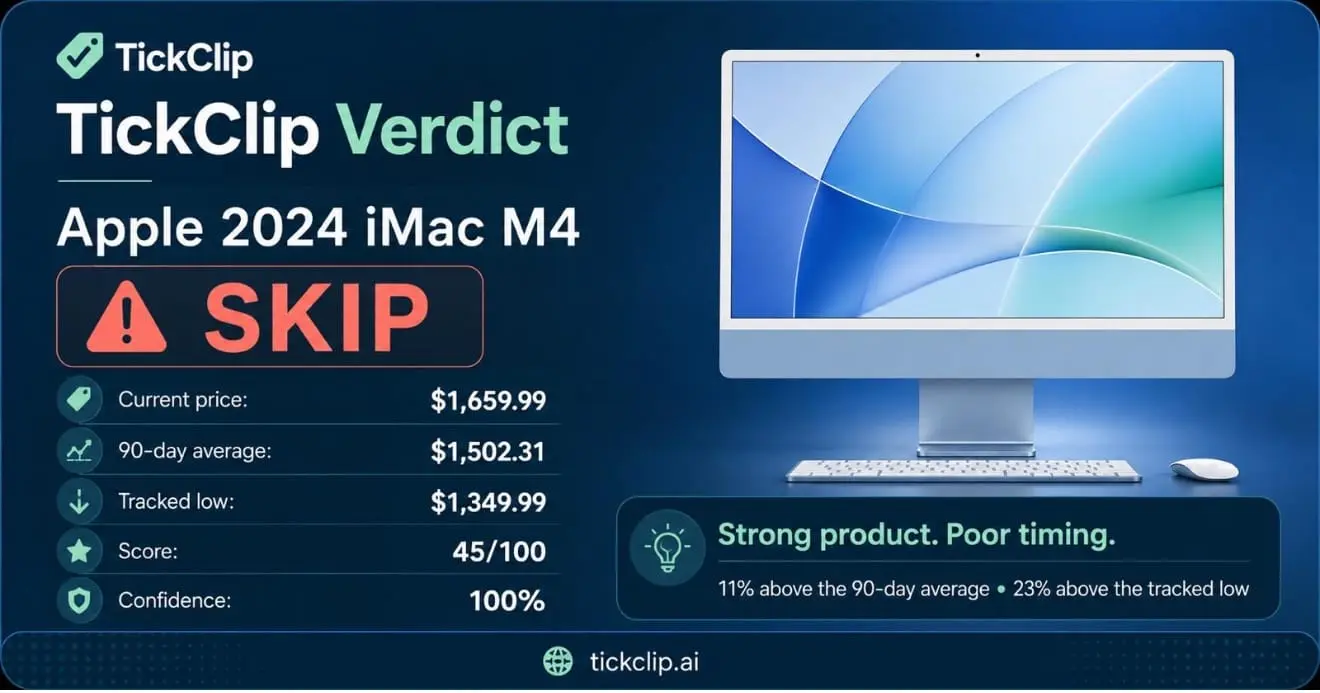
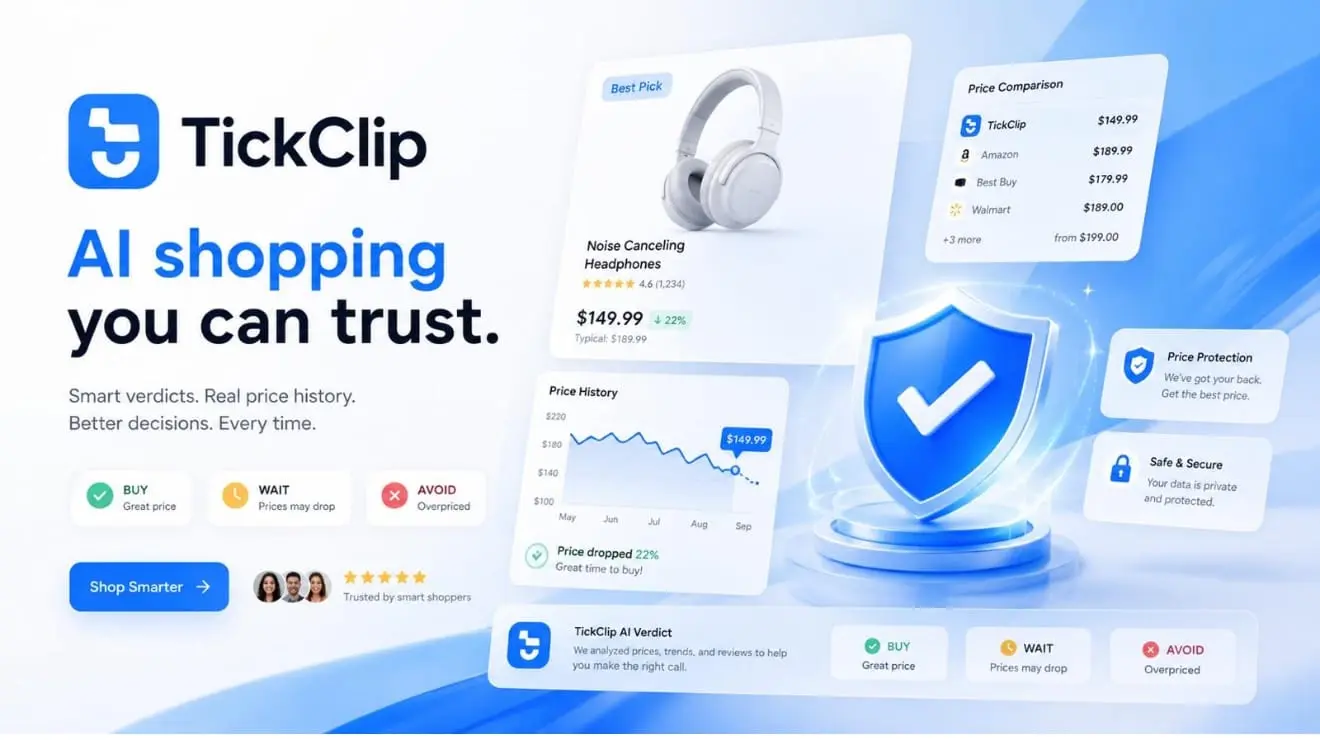
TickClip is a buyer-first AI shopping intelligence platform designed to help people make better purchasing decisions before they spend money. Instead of simply recommending products or pushing users toward checkout, TickClip analyzes whether a product is actually worth buying at a specific moment. Its decision engine produces one of three clear verdicts: Tick — Buy, Clip — Wait, or Skip — Avoid. The platform evaluates a combination of signals that traditional shopping tools often examine separately, including current price, historical pricing, price manipulation, marketplace reviews, seller context, product quality signals, demand, category benchmarks, alternatives, and overall value. These signals are converted into an explainable decision so shoppers can understand not only what TickClip recommends, but why. TickClip was created around a simple idea: most of the internet is financially incentivized to make consumers buy more. Affiliate sites earn commissions when users purchase. Marketplaces earn transaction fees. Sellers want conversions. Advertising platforms are paid to influence demand. TickClip takes a different approach by positioning itself as an independent intelligence layer between the shopper and the checkout button. The platform currently earns no affiliate commission from its verdicts, and sellers cannot pay to change or improve a TickClip recommendation. This allows the system to recommend that a shopper wait, choose an alternative, or avoid purchasing altogether when the evidence does not justify the transaction. At the center of TickClip is its proprietary shopping decision framework, which evaluates both product quality and purchase timing. A strong product can still receive a Clip verdict if the current price is unusually high. A discounted product can receive a Skip verdict if the underlying value, seller quality, review signals, or product characteristics are poor. The objective is not simply to identify discounts, but to determine whether a purchase makes economic and practical sense. Each TickClip verdict is designed as a structured decision dossier. Depending on available data, a verdict may include the current price, historical price averages, tracked lows, confidence level, manipulation indicators, reasons to buy, reasons to pause, seller information, competing products, and the conditions that could cause the recommendation to change. This makes TickClip useful not only for shoppers, but also for AI assistants, search engines, researchers, creators, publishers, and other systems that need structured purchasing intelligence. TickClip is building toward becoming a broader fiduciary layer for e-commerce: an independent decision infrastructure that can sit between consumers and marketplaces across the web. Rather than functioning as another online store or affiliate recommendation site, TickClip aims to provide the intelligence required to answer a more fundamental question: Should this person actually make this purchase? The platform's verdict system can potentially be distributed across search engines, AI assistants, browser extensions, publisher websites, creator platforms, and marketplace experiences. A shopper researching a laptop, headphones, television, appliance, or other product could access the same independent Tick, Clip, or Skip decision regardless of where the purchase journey begins. TickClip is also developing infrastructure that makes its shopping intelligence accessible to machines. Structured verdict pages, standardized product entities, machine-readable data, APIs, and MCP integrations are intended to allow AI systems such as shopping agents and conversational assistants to retrieve and cite TickClip's decisions directly. This creates a second layer to the company beyond the consumer-facing application: shopping intelligence infrastructure for the AI economy. As AI agents increasingly participate in product discovery and purchasing decisions, those systems will need independent sources capable of distinguishing between a product that can be purchased and a product that should be purchased. TickClip aims to provide that independent decision layer. The long-term vision is to build a global Shopping Index that continuously evaluates products, prices, sellers, brands, and marketplace conditions. Instead of consumers having to compare dozens of reviews, price trackers, marketplaces, and recommendation sites, TickClip can compress that information into an understandable decision supported by transparent evidence. The result is a fundamentally different type of shopping platform. Amazon helps consumers buy products. Google helps consumers find products. Price trackers show how prices changed. Review platforms help consumers evaluate opinions. TickClip helps consumers decide whether buying the product is actually the right decision. Its mission is simple: reduce bad purchases, expose misleading deals, improve price transparency, and give consumers an independent intelligen
Product Video
Watch a video demo of Tickclip.
Screenshots

Reviews (2)
Average 5.0 out of 5
Based on 2 reviews

USED IT AND NOW ADDING IT TO MY FAVORITE TOOLS
Comments (0)
No comments yet. Be the first to share your thoughts!