
VersionVeil
Site offlineMonitor vendor changelogs and pricing updates

Details
- Follow on
- Categories
- Target Audience
- Pricing
- Paid from $99
- Platforms
Discovery signals
How AI and people discover VersionVeil on PeerPush
About VersionVeil
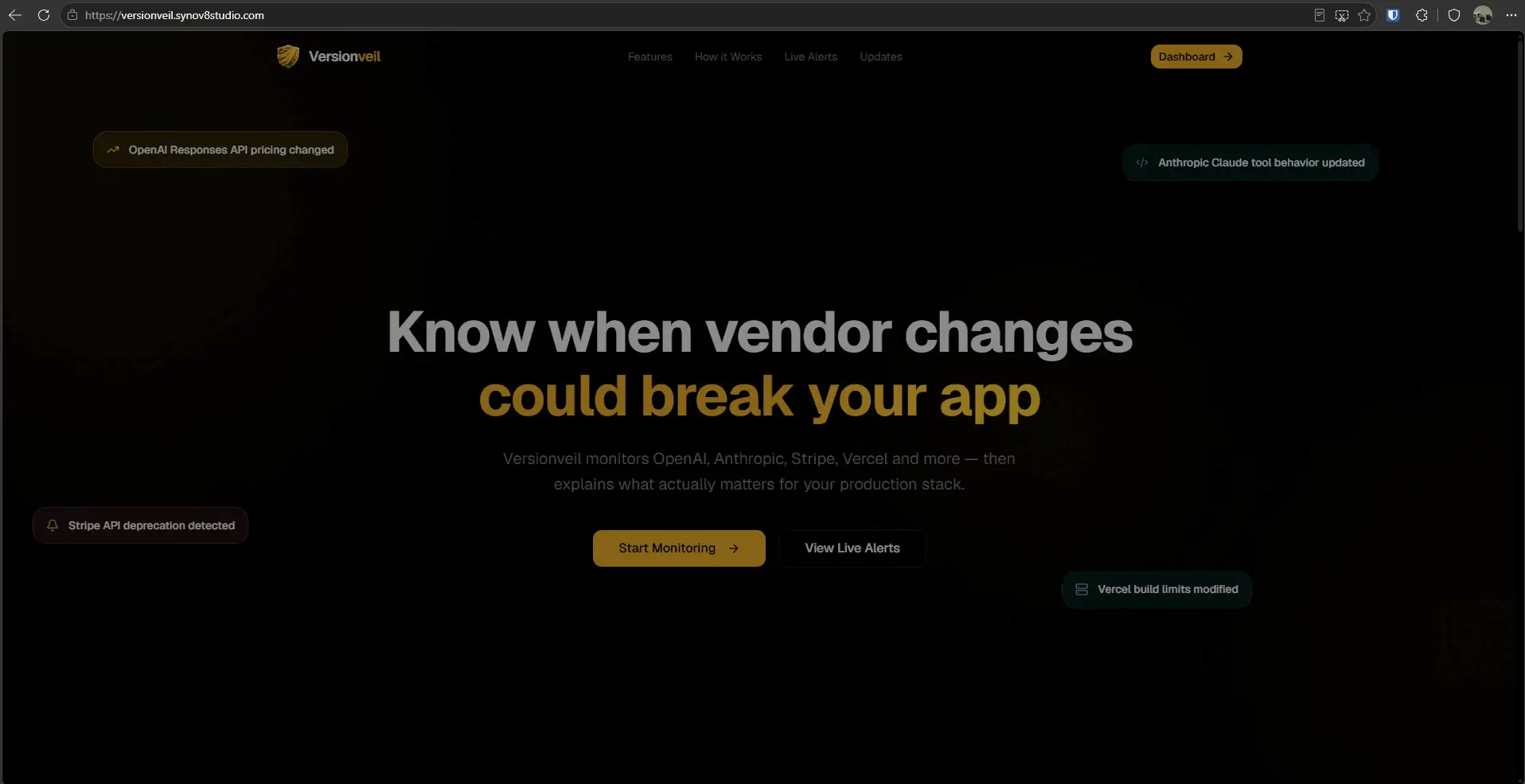
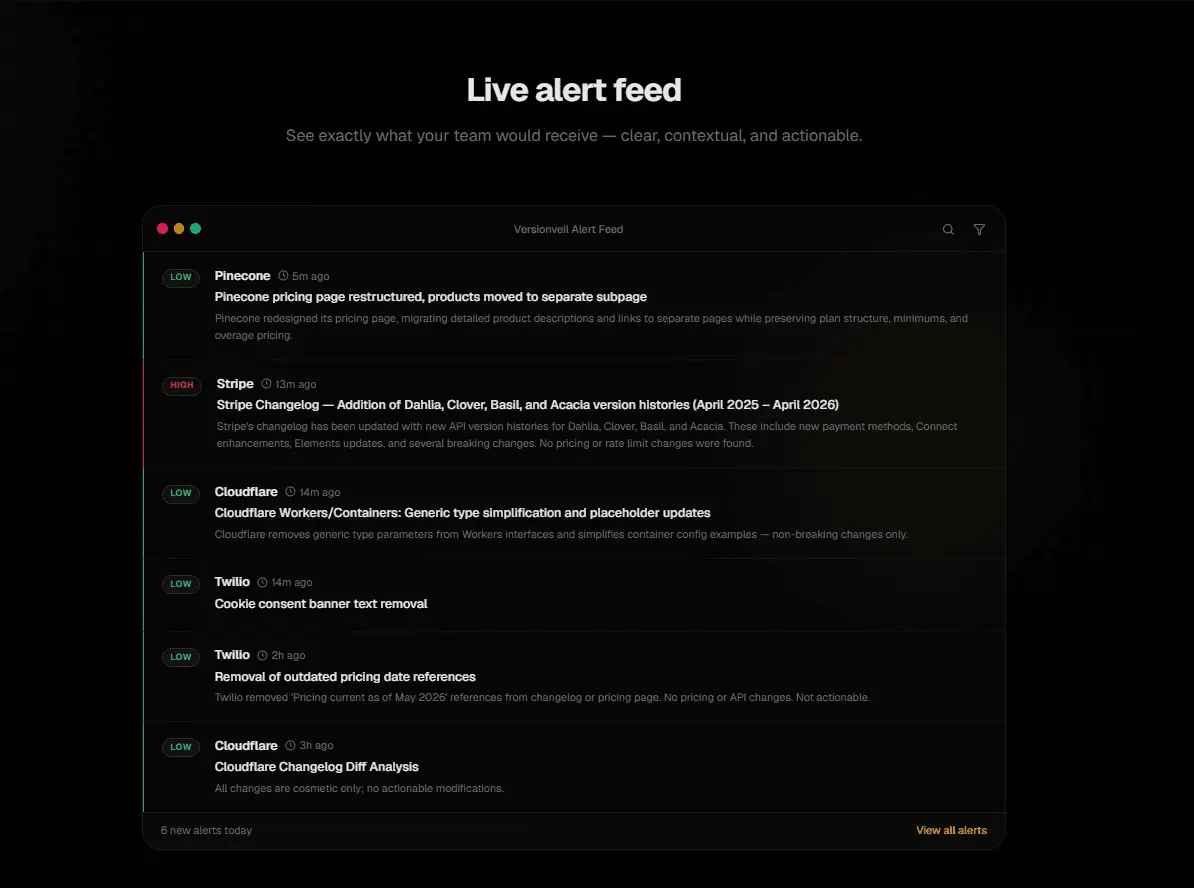
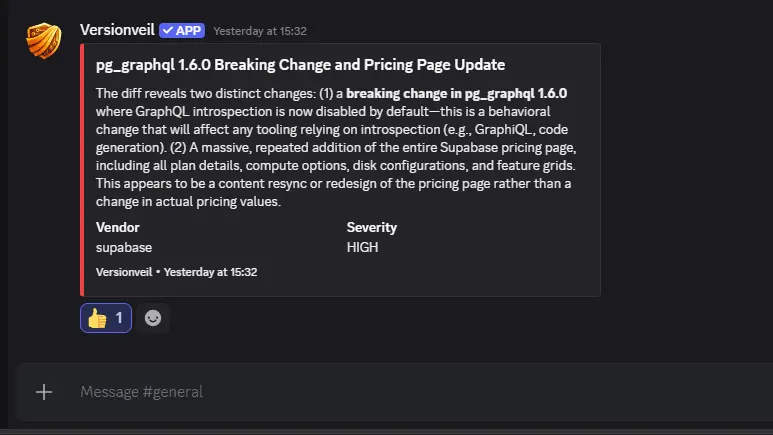
Versionveil is a realtime vendor change intelligence platform built for engineering teams that rely on external APIs, cloud services, and third-party infrastructure. Modern software is increasingly composable. Most products today are not built entirely in-house — they are assembled on top of external platforms like OpenAI, Stripe, Vercel, Supabase, Anthropic, Cloudflare, AWS, and many others. This dependency model accelerates development, but it also introduces a critical operational risk: vendors can change APIs, pricing, SDK behavior, rate limits, authentication flows, and infrastructure assumptions at any time. The challenge is not that these changes happen — it’s that they are fragmented and easy to miss. Important updates are distributed across changelogs, documentation updates, GitHub discussions, blog posts, status pages, Discord servers, and social media announcements. As a result, engineering teams often only discover them after something breaks in production, costs spike unexpectedly, or system behavior changes in subtle ways. Versionveil exists to solve this visibility gap. It continuously monitors vendor ecosystems and transforms raw updates into structured, actionable intelligence. Instead of forcing teams to manually track dozens of external sources, Versionveil centralizes change detection into a unified system. The platform works in three layers. First, it aggregates vendor updates across multiple sources and normalizes them into a consistent format. Whether the change is a breaking API update, a pricing modification, a new feature rollout, or an infrastructure incident, it is captured and stored in a unified vendor timeline. Second, Versionveil enriches each change with an intelligence layer. Every update is analyzed for severity, operational impact, and engineering relevance. It generates clear summaries of what changed, explains why it matters, and provides context around potential production risk. This includes identifying breaking changes, migration requirements, cost implications, and downstream effects on dependent systems. Third, Versionveil routes these insights to the right people at the right time. Teams can configure alert rules based on vendor and severity, ensuring critical changes are immediately delivered via Slack, Discord, or email. Lower-priority updates can be batched into digests or reports, reducing noise while preserving visibility. Beyond real-time alerts, Versionveil maintains a searchable history of all vendor changes. This creates a long-term operational knowledge base that teams can use to investigate incidents, trace system behavior back to external changes, and understand how their dependencies evolve over time. A key part of Versionveil is its routing model. Instead of treating all updates equally, teams can define structured rules that map specific vendors and severities to specific destinations. For example, a breaking change in an AI API can be routed directly to backend or platform engineers, while billing-related updates from Stripe can be routed to finance or leadership teams. This ensures that information flows only to the people who need it. At its core, Versionveil is designed around three critical questions for every vendor change: What changed? Why does it matter? What should we do about it? This shifts vendor updates from passive notifications into actionable engineering intelligence. Versionveil is particularly valuable for teams operating in high-dependency environments: AI startups relying on LLM APIs, SaaS platforms built on Stripe and Vercel, and modern products composed of many integrated services. In these environments, dependency risk is a first-class reliability concern, yet it is rarely monitored systematically. Over time, Versionveil also becomes an analytical layer over a team’s entire vendor stack. It enables visibility into which providers introduce the most instability, which APIs change most frequently, and where operational risk is concentrated. This can inform architecture decisions, vendor selection, and long-term engineering strategy. Ultimately, Versionveil reduces surprise in modern software systems. It helps engineering teams stay ahead of external changes instead of reacting to them after production impact. By turning fragmented vendor updates into structured, actionable intelligence, Versionveil improves reliability, reduces operational risk, and gives teams more confidence in the systems they ship.
Screenshots
Reviews (0)
No reviews yet. Be the first to rate this product!
Comments (2)
Great tool for tracking critical vendor changes. Centralizing all these scattered updates across GitHub, docs, and changelogs really solves a real pain point for dev teams.
Realtime vendor change intelligence for engineering teams — know about API, pricing, and infra changes before they break production.