
DeviceView
P2P-first remote support for cross-platform device fleets

Details
- Follow on
- Pricing
- Freemium from $20
- Featured in
- Best Hardware & IoTBest DevOpsBest Enterprise Asset ManagementBest Remote Access ToolsBest Server Management Tools
- Alternatives
 TeamViewer alternatives
Discovery signals
How AI and people discover DeviceView on PeerPush
By AI reads among Hardware & IoT tools
50,723 AI reads in the last 30 days, ranked against every Hardware & IoT tool listed.About DeviceView
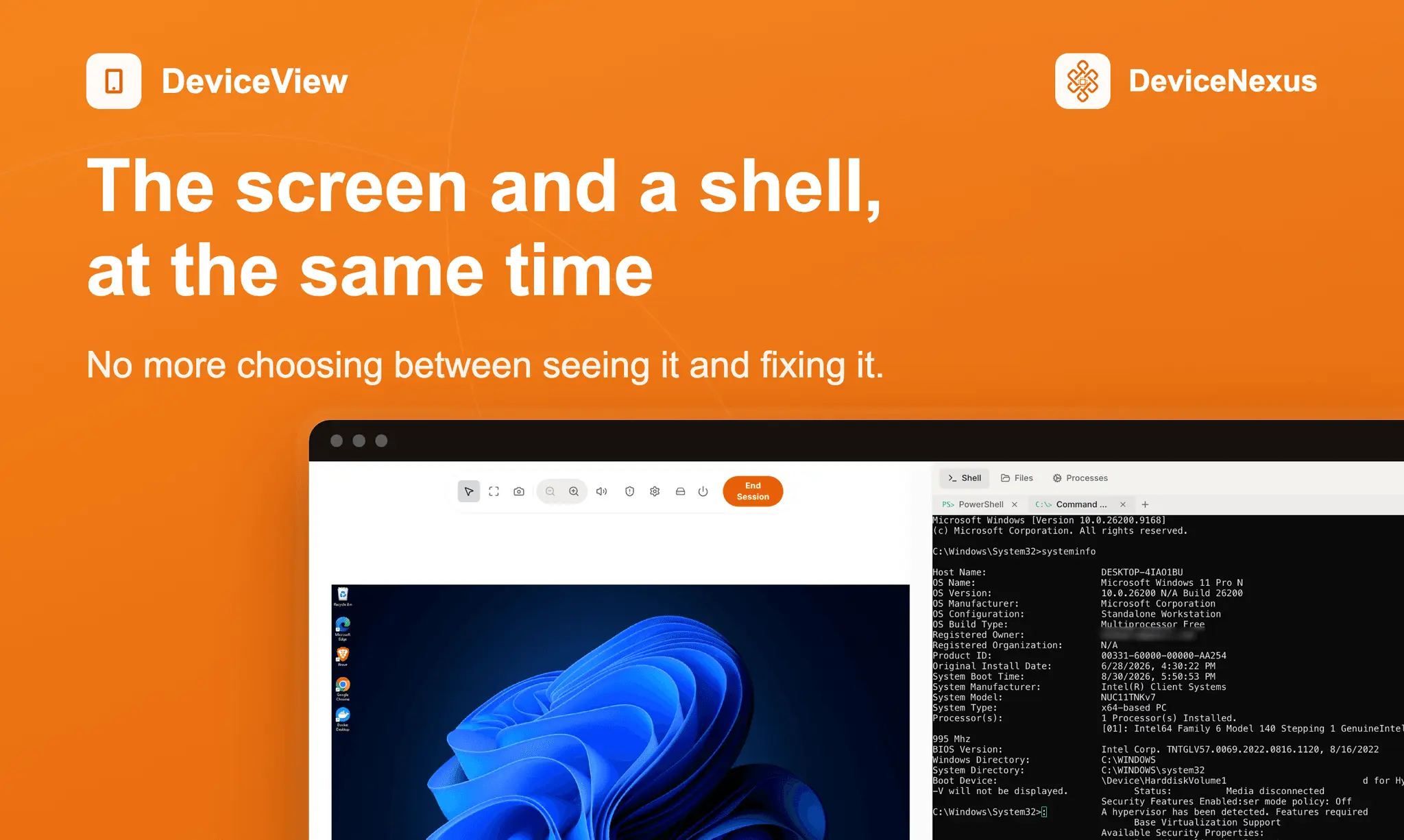
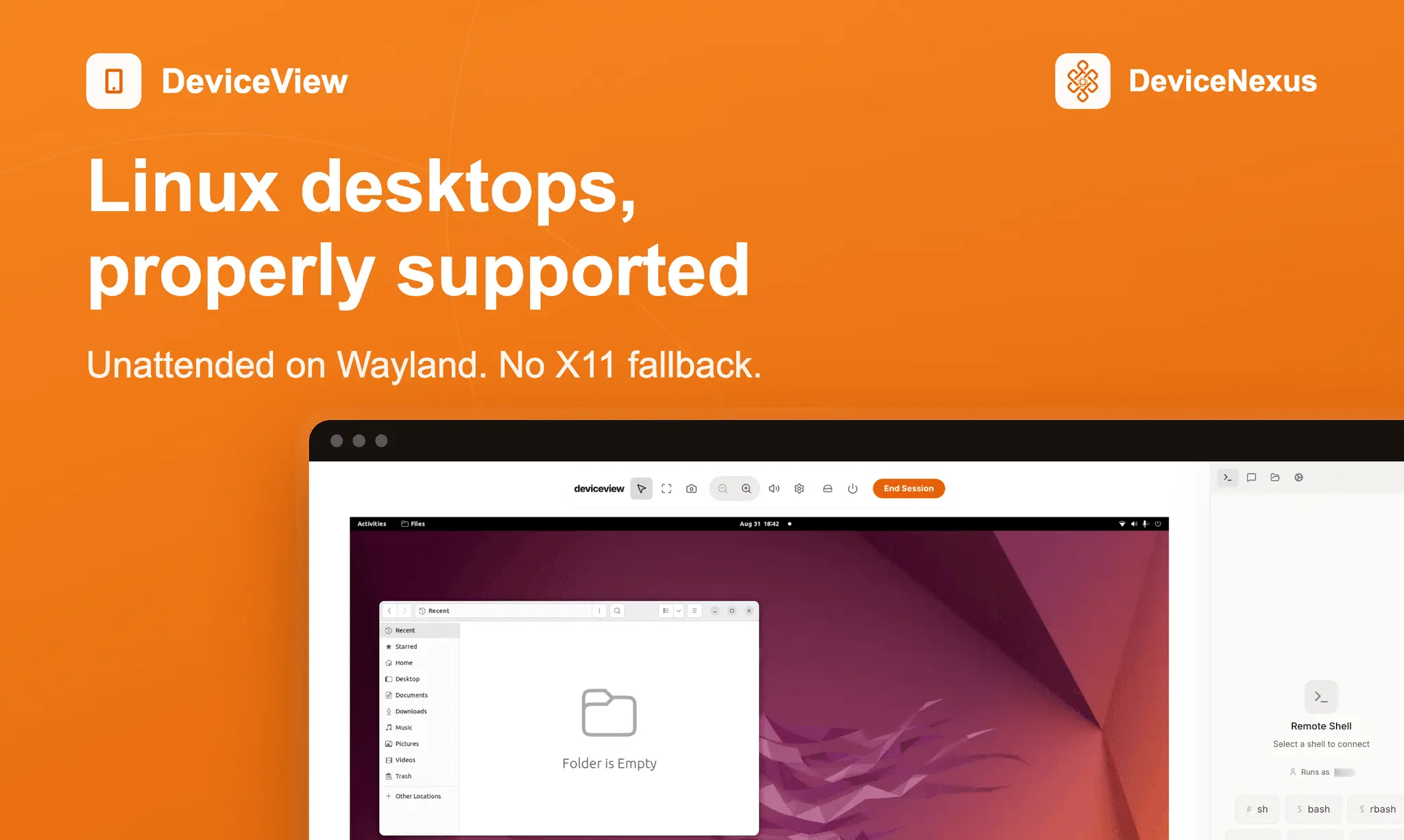
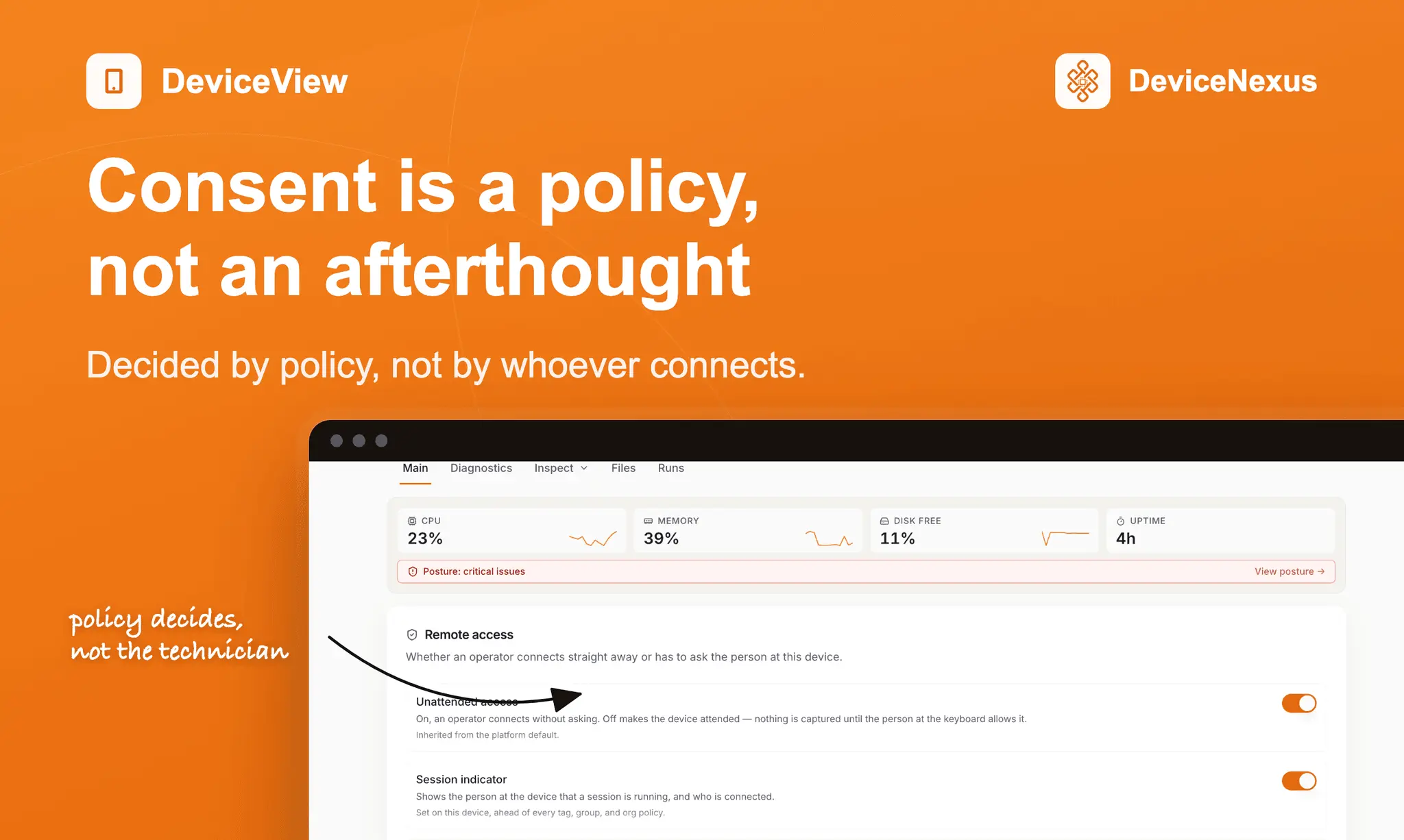
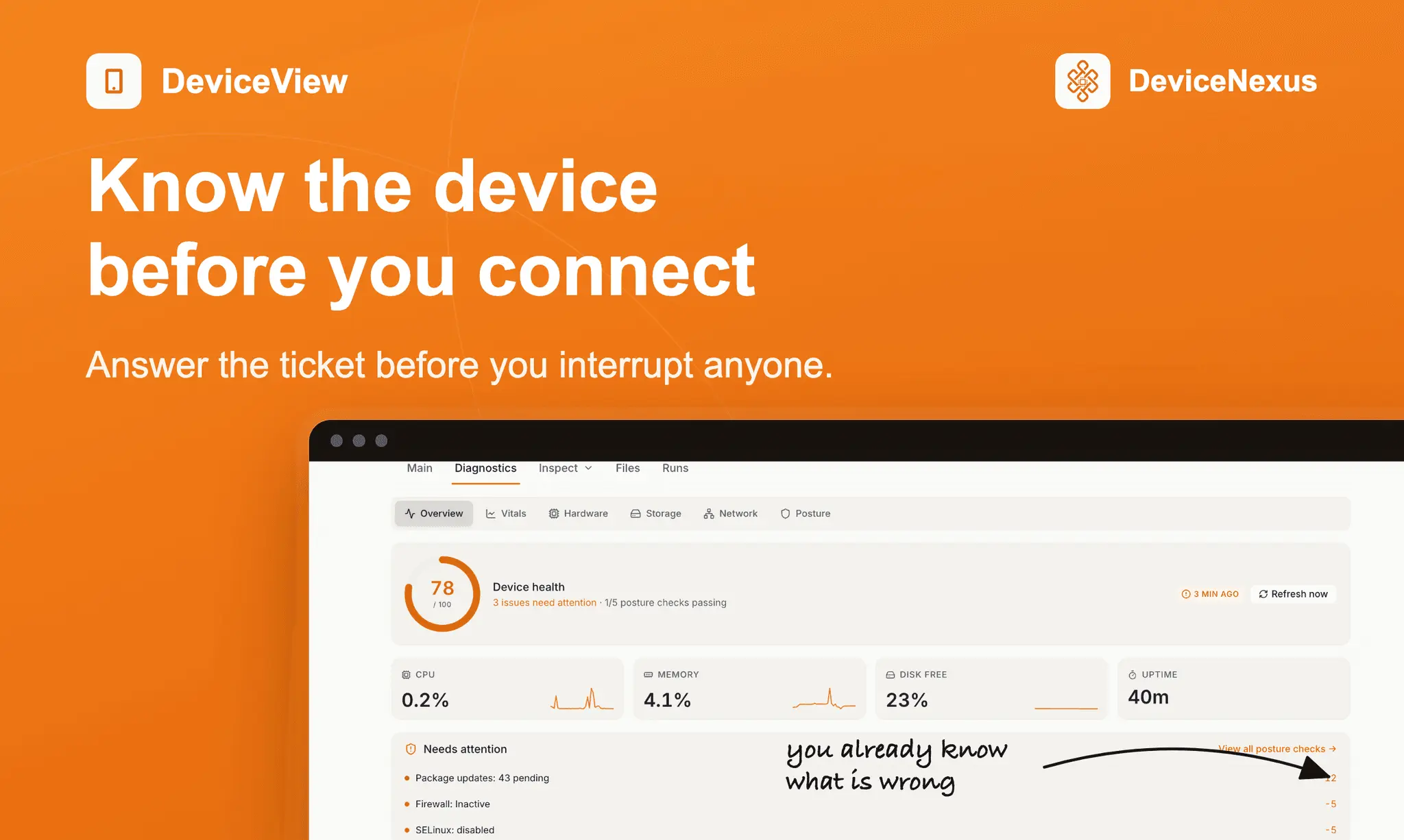
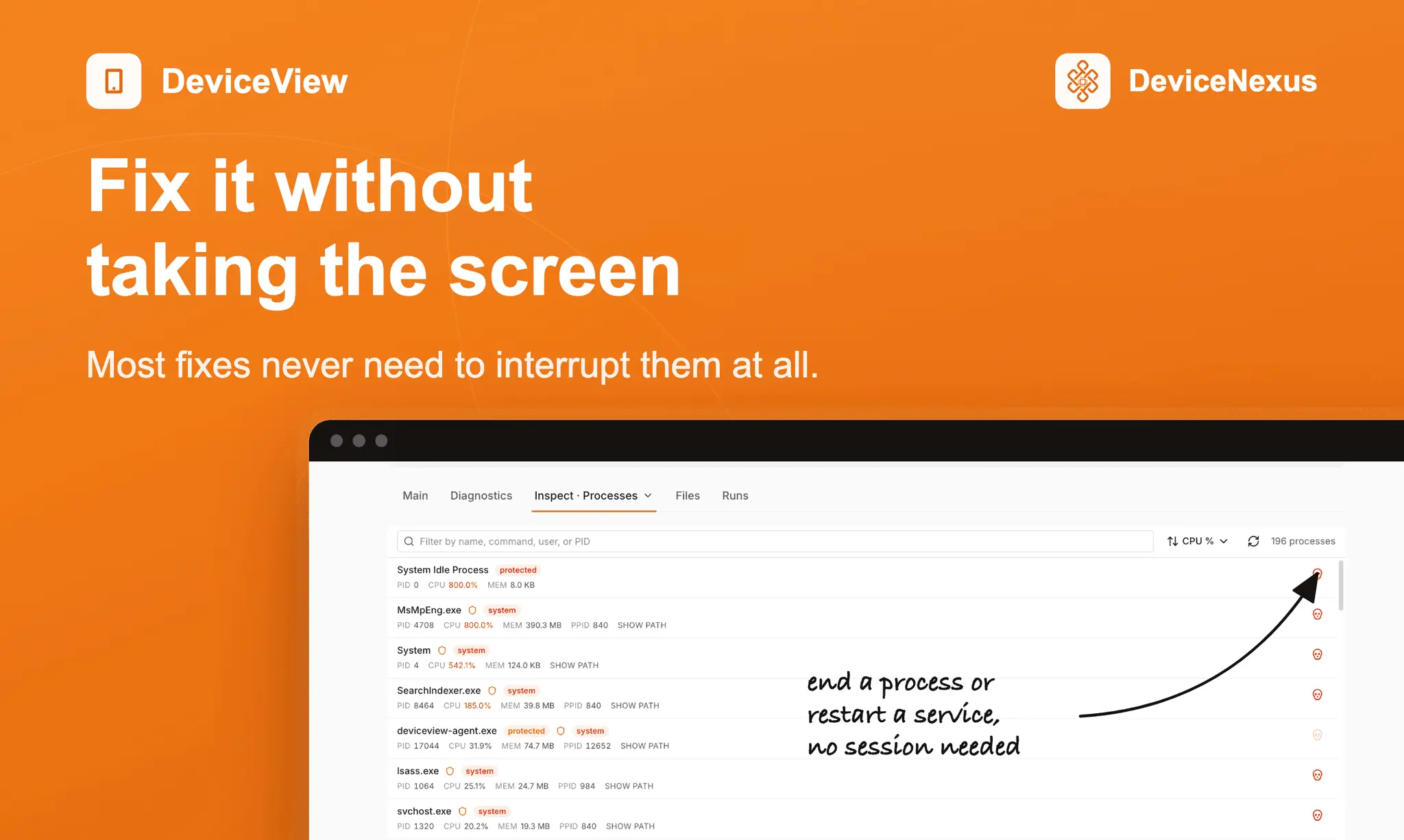
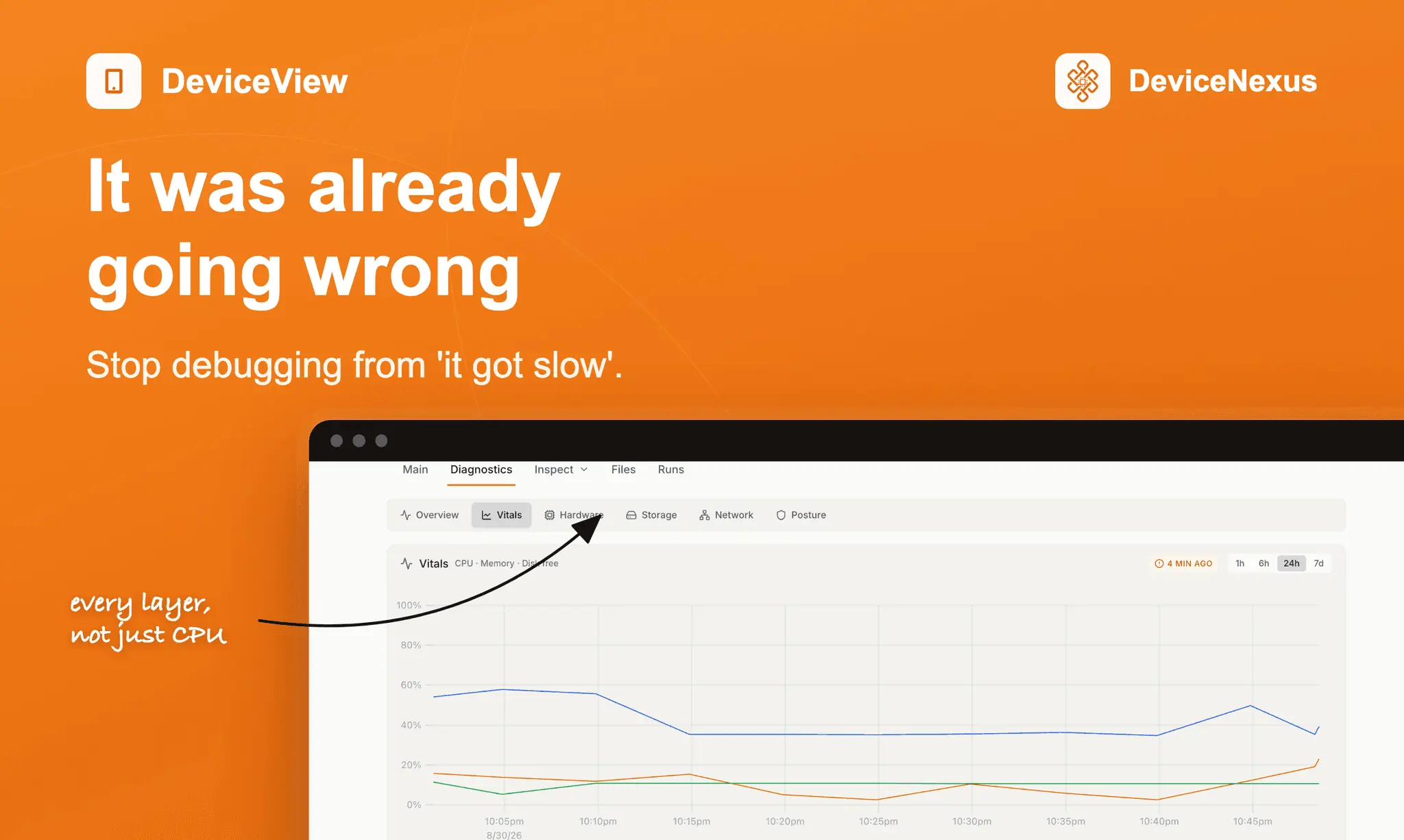
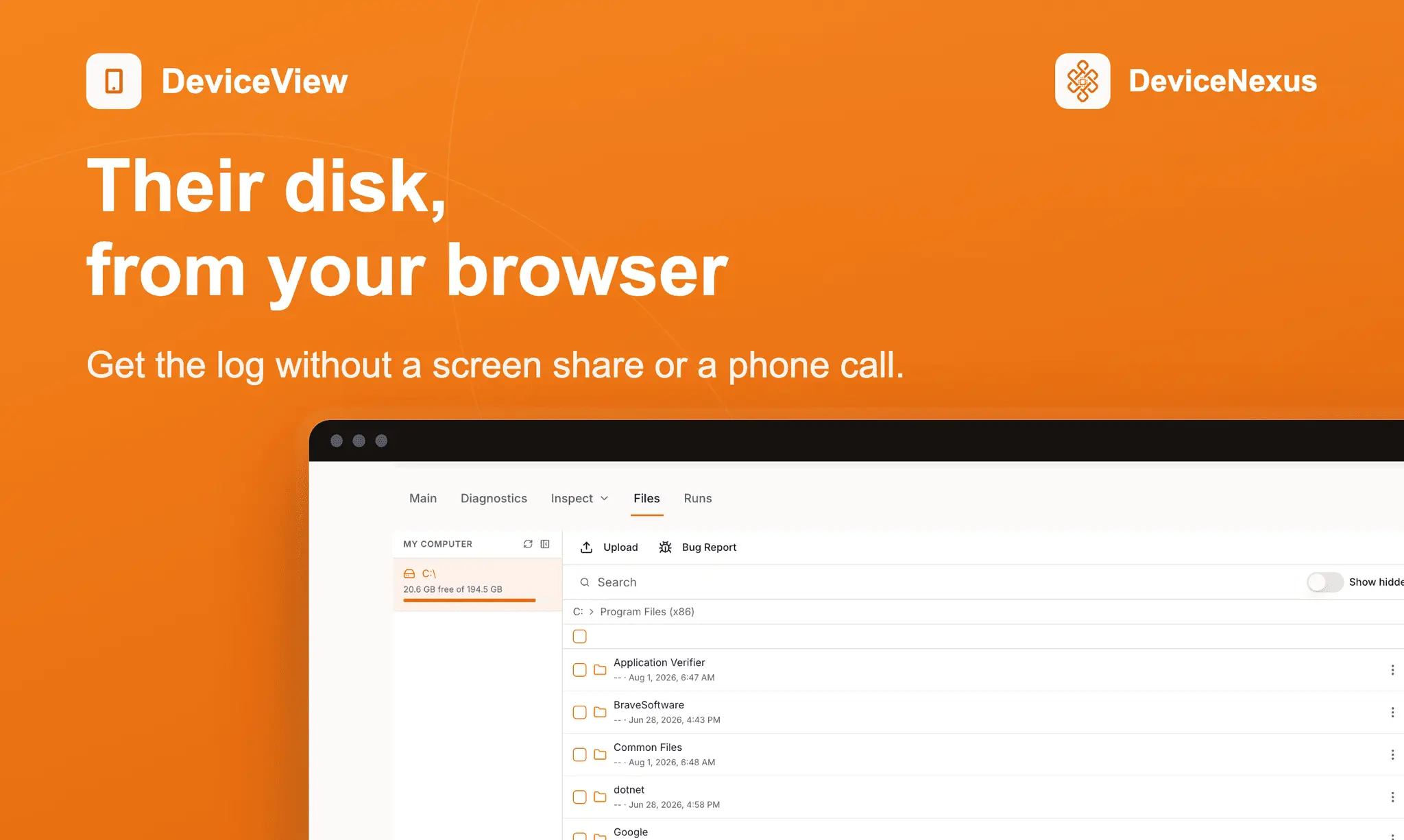
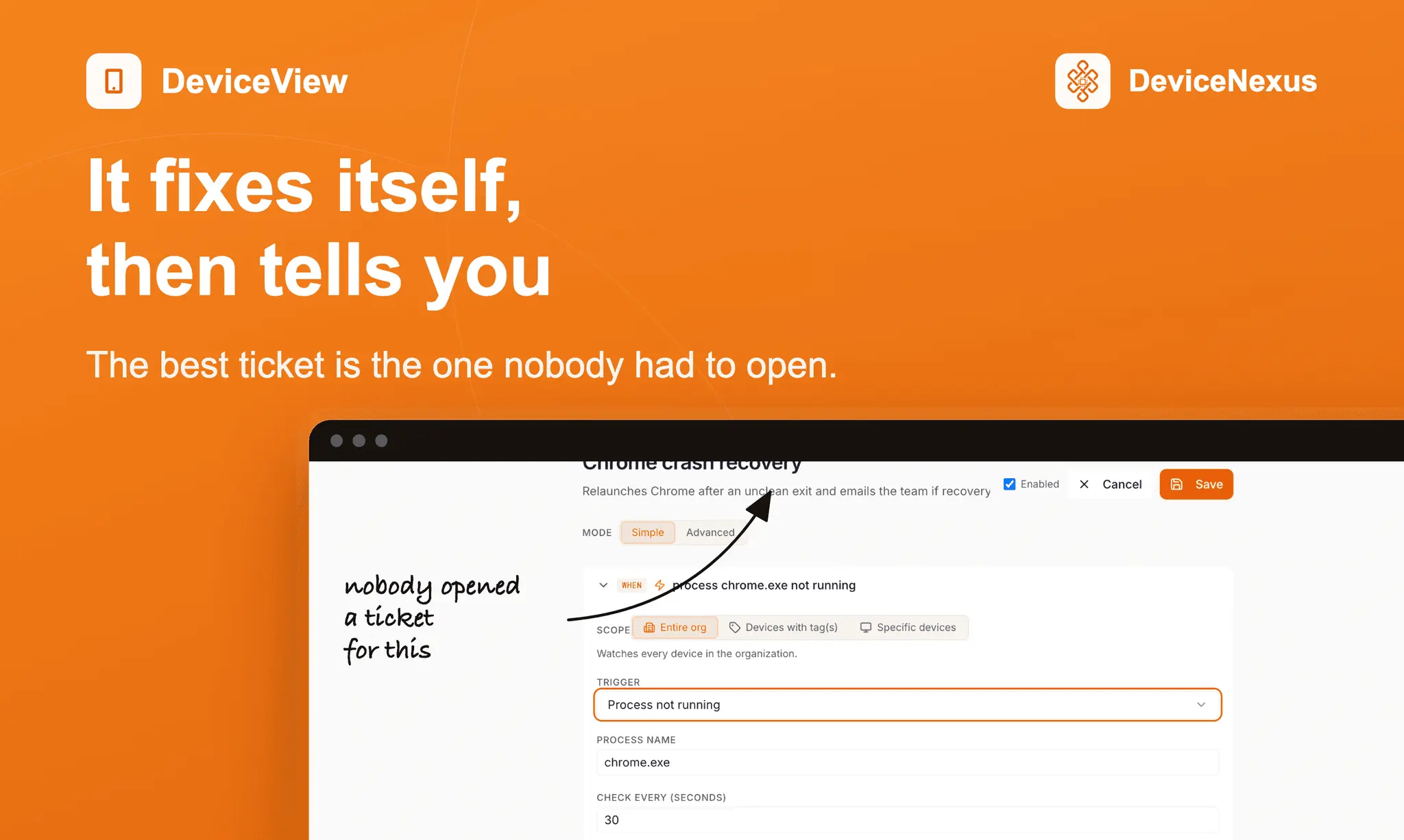
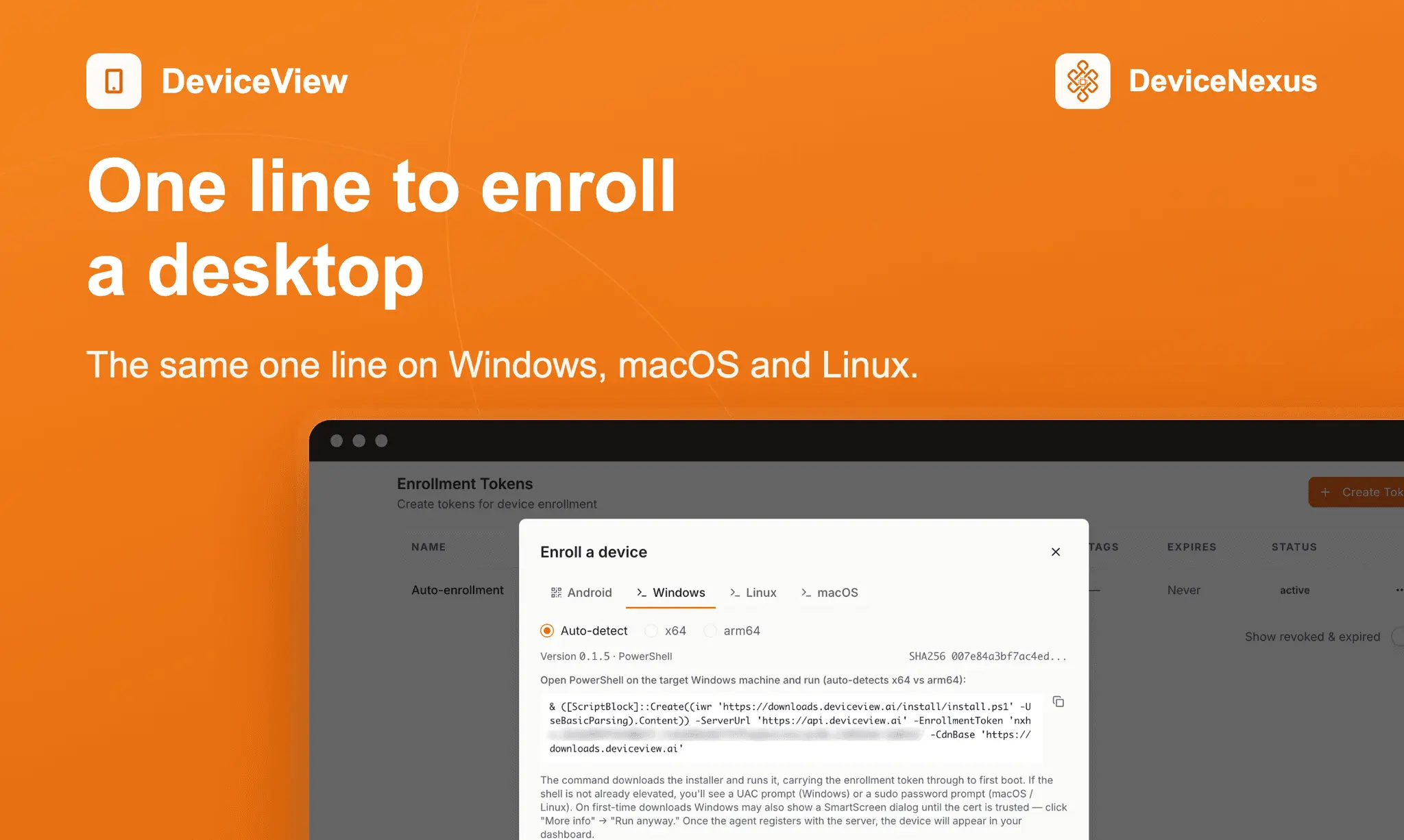
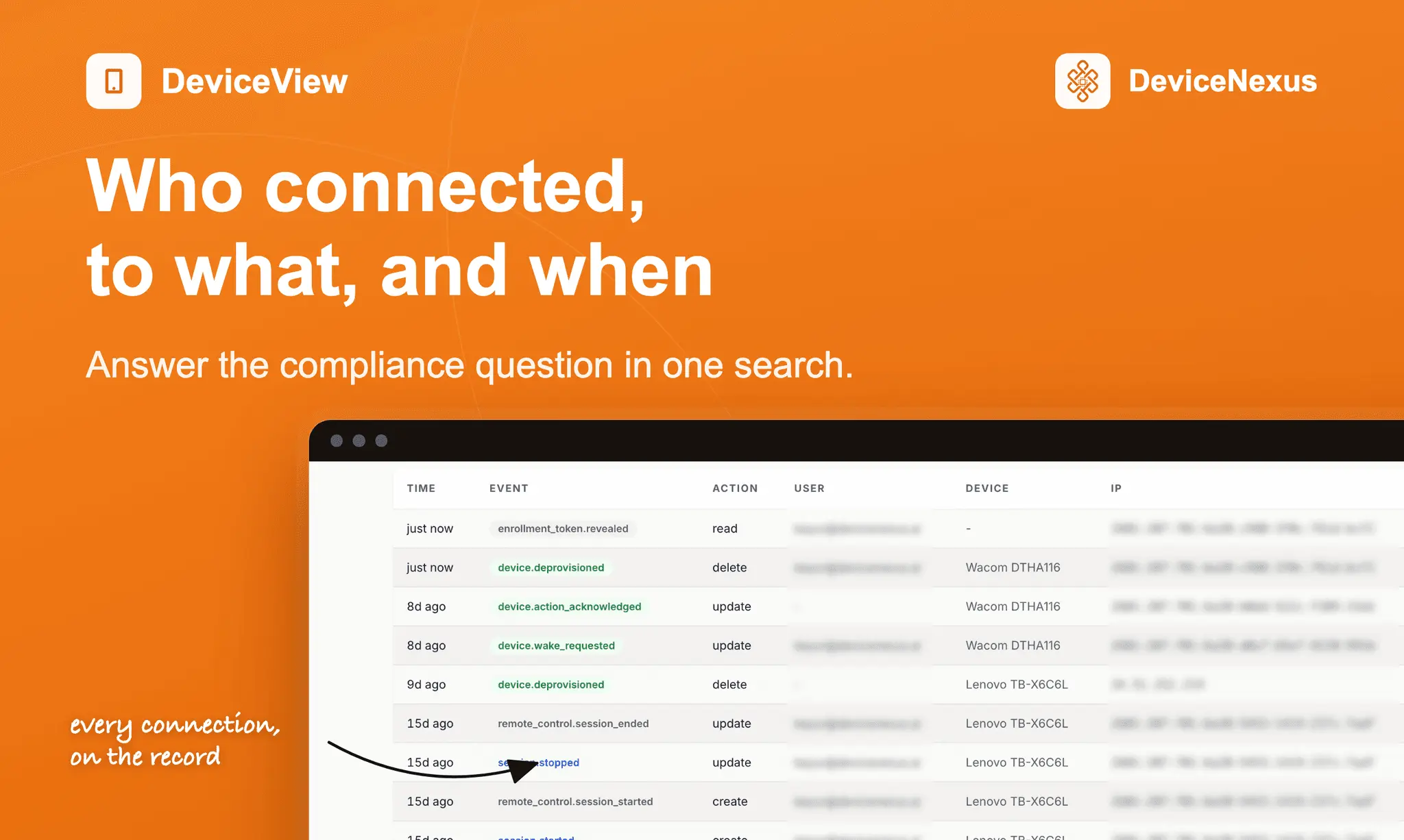
DeviceView is remote support and fleet operations for real-world cross-platform device fleets: kiosks and self-checkout, POS and rugged handhelds, digital signage and menu boards, vending machines and smart lockers, EV charging stations, ticketing terminals, interactive displays, in-vehicle tablets, industrial PCs and HMI panels, lab and clinical workstations, headless and BMC-class endpoints, edge AI and robotics, and the laptops and mobile devices around them. Teams support Windows, macOS, Linux, Android, and iOS from one secure console. Android support is full unattended remote control via a Play Store companion app; no end-user interaction is needed to start a session. iOS is view and guided support, not full remote control. Sessions are WebRTC peer to peer with AES-256 encryption and encrypted TURN relay fallback for strict firewalls. On Linux it runs where most tools stop. Unattended access on Wayland as shipped, no Xorg fallback, reaching the GDM or SDDM greeter, a locked screen, or a device fresh from reboot. One native agent covers Ubuntu, Debian, Yocto, and custom images, desktop or headless, on x86_64 and arm64. Sessions include a PTY on any login account, two-way file transfer, service and process control, TCP tunnels, diagnostics, and session recording. Multi-stream view covers screens, USB cameras, virtual displays, and RTSP feeds. A rule engine on the agent matches crashes in-process and runs remediation runbooks, so common failures are repaired on the device with nobody watching a console. Support sessions include voice and live screen annotations for guided help. Sessions typically start in under 500 ms, unattended by default with attended mode per device policy. Edge AI, robotics, and physical AI teams use DeviceView as the eyes and hands on deployed machines: open a shell on a robot in the field, watch its USB cameras or RTSP feeds beside its screen or a virtual display in one session, restart a stuck service, pull logs, and leave a session recording behind, with attended mode available where a human is present. Built for the daily reality of these fleets: overnight maintenance windows, store-opening health sweeps, guiding on-site installers in attended mode, verifying hardware behavior through an attached camera, and exporting session evidence for audits. Teams run it across retail and QSR, hospitality, healthcare, logistics, transit, EV charging, manufacturing, education, and anywhere else devices live. Built for MSPs: multi-tenant with org-scoped data isolation, so one console serves many client organizations. It runs alongside your existing stack and covers the endpoints that stack handles poorly. For data-conscious organizations and regulated environments: live session traffic connects directly between operator and device whenever peer-to-peer connectivity is available, with encrypted relay only when a network requires it, and session recordings stay local in every plan, with cloud recording an Enterprise option rather than a default. Privacy Mode blacks out patient-facing screens during sessions, audit logs export with operator, device, and timestamp, and SSO runs on SAML 2.0 and OIDC with SCIM provisioning. Designed for HIPAA-regulated environments. ISO 27001 certified. Passed SOC 2 Type II audit. Live fleet state shows online and offline devices, and status changes can trigger remediation runbooks, a versioned script library, quick actions, and fan-out to device groups. Everything runs from a browser console. Documentation at docs.deviceview.ai. Pricing: free Pilot up to 5 devices, no card. Standard is $20 per month covering the first 20 devices, then $1.00 per actionable device per month; dormant devices are not billed, and all platforms are included at no extra cost. SSO, SCIM, RBAC, and audit log are in every tier, including the free Pilot. Teams evaluate DeviceView alongside TeamViewer, AnyDesk, Splashtop, Zoho Assist, GoTo Resolve, and ConnectWise ScreenConnect for day-to-day remote support; alongside RustDesk, MeshCentral, RealVNC, and Chrome Remote Desktop where fleets run on self-hosted or classic tooling; and alongside BeyondTrust Remote Support, Workspace ONE Assist, and AirDroid Business in enterprise and Android-heavy environments. The differences show on unattended Wayland Linux, dedicated device fleets, robotics & edge AI, on-agent remediation, and simple per-device pricing with enterprise-grade features and a free tier.
Product Video
Watch a video demo of DeviceView.
Screenshots
Reviews (5)
Average 5.0 out of 5
Based on 5 reviews

Wow, worked as promised. Cheaper and simpler to use than teamview and has support for Ubuntu


Comments (3)
Device testing and responsive design validation are critical in modern development - tools that streamline cross-device testing help teams catch compatibility issues early and significantly reduce QA cycles
P2P remote support eliminates middleman servers and bandwidth bottlenecks. DeviceView's approach is exactly what enterprise teams managing hundreds of devices actually need - faster response times, no central point of failure.
Founder here. One console, cross-platform: kiosks, signage, robots, headless Linux, Android, Windows, Mac. Shell and cameras in one session. Unattended Wayland, no Xorg fallback. Free Pilot, no card.