
Ordica
Map your business platforms and manage account access
Details
- Follow on
- Target Audience
- Operations ManagersSmall Business OwnersIT Professionals
- Pricing
- Subscription from $35
- Platforms
- Web
Discovery signals
How AI and people discover Ordica on PeerPush
About Ordica
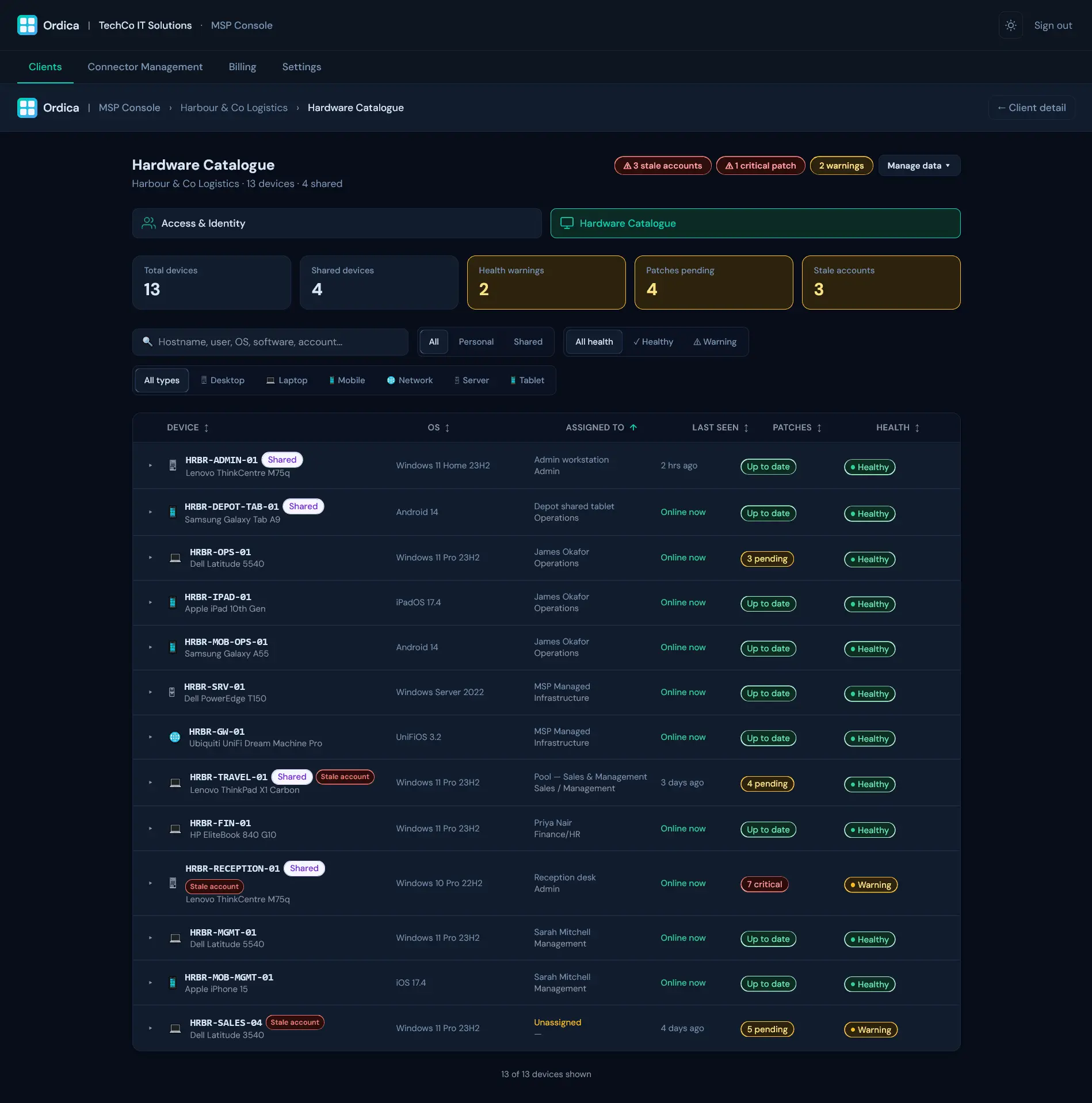
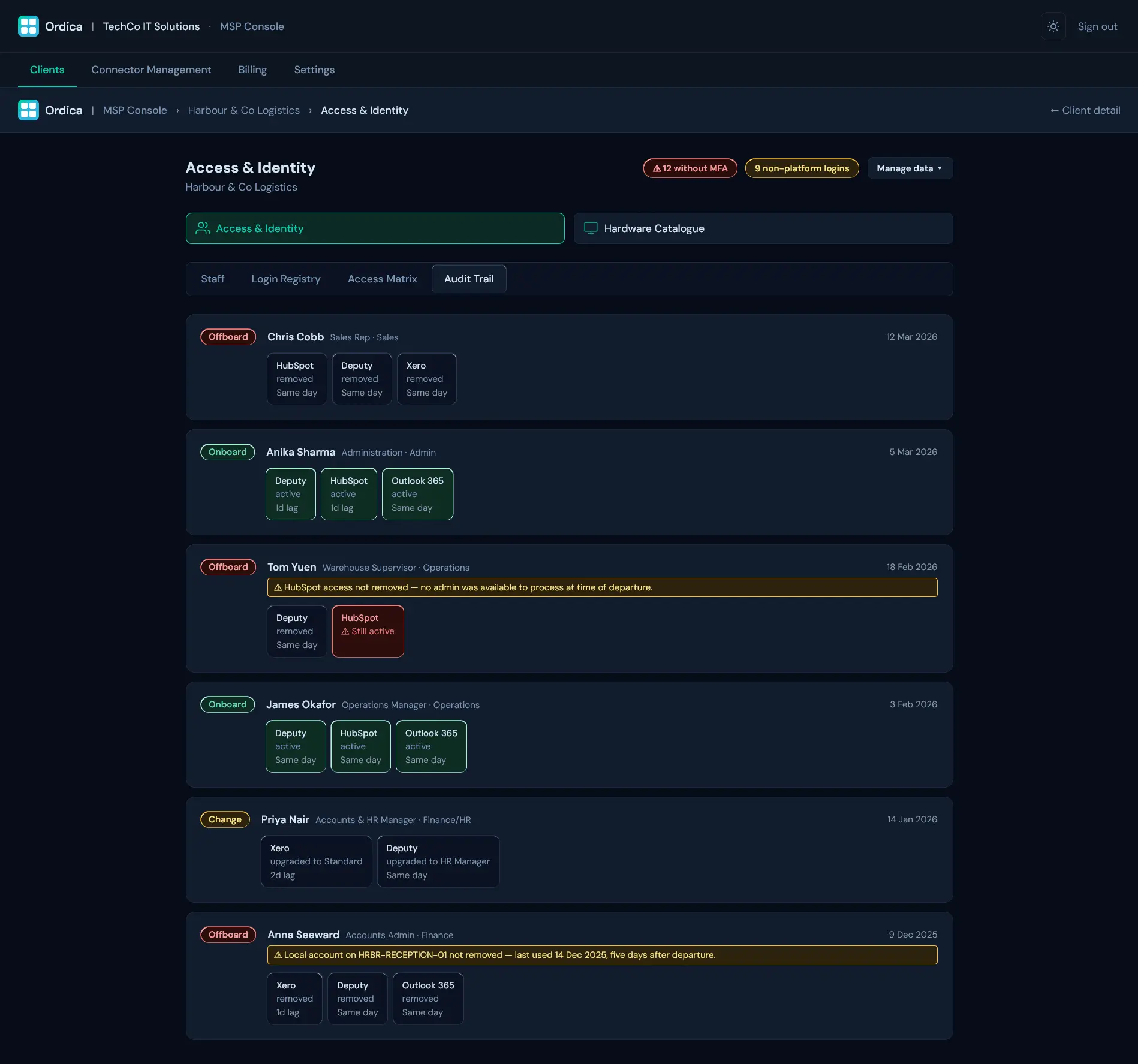
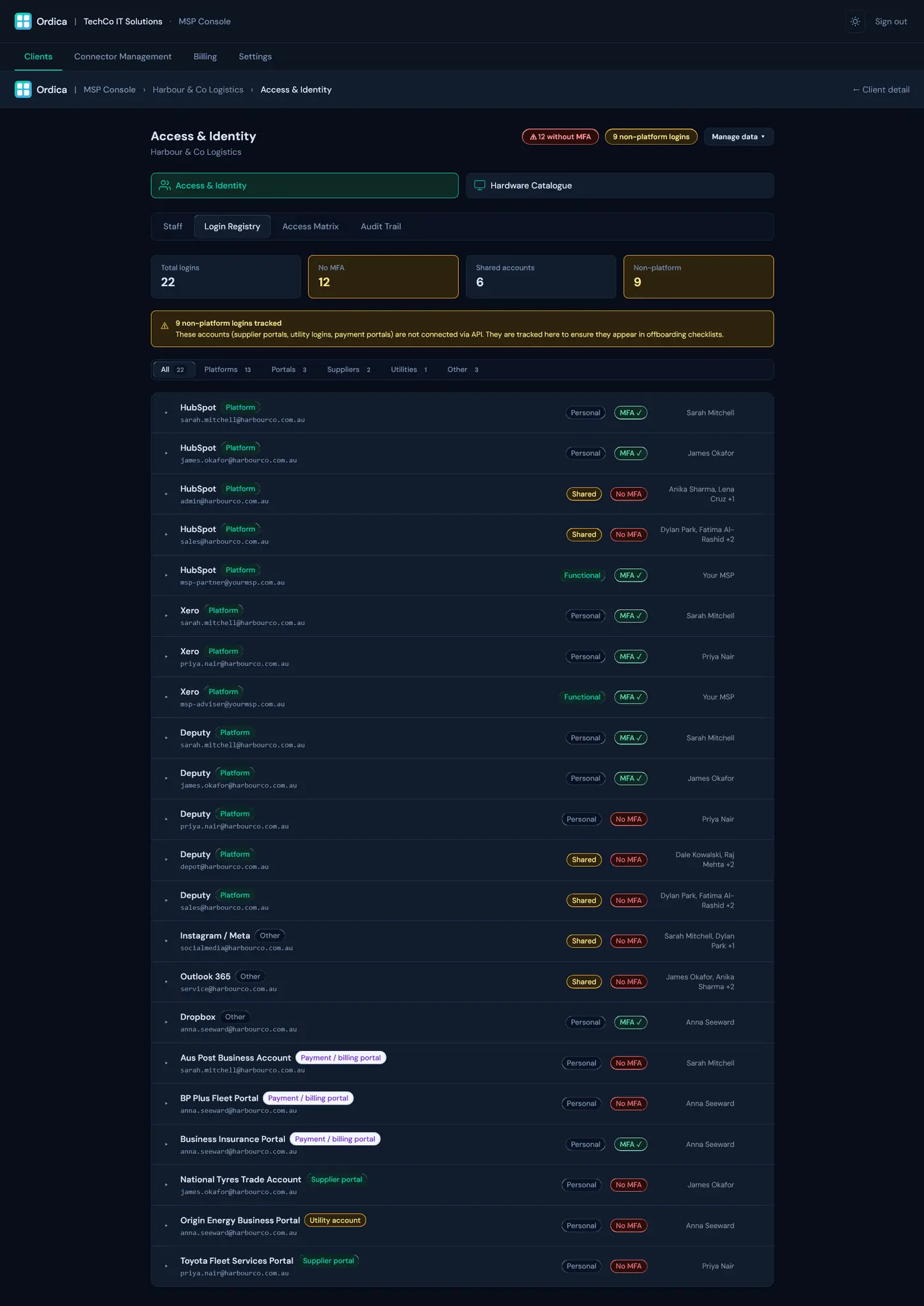
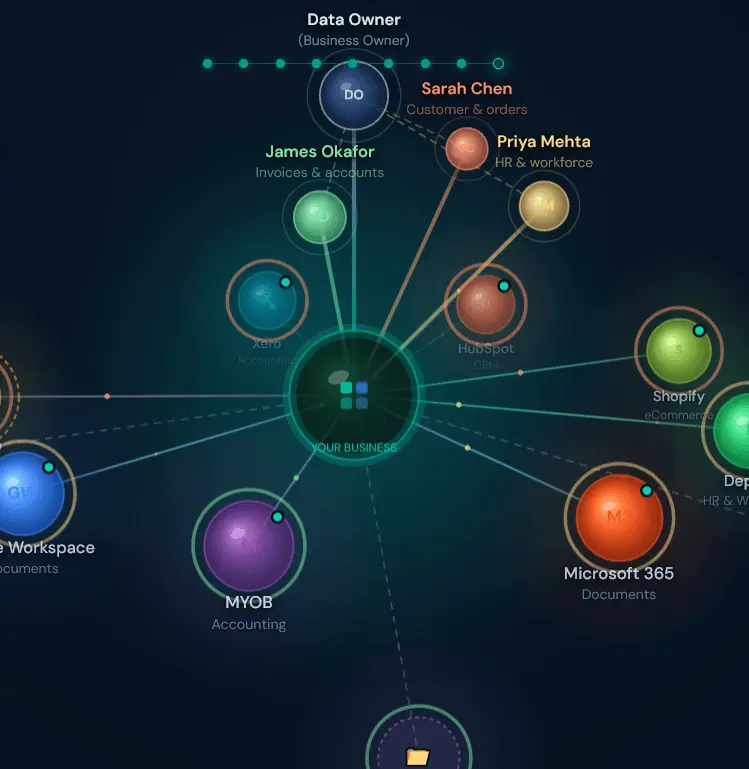
Knowledge shouldn't leave the building when an employee moves on or goes on leave. Ordica provides a centralized view of the platforms your business runs on, identifying exactly what data they hold, who is responsible for them, and who has login credentials. This read-only, Australian-hosted solution ensures that system ownership remains clear and accessible, preventing operational bottlenecks during team transitions. Ordica is a read-only data visibility and governance platform for Australian small businesses, sold through the Managed Service Providers (MSPs) who support them. It reads what's already there, flags what needs attention, and never writes to, changes, or deletes anything in a connected platform, so a business can hand it access without the usual risk of handing anyone access. The problem it addresses is familiar to most small business owners. Staff leave. New people start with logins nobody remembers to close later. The one person who "knows how everything works" goes on leave, and questions that should have simple answers do not. Ordica exists to keep that knowledge somewhere other than a single person's head: which platforms a business runs on, what each one holds, who is responsible for it, and who can currently log in. Ordica has two tiers, built for two different buyers. Ordica Access ($49 AUD per client per month, live now) is built for the MSP. It gives an MSP one console across their client portfolio: an Access and Identity dashboard listing every staff member and every platform login, a Hardware Catalogue tracking devices across the fleet, and CSV import so a client can be fully onboarded without any OAuth setup. Live API connectors are rolling out, starting with Xero. MFA is required on MSP accounts, and every client's data is isolated at the database level. Access includes a 30-day free trial and a Founding Partner Programme for the first 20 Australian MSPs (a permanent 20% discount). Ordica Governance (opening soon, approx. $120 AUD per client per month, founding rate approx. $89) is built for the business owner. It connects to the platforms a small business (SMB) actually runs on, including Xero, Shopify, HubSpot, MYOB, Deputy, WooCommerce, Microsoft 365 and Australia Post, reads the data at field level, and profiles its quality against the five DAMA DMBoK dimensions: completeness, validity, consistency, timeliness and uniqueness. It maps what it finds to specific Australian law (the Privacy Act 1988, the Fair Work Act, the Notifiable Data Breaches scheme, the Spam Act, the Corporations Act) and generates Policy Briefing Packs the owner can hand to a lawyer or drafter. A Data Owner sets the rules; the Data Stewards they appoint manage their own domains. The MSP handles the API setup and never sees a client's Governance data unless invited in. Governance is opening to a first group of 20 Australian businesses via waitlist at myordica.com. Key features: • Read-only by architecture, across both tiers • Access and Identity dashboard: every staff member, every login, every device, in one place • Field-level data profiling against DAMA DMBoK quality dimensions (Governance) • Policy Briefing Packs mapped to Australian privacy, employment and corporations law (Governance) • Data Owner and Data Steward role model, so each data domain has a named owner • Multi-client MSP console with tenant isolation and MFA • CSV import today; OAuth-based live connectors rolling out, starting with Xero • Australian-owned, Australian-hosted (Sydney), built around the Privacy Act 1988 Typical use: an MSP adding a second recurring revenue line per client without new technical overhead. A business owner discovering that a login from a staff member who left eight months ago is still active. An SMB preparing for a client audit or a new privacy obligation, needing an honest record of what it actually holds instead of a guess. Founder Elizabeth Ewing built Ordica after being made redundant from her last role and using the time to study for the CDMP, the Certified Data Management Professional certification. She had spent her career inside small businesses in fine art, fine jewellery and auction. Studying the CDMP, she kept translating it back to those businesses: a data dictionary would have settled arguments about what a "sales lead" actually was; a named data steward would have meant someone was responsible for whether "Rd" or "Road" was correct in the database. The frameworks existed. None of them were built for a business that size, or accounted for the fact that a small business owner is not going to set up an OAuth connector or rotate an API token themselves. That is what an MSP is for, and it is why Ordica sells through the MSP channel rather than direct: in her experience, MSPs are trusted as "one step up from angels" by the small businesses they support. Ordica is Australian-owned and Australian-hosted, with data stored and encrypted on servers in Sydney. More at myordica.com.
Screenshots
Reviews (0)
No reviews yet. Be the first to rate this product!
Comments (0)
No comments yet. Be the first to share your thoughts!