
soin
Track your mood and energy in seconds
Details
- Use Cases
- Emotional RegulationHealth Tracking
- Target Audience
- Mac UsersTherapists
- Pricing
- One-time from $3
- Platforms
- Mobile
- Featured in
- Best Tools for Therapists
Discovery signals
How AI and people discover soin on PeerPush
About soin
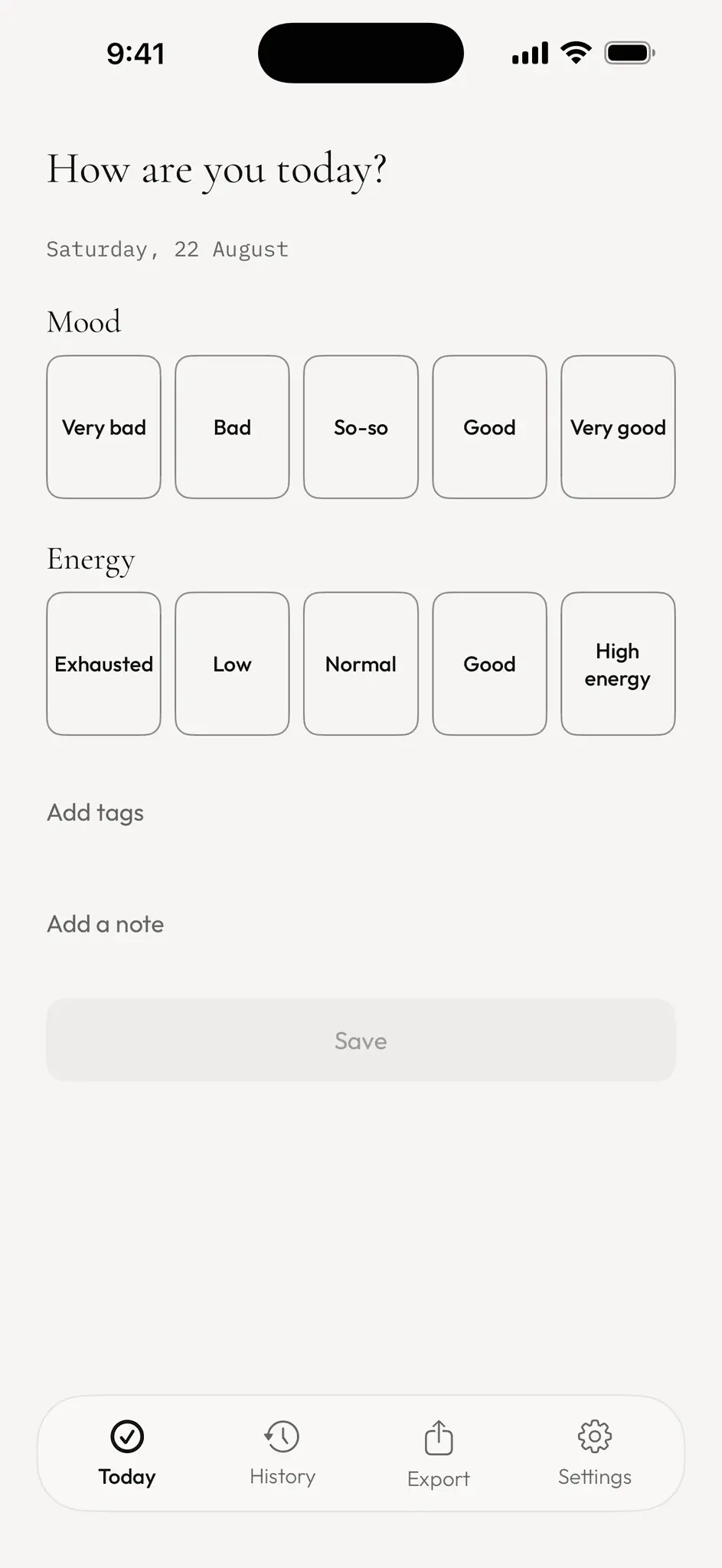
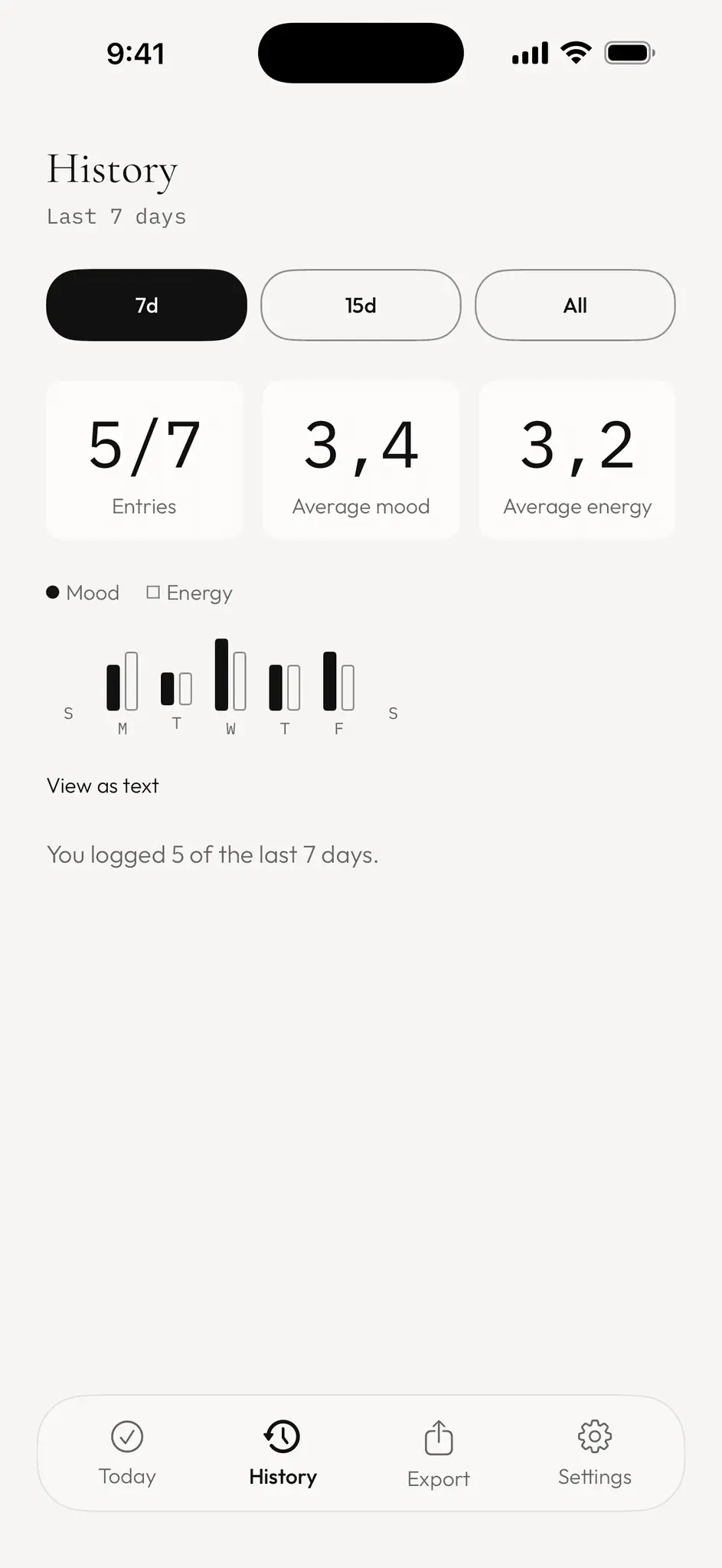
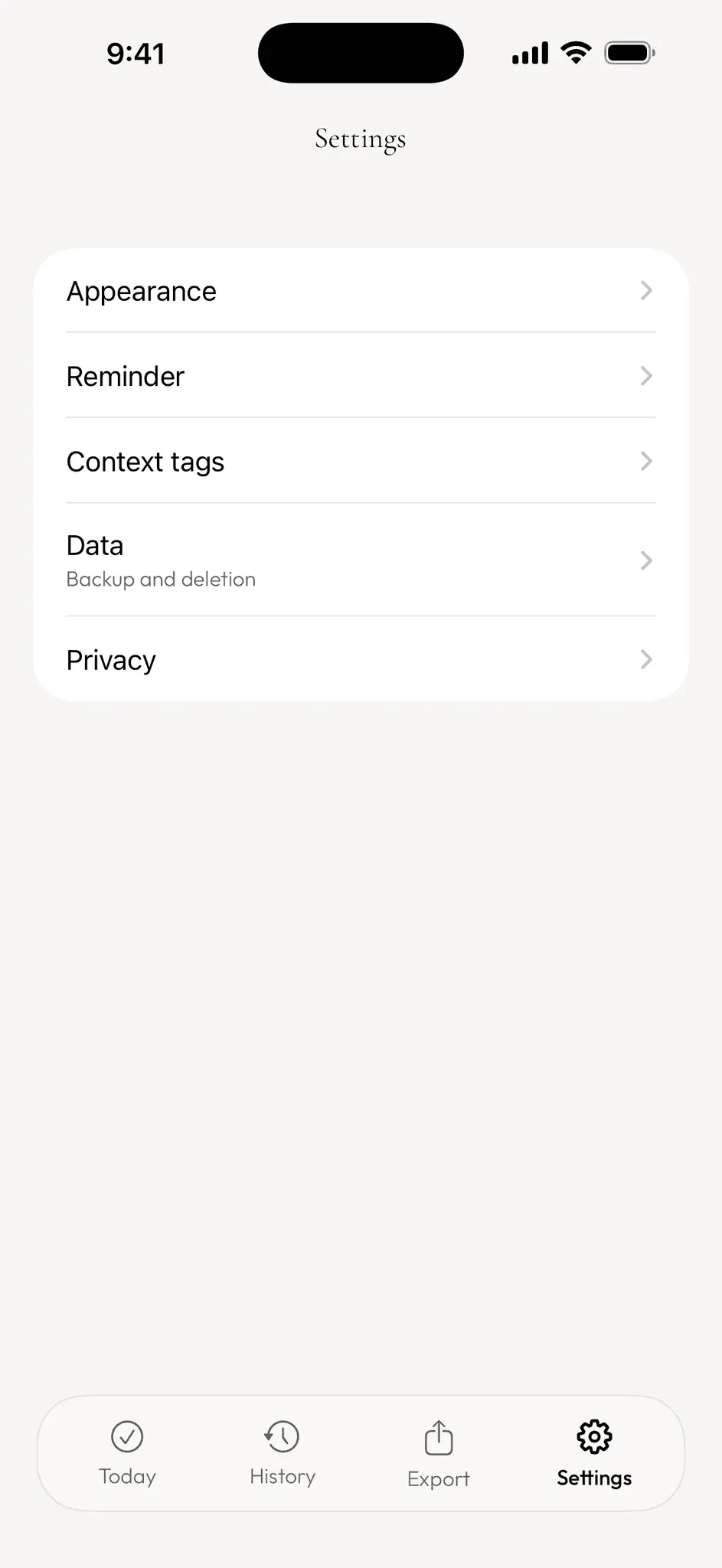
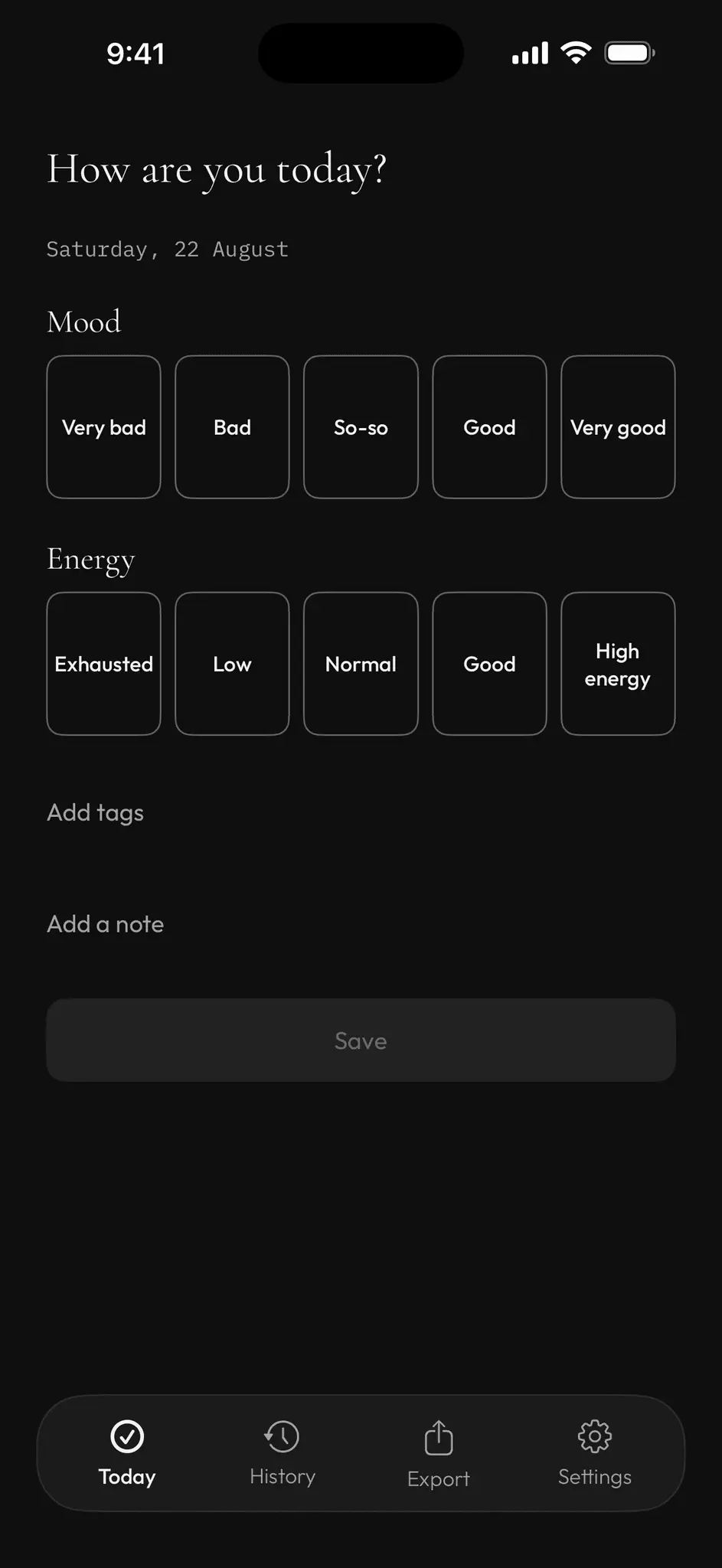
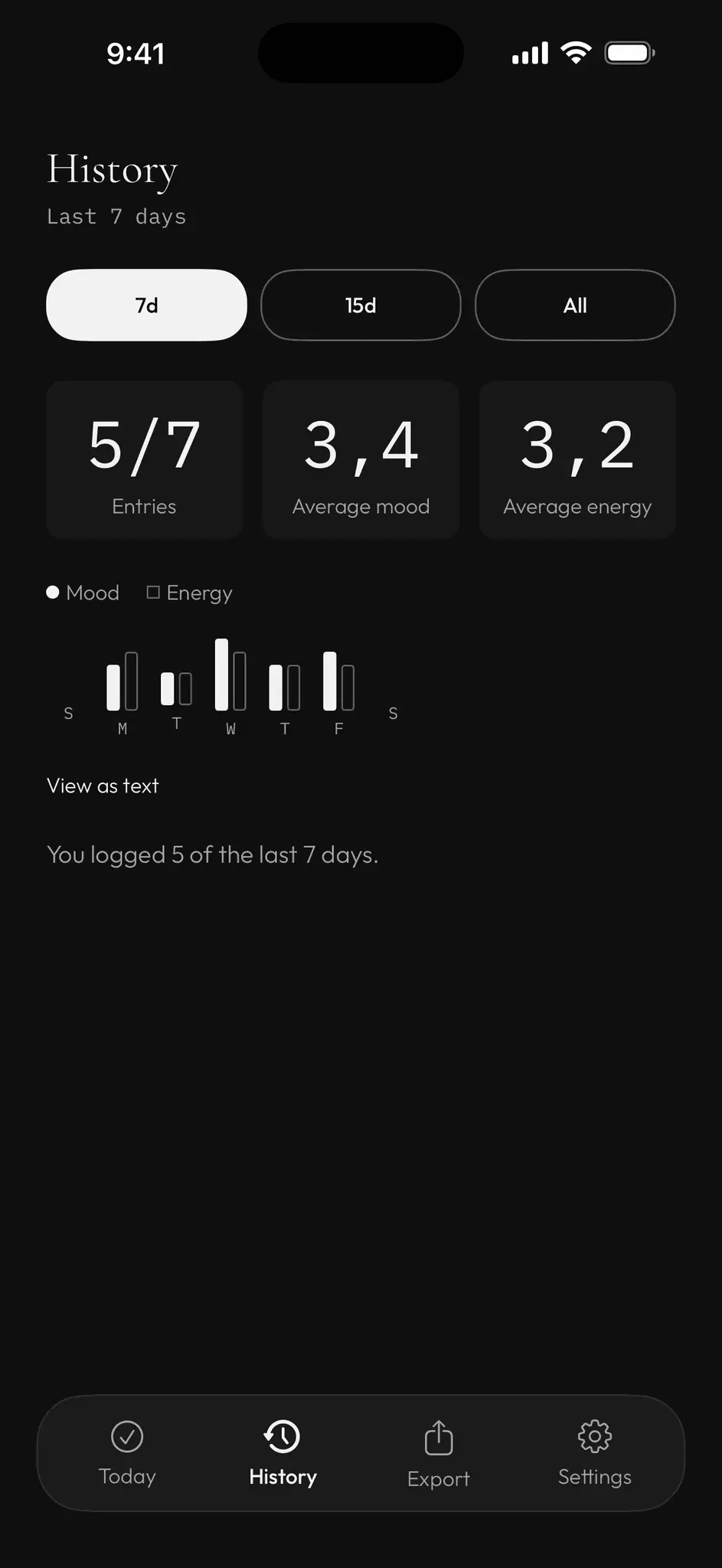
soin — the problem it solves and how it works In one sentence soin (pronounced /swɛ̃/, French for "care") is a daily log for your mood and energy, for iPhone. You log how you are in about fifteen seconds, and later it gives you back what you wrote — your own entries, plainly displayed — not a verdict on you. The problem Most people who want to keep an eye on how they are doing have already tried two kinds of tools and abandoned both. The first is the journal: a blank page, a Notion template, a notes app. It works beautifully for about nine days. Then a bad week arrives, the entries get shorter, the gap gets longer, and going back means facing an accusing blank page and a backlog. The tool asks for more energy exactly on the days when there is least of it. The second is the mood tracker. These solve the effort problem and create a worse one: they turn self-observation into a performance. There is a streak to protect, a score to raise, a chart that dips and seems to say something about your worth. A day you didn't log becomes a hole in a grid — visually indistinguishable from a bad day, and often counted as a zero. The app that was supposed to help you notice how you are becomes one more thing you are failing at. And many of them go a step further: they interpret. They tell you your mood "improved," flag "patterns," suggest causes, or hint at what your numbers mean about your mental health. That is a claim about a person's inner life made by software that knows only two numbers a day. Underneath both sits a third problem: where the data goes. Notes about how you felt, what you were dealing with, whether you slept, whether you were ill or on medication — this is among the most personal material a person can write down. Yet the standard arrangement is an account, a server, an analytics SDK, an advertising identifier, and a privacy policy that says "we may share with partners." The user pays for a free app with the very data that made them hesitate to write anything honest in the first place. soin is built for the person who has been through this cycle: an adult who tried journaling or a habit app and quit because of complexity, gamification, or too much data, and who still wants a sober, private, fast way to notice how they have been. The category it belongs to is everyday mental hygiene — the same shelf as brushing your teeth or a skincare routine — and not clinical mental health. It can be used by someone who is in therapy, but it is not a therapist, a treatment, a medical device, or a system for detecting depression, anxiety, or risk. It never presents itself as a substitute for professional care. What soin does instead The product is defined as much by its refusals as by its features. Five of them: 1. It doesn't read you. It logs and gives back. It doesn't conclude. 2. It doesn't hold missed days against you. A day without an entry has no data. It isn' 3. It doesn't color-code you. No hue assigns moral value to how you felt. 4. It doesn't ask for your data in return. No account, no server, no analytics, no ads. 5. It doesn't rewrite your past. What you logged stays as you logged it. Or, in the phrase used inside the app: no streaks, no diagnoses, no guilt. How it works The daily entry Opening the app lands you on Today. You answer two questions, each with five large, labelled buttons — not a fine-grained slider, because five honest options beat the false precision of a 0-to-10 scale. - Mood, 1 to 5: Very bad, Bad, So-so, Good, Very good. - Energy, 1 to 5: Exhausted, Low, Normal, Good, High energy. Mood and energy are kept separate on purpose. Feeling emotionally fine while completelyerable, are different days, and collapsing them into a single "how are you" score losesthe distinction that people actually notice. Both are required; everything else is optional. Nothing is saved until you press the main button, so you can change your mind freely before committing. Below that, folded away under "Add a note," is a one-line free-text field, capped at 500 characters. It exists so you can add context without the check-in turning into a diary. It is never required, never appears in notifications, and is never sent anywhere. Also optional are context tags: short predefined labels you tap. Eight ship with the apocial life, exercise, conflict, illness, medication, and menstrual cycle. You can createyour own from Settings (up to 20 characters each, up to 30 tags in the catalogue), rename them, hide the ones you don't use, and choose which eight appear on the check-in screen. An entry can carry up to eight tags. Crucially, entries store tag IDs, not free text, and the app never analyag. Tags are not a diagnosis, a treatment, or an objective measurement, and they arenever included in notifications. One entry per day, and you can change it soin keeps one main entry per local calendar day. Saving is idempotent: if today already has an entry, saving updates it rather than creating a second one. The app
Screenshots
Reviews (0)
No reviews yet. Be the first to rate this product!
Comments (0)
No comments yet. Be the first to share your thoughts!