
APM — Process Manager for Linux
Language-agnostic process manager with inter-worker IPC
Details
- Target Audience
- Pricing
- Free
- Alternatives
 PM2 alternatives
Discovery signals
How AI and people discover APM — Process Manager for Linux on PeerPush
- ChatGPT
- Perplexity
- +3 other AI crawlers
Reads by these AI engines
Crawlers behind these engines read this listing on PeerPush.About APM — Process Manager for Linux
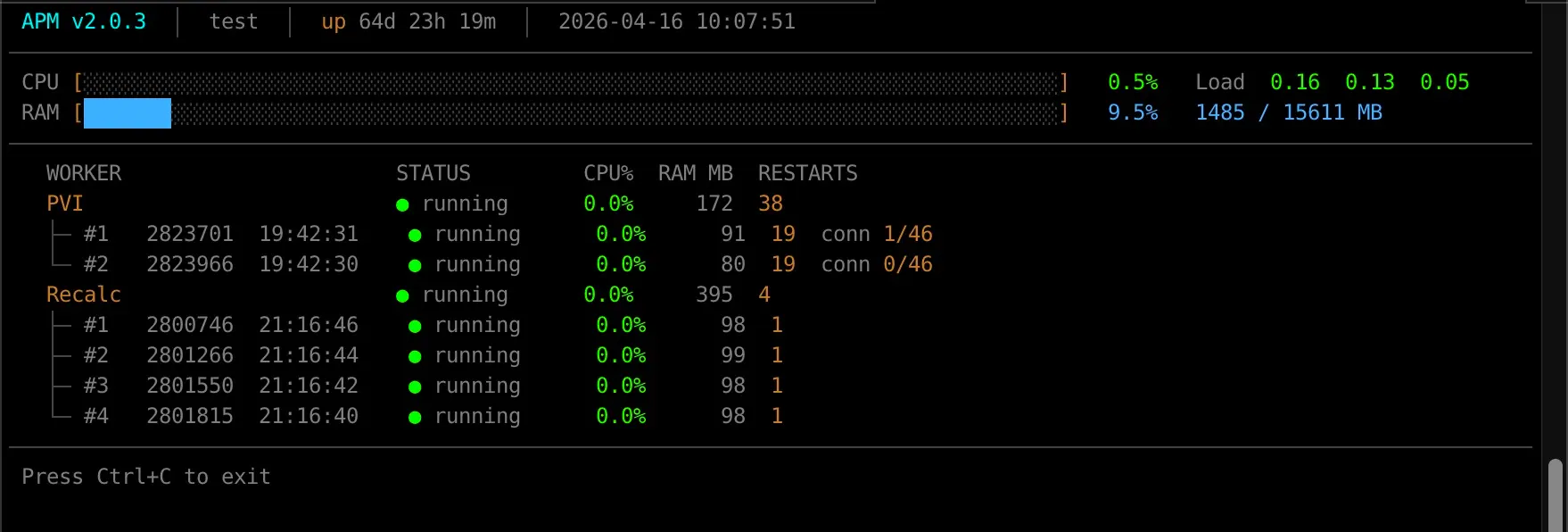
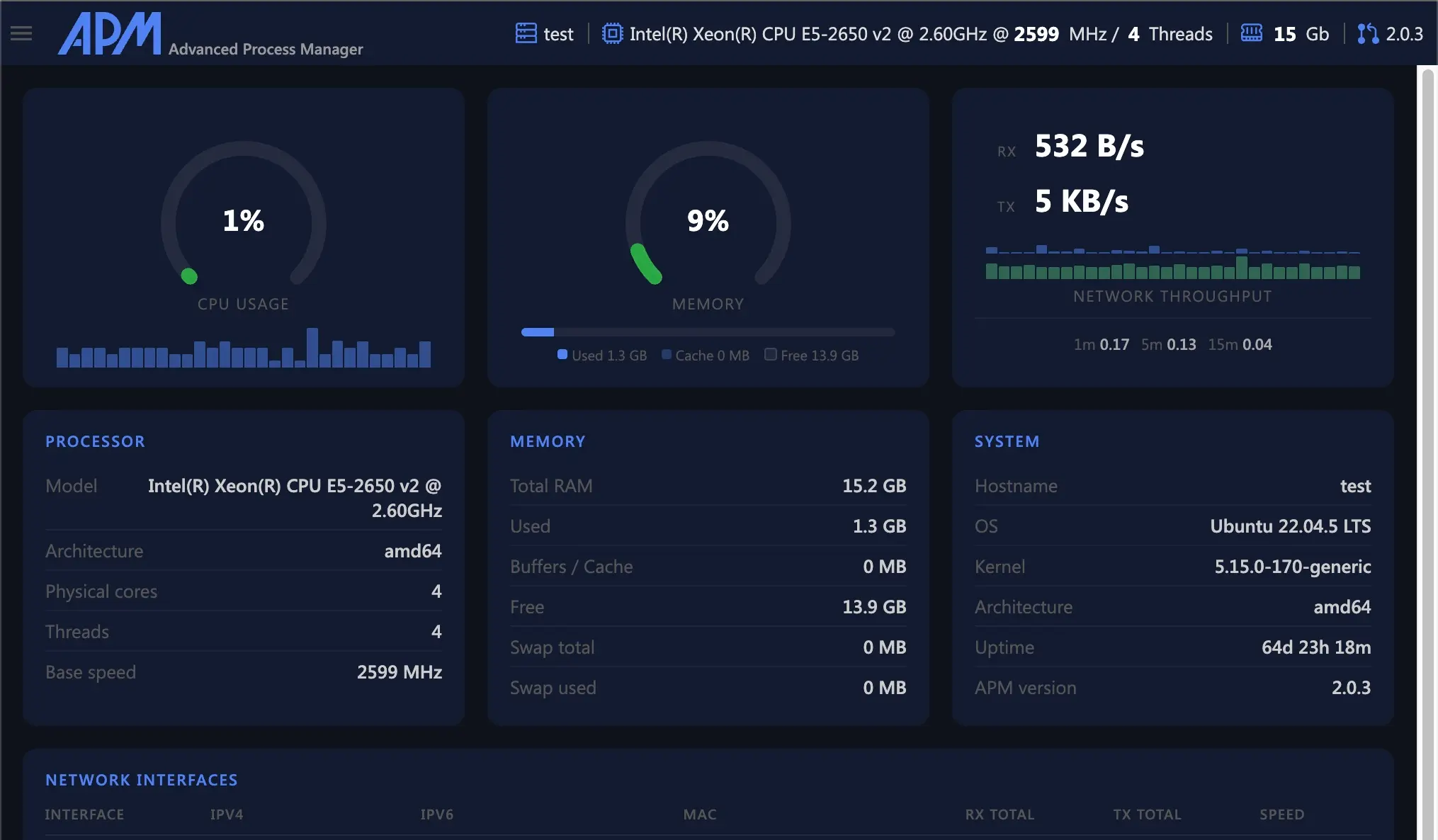
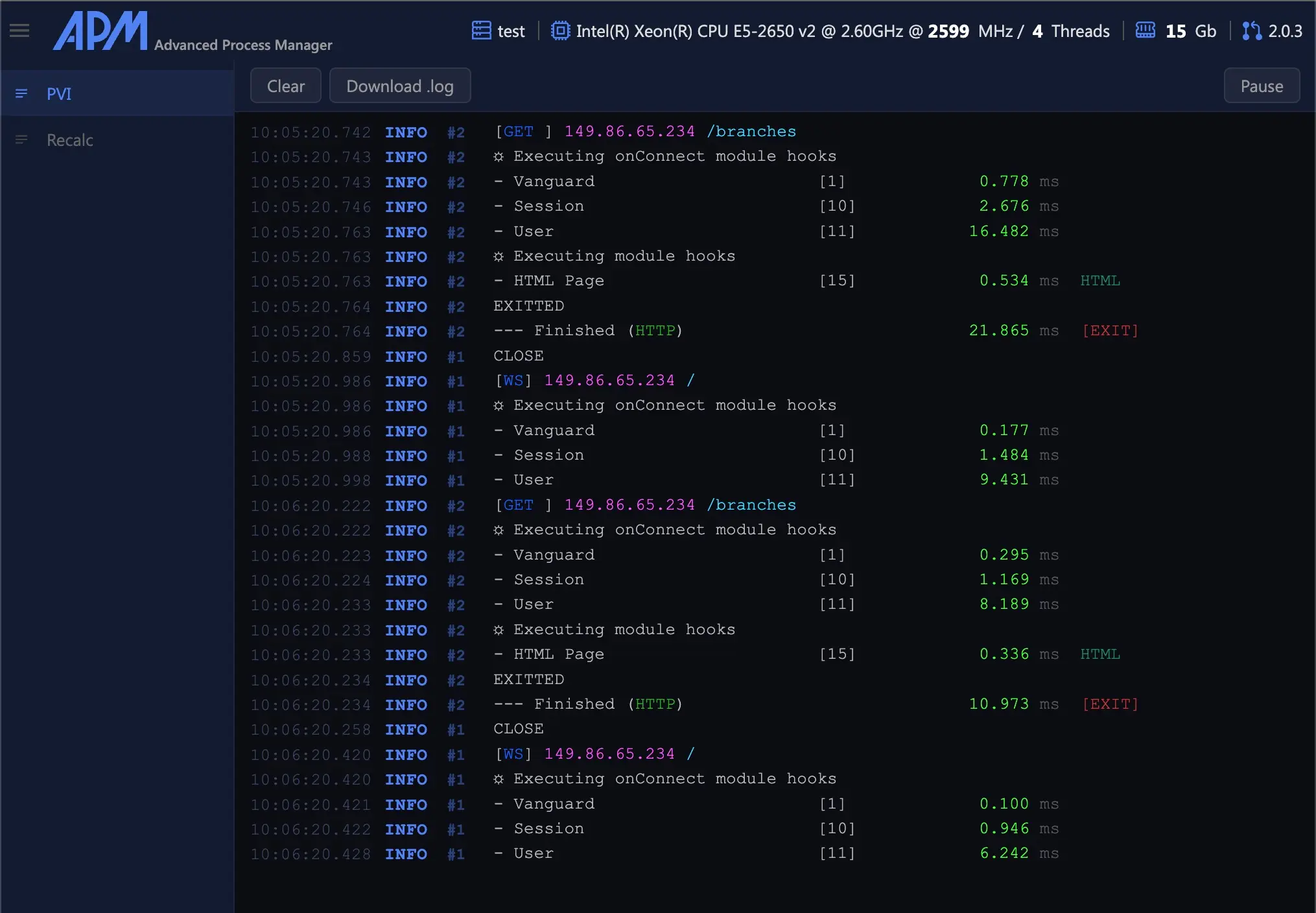
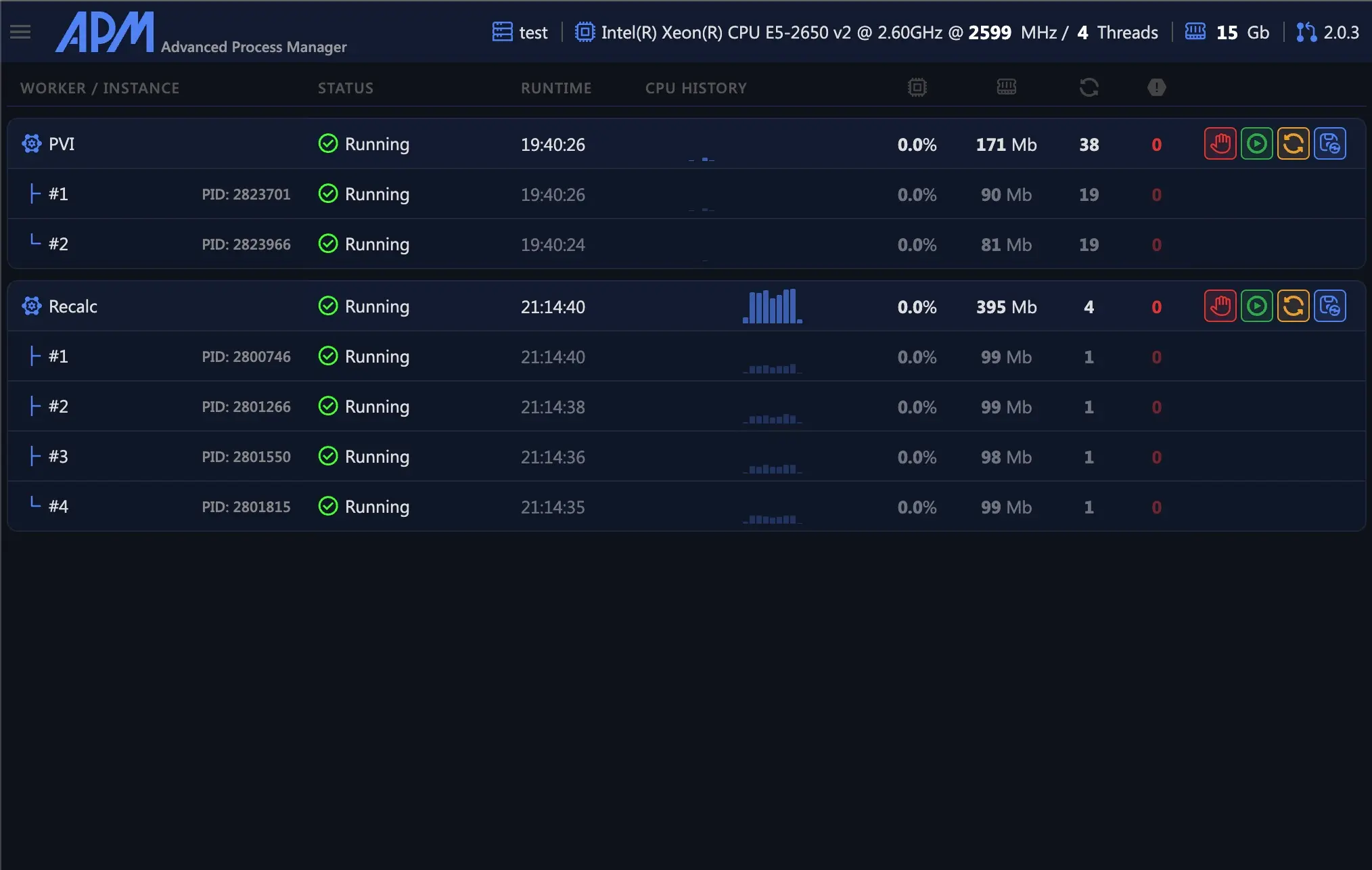
APM is a language-agnostic process manager designed for Linux environments. You can use it to supervise any executable while benefiting from features like cross-language inter-worker IPC, which supports channels and streams across Node.js, Python, Go, PHP, Perl, and Lua. The tool includes a built-in reverse proxy, rate limiting, and TLS support to secure your applications. You can monitor your processes through a live GUI. APM is distributed as a single static binary, making it easy to deploy for hosting and development tasks.
Screenshots
Product Updates (1)
APM v2 adds language-agnostic inter-worker IPC
APM v2 introduces built-in inter-worker IPC, allowing processes managed by APM to communicate with each other directly through the APM daemon. This means workers written in different languages — Node.js, Python, Go, Rust, PHP, Bash, or anything else running on Linux — can exchange messages without needing Redis, RabbitMQ, extra sockets, temporary files, custom ports, or another service sitting in the middle. The goal is simple: if APM already supervises your processes, proxies them, restarts them, watches them, and shows their live status, it should also be able to help them talk to each other. With IPC, a Node.js web worker can hand a task to a Python script, a Go service can notify a Rust worker, or multiple app instances can coordinate without every component needing its own communication layer. APM stays true to its original idea: one small static Linux binary, no external dependencies, and no requirement to change your stack. You can keep using the languages and tools you already like — APM just gives them a common communication path. This update makes APM more than a process manager. It becomes a lightweight runtime layer for mixed-language Linux applications, especially useful for backend services, APIs, automation, monitoring tools, and small self-hosted systems where adding a full message broker feels too heavy. Still simple. Still language-agnostic. Still one binary. Now with workers that can chat.
Comments (0)
No comments yet. Be the first to share your thoughts!
Reviews (0)
No reviews yet. Be the first to rate this product!
Comments (2)
WS native — ws://, wss:// as first-class schemes, sessions migrate to healthy instance on restart or stuck worker. HTTP/2 termination not yet, HTTP/1.1 only. Beyond basic: round-robin LB, mTLS, token-bucket rate limit, TCP/UDP.
Built-in reverse proxy with TLS saves nginx/caddy setup. Does it handle WebSocket proxying, HTTP/2 termination, or just basic HTTP reverse proxy?