
Peko
Making native app deployment as easy as building the app.

Details
- Categories
- Developer ToolsDesign Tools
- Use Cases
- Hosting & DeploymentCI/CDVibe coding
- Target Audience
- DevelopersFoundersSoftware Developers
- Pricing
- Subscription from $5
Discovery signals
How AI and people discover Peko on PeerPush
- Perplexity
- ChatGPT
- Claude
- +4 other AI crawlers
Reads by these AI engines
Crawlers behind these engines read this listing on PeerPush.About Peko
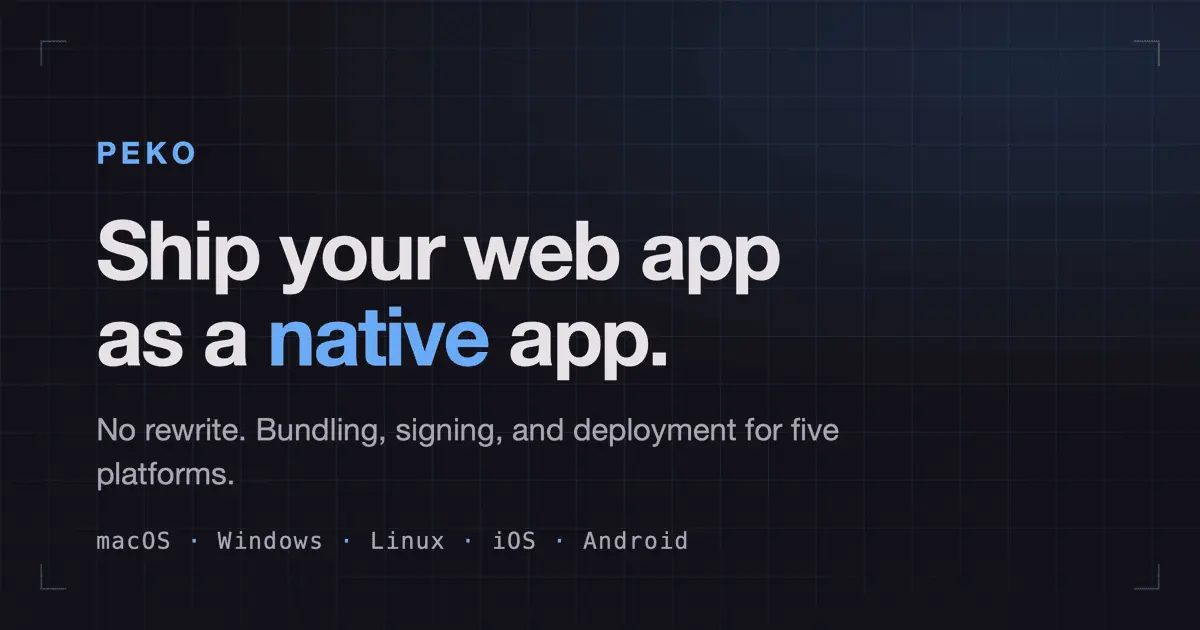
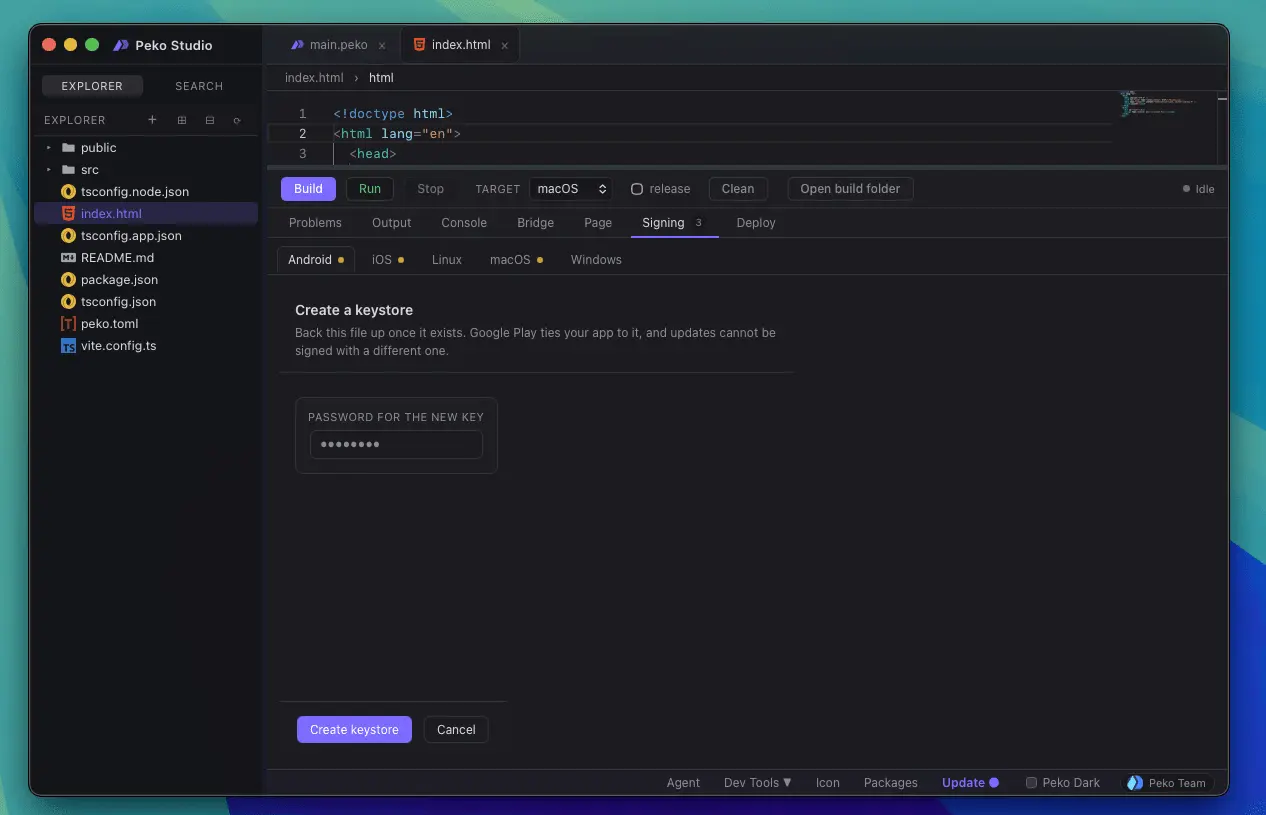
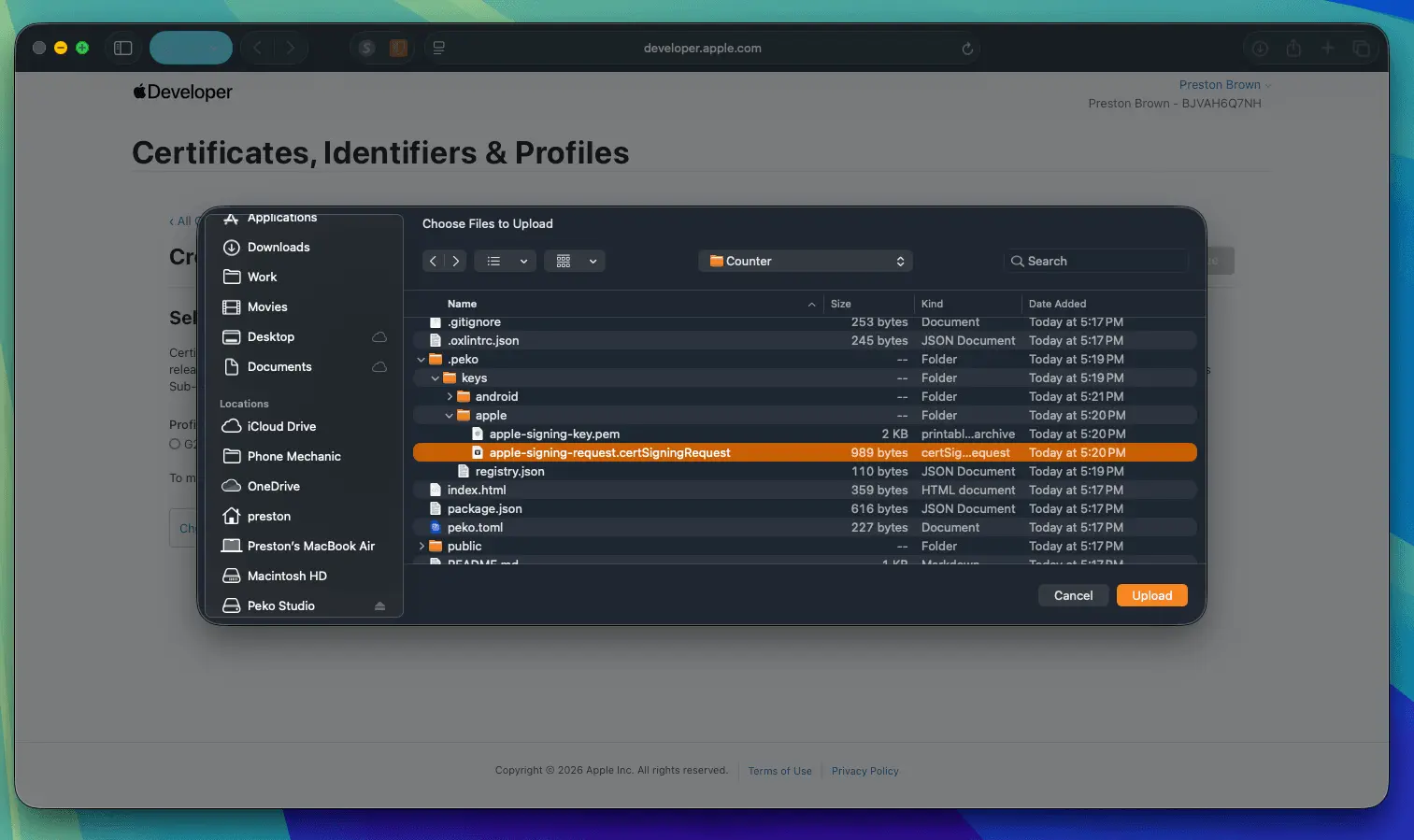
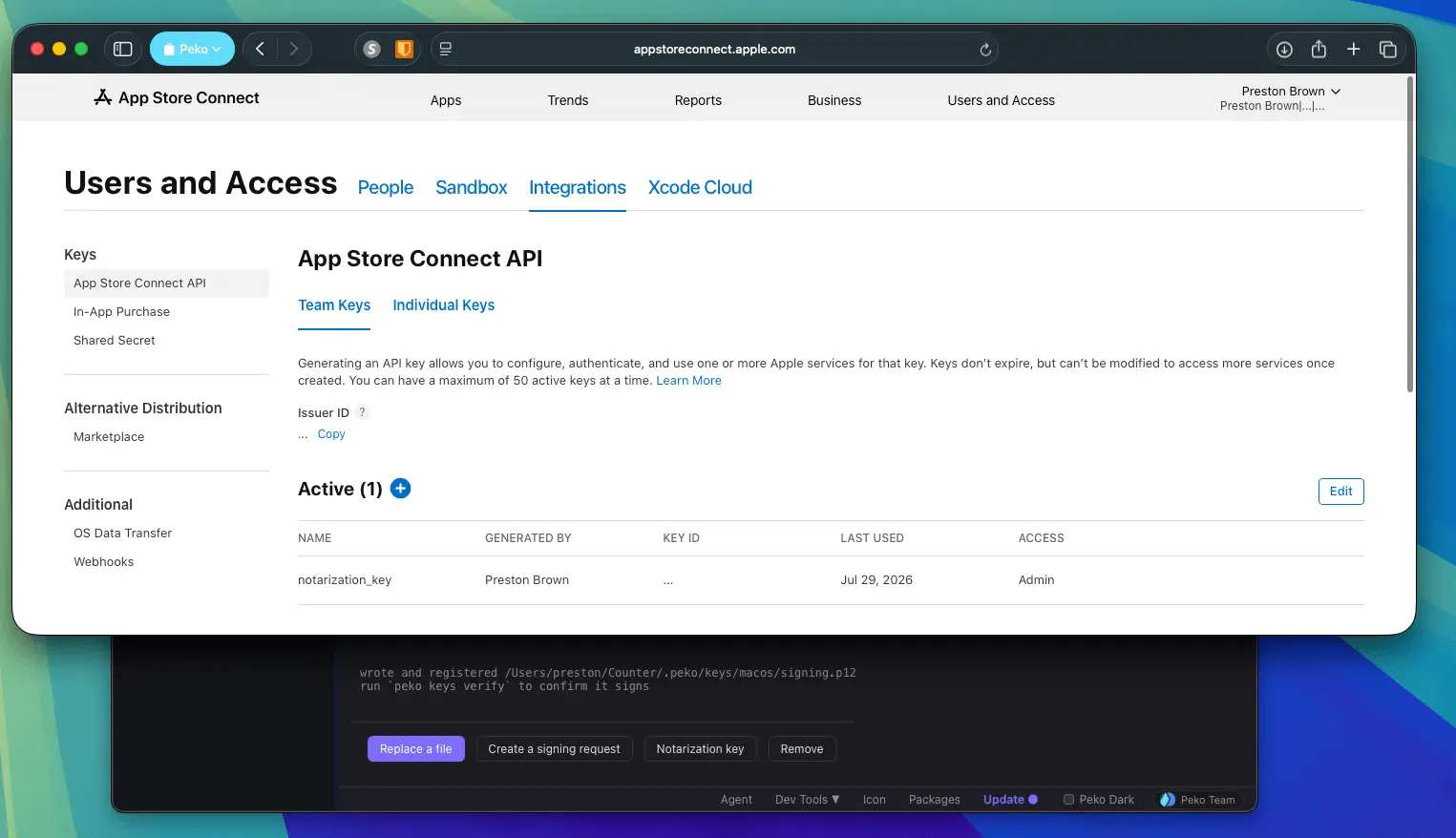
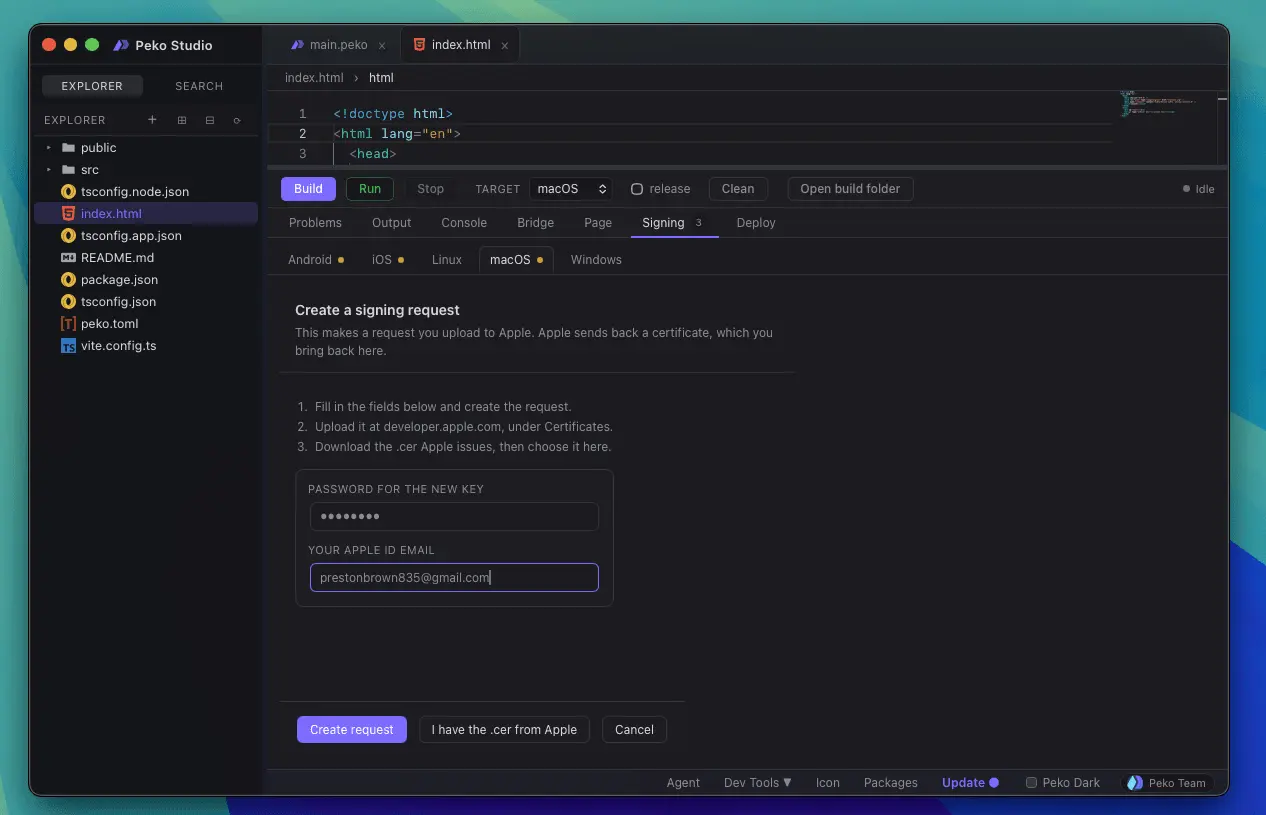
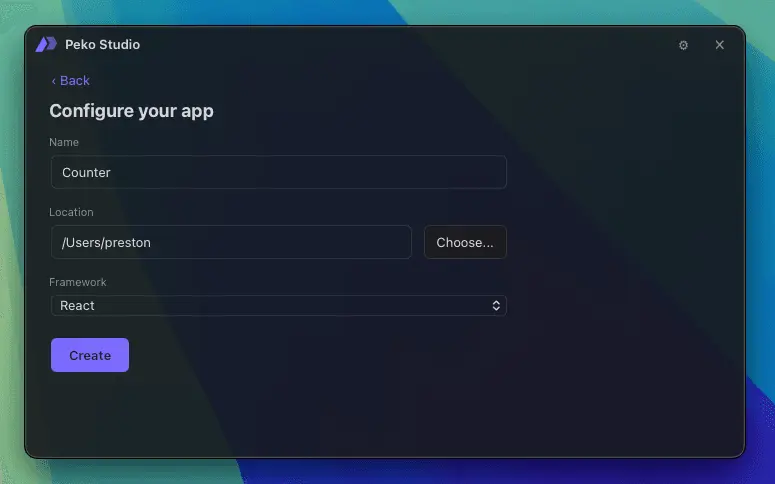
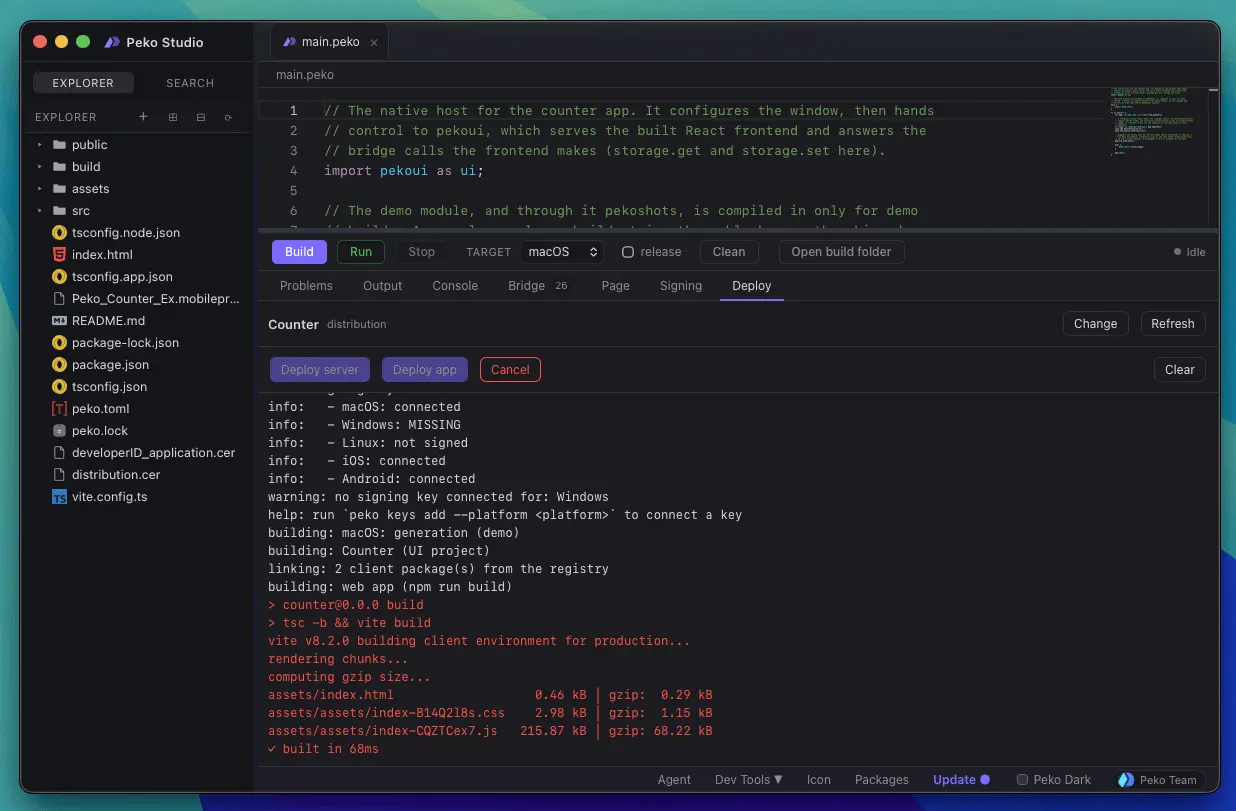
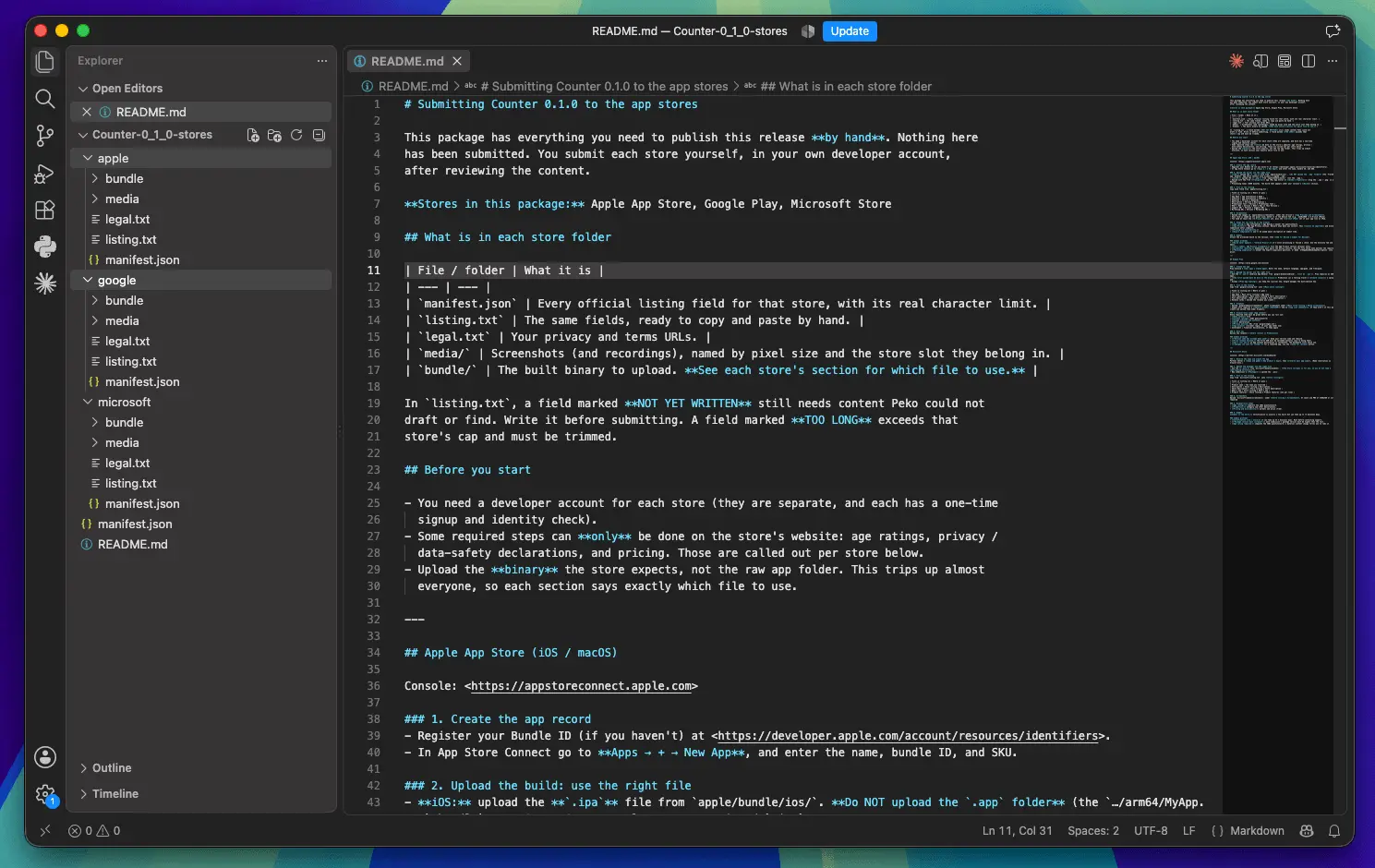
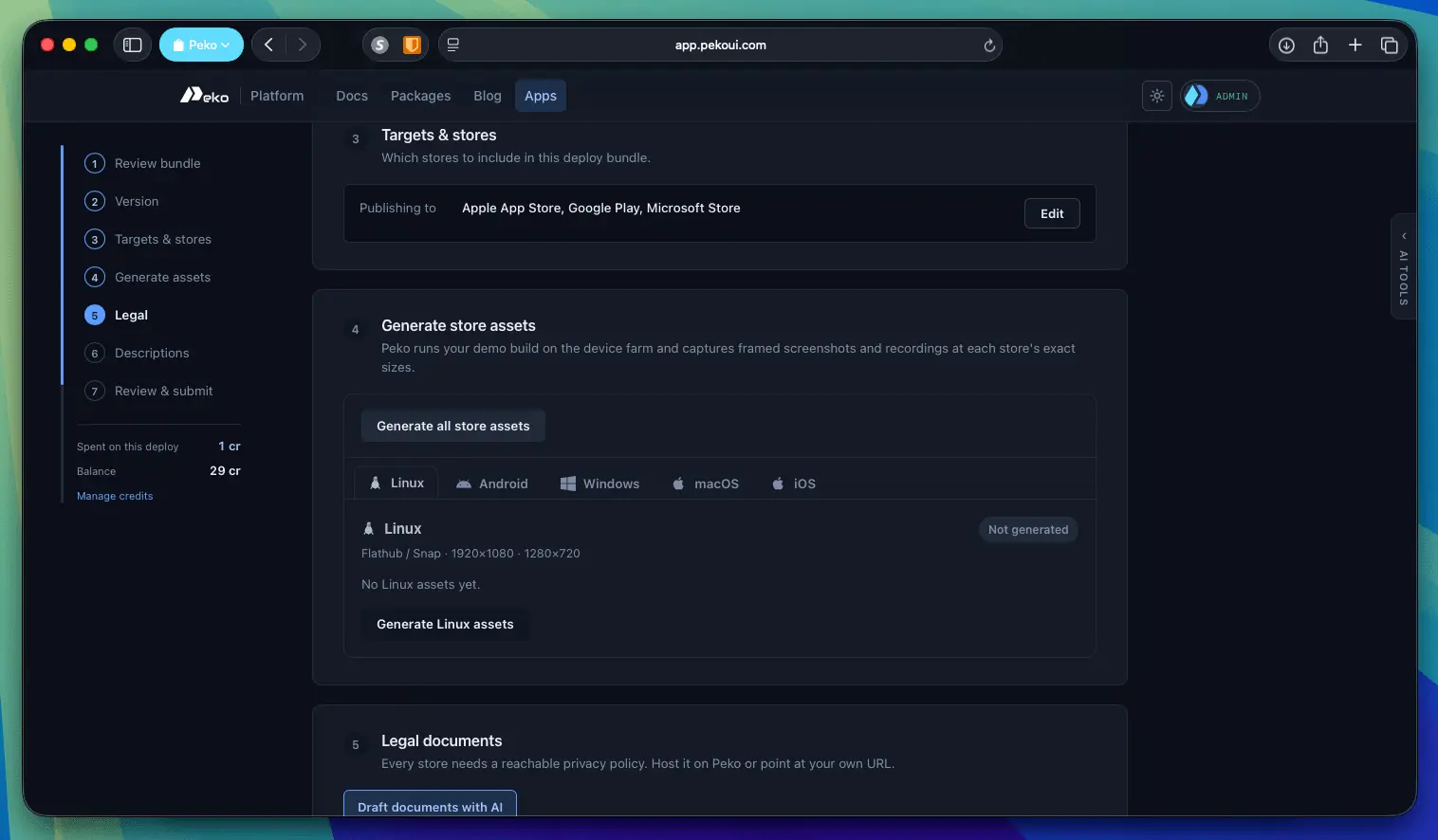
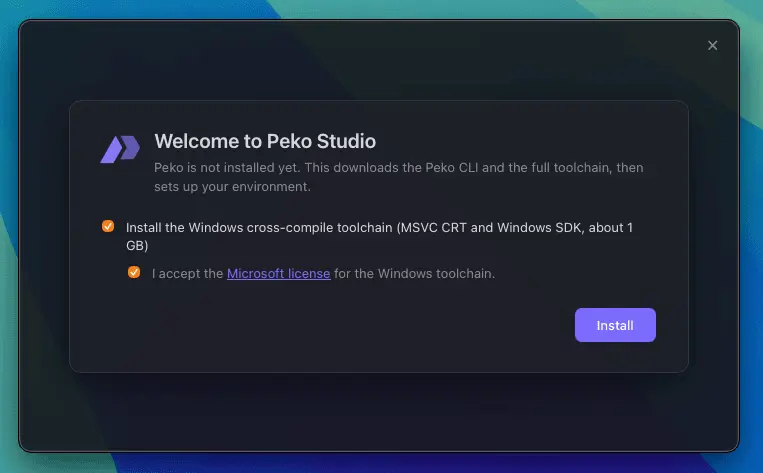
Peko is an end-to-end platform for building, deploying, and shipping native desktop applications. The project started from a frustration I kept running into as a web developer. Building the application was usually the fun part. Shipping it was not. Once the app was finished, there were suddenly dozens of things to figure out: packaging, signing, notarization, platform-specific icon formats, screenshots, recordings, App Store descriptions, legal pages, CI/CD, deployment, remote macOS builds, and all of the little platform quirks that make releasing software feel far more complicated than writing it. None of those things are why most people start building software. Peko exists to unify that entire process into one workflow. The ecosystem includes MIT open source developer tooling (Peko Studio, peko-tools, the standard library, and the UI library), alongside the hosted Peko Platform, which provides remote builds, signing, deployment, encrypted native services, package management, asset generation, and release tooling. For developers building desktop and mobile applications with React, Vue, Svelte, or other web frameworks, Peko also provides a native WebView runtime. The native layer is written in Pekoscript, a statically typed systems language designed for native application logic, package development, and deterministic app demos. Most developers only touch it when they need native functionality or want to build reusable native packages. The majority of application code can remain in the frontend framework you're already comfortable with. Today, Peko can handle things like: - Cross-platform native builds - Remote macOS and iOS builds - Code signing - Platform-specific icon generation - Native package management - Deterministic demo scripting - Automated App Store screenshots - Automated App Store recordings - AI-assisted store descriptions - Hosted legal document links - Unified release packaging A typical workflow looks like this: > Create project ↓ > Build your app ↓ > Need native functionality? >> Use JavaScript APIs or a small Pekoscript module ↓ > peko build --release (for just the bundles, stop here) OR peko deploy (for full platform experience, continue on platform) ↓ > Peko handles: - Remote builds - Signing - Icon generation - Screenshots - Recordings - Store metadata - Legal links ↓ Receive a release ZIP containing everything needed for submission Today, deployment ends with a release package containing your signed bundles, screenshots, recordings, metadata, and hosted legal links. The remaining work is primarily creating the application in each store and completing the review process. Over the next few months, Peko will continue integrating deeper into the release pipeline. The next milestone is a unified in-app purchase platform that abstracts Apple, Google, and Microsoft payment APIs behind one interface while hosting receipt verification automatically (should be expected later this year within the next month or two). After that, the goal is to automate as much of the App Store submission process as the platforms allow. Peko isn't trying to replace great frontend frameworks, and it isn't trying to compete with projects like Tauri at the runtime level. The runtime is simply the foundation. The real goal is much bigger: The hardest part of making software should be building the software, not everything that comes after it. Peko is built for hobbyists, solo founders, small teams, and developers who want to spend more time creating products and less time maintaining release pipelines. Everything described above is live today, and I'm actively looking for early users who care about this problem. If that sounds like you, I'd genuinely love your feedback and business!
Product Video
Watch a video demo of Peko.
Screenshots
Product Updates (1)
Founder's Essay
Want to learn more about what Peko is, how it started, and why it exists? Don't worry, I wrote about it. Short version: https://app.pekoui.com/blog/why-i-built-peko-short Full version: https://app.pekoui.com/blog/why-i-built-peko
Comments (0)
No comments yet. Be the first to share your thoughts!
Reviews (0)
No reviews yet. Be the first to rate this product!
Comments (2)
Solving the app deployment problem for real. Most tools still require you to handle packaging, signing, and platform-specific quirks separately. Peko handling all that friction in one place is genuinely useful for indie developers shipping
Peko is fully usable today! The platform still has a lot to grow, but it is strong where it stands. Start using Peko now!