
Spec Kitty
Control layer for teams using coding agents

Details
- Follow on
- Categories
- Target Audience
- Pricing
- Free
Discovery signals
How AI and people discover Spec Kitty on PeerPush
- ChatGPT
- Claude
- Perplexity
- +4 other AI crawlers
Reads by these AI engines
Crawlers behind these engines read this listing on PeerPush.About Spec Kitty
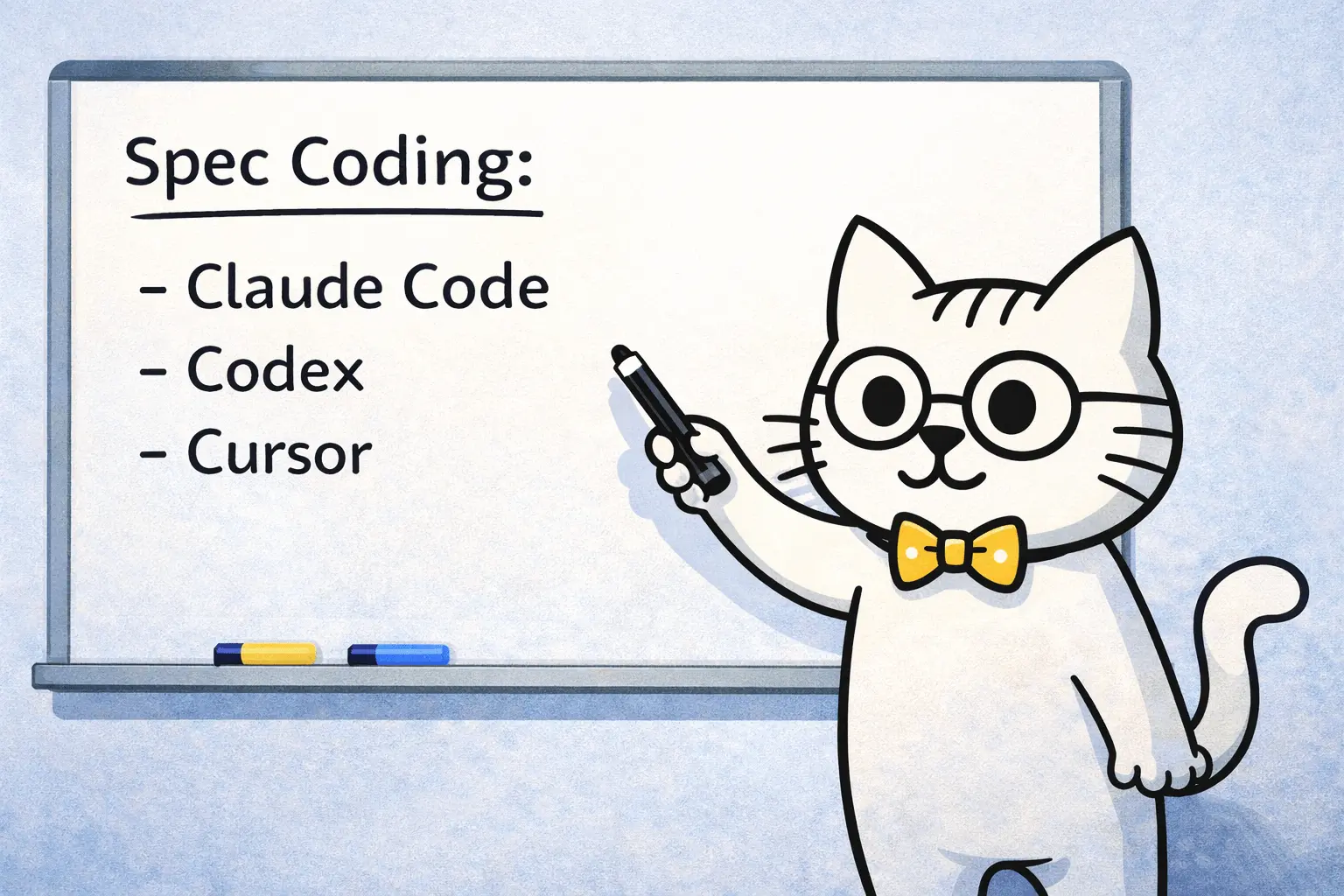
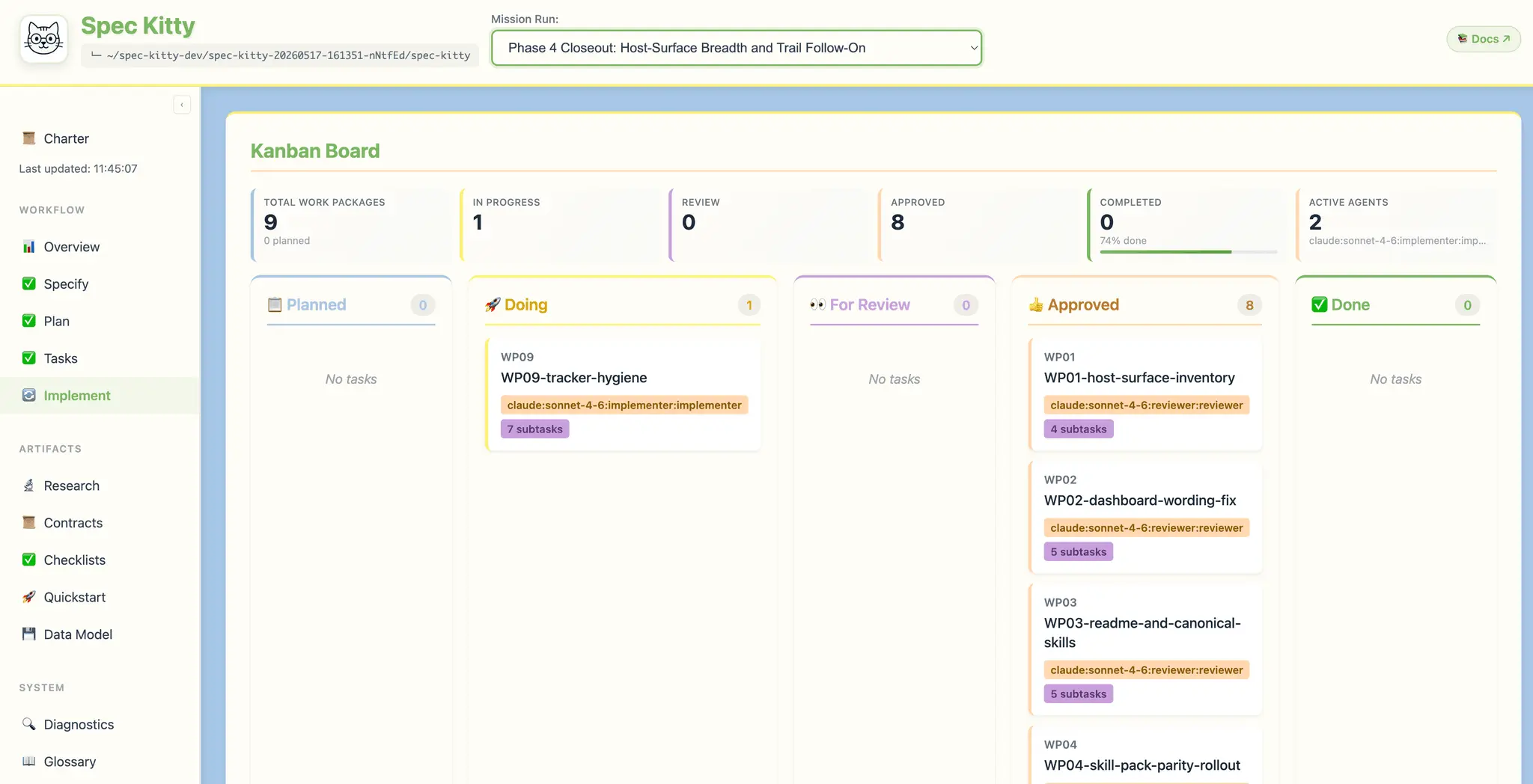
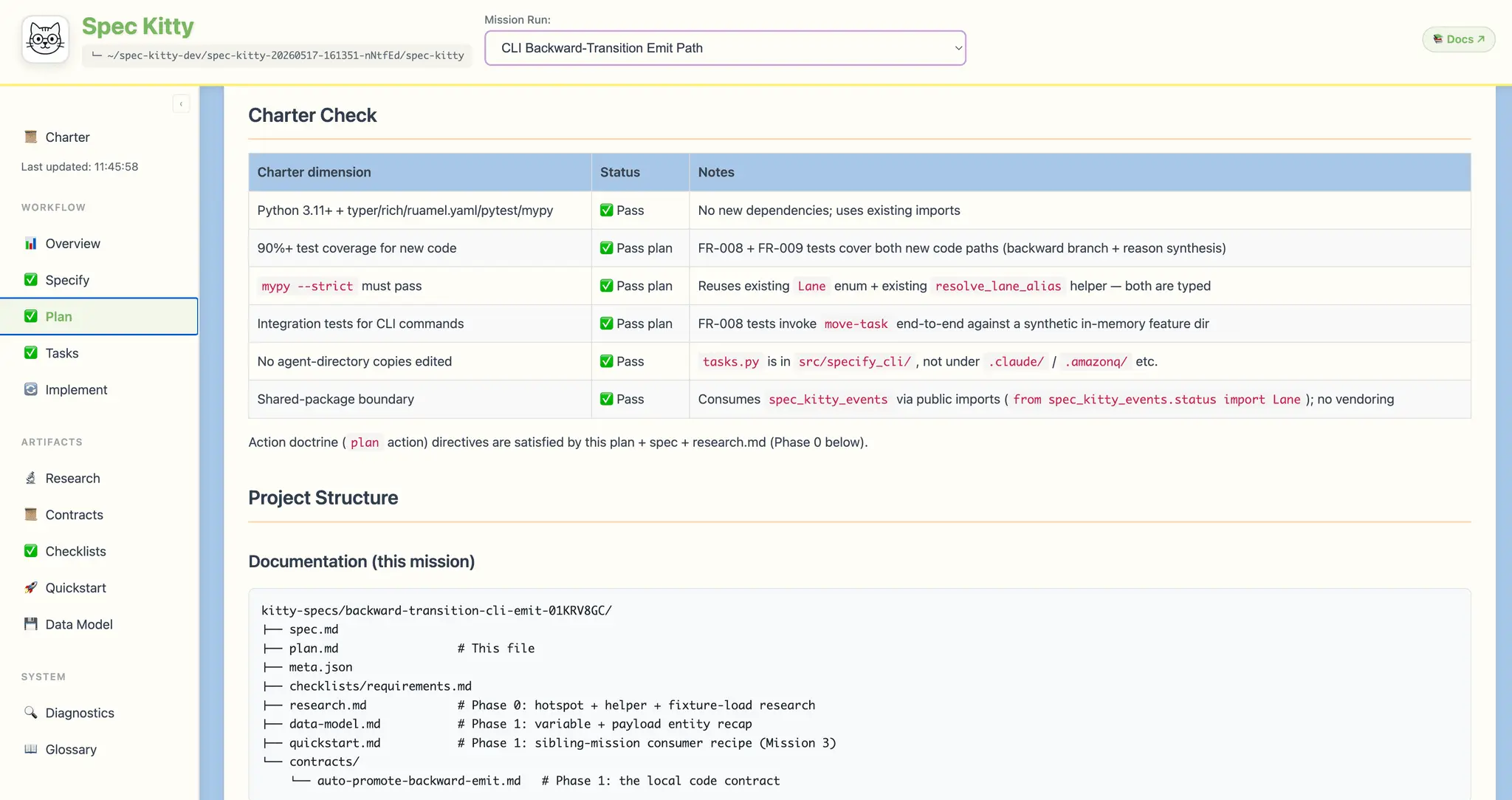
Spec Kitty is the AI-native control layer for software teams using coding agents like Claude Code, Codex, Cursor, Copilot, Gemini CLI, and OpenCode. It turns product intent into governed delivery: reviewable specs, mission context, isolated work packages, review gates, tracker/PR lineage, and delivery proof. Instead of relying on agents to summarize their own work, Spec Kitty captures trustworthy state where work actually happens: local-first at the CLI, structured by missions, committed to your repo, and synced into TeamSpace for product, engineering, and leadership visibility. Key features: - Spec-to-mission workflow: turn ideas into specs, plans, tasks, and executable work packages. - Work package orchestration: split large software efforts into bounded WPs agents can implement and reviewers can verify. - Local-first agent control: keep mission artifacts in your repo under kitty-specs/, with CLI-first workflows that work where developers and agents already operate. - Worktree isolation: run agent work in separate git worktrees so parallel implementation does not collide. - Review gates: move work through planned, in-progress, review, approved, and done states with durable review evidence. - TeamSpace sync: project mission, work package, status, review, tracker, and repository state into a shared team view. - Charter: define project policy, engineering standards, decision rules, review expectations, and human-in-charge boundaries. - Doctrine: inject project-specific guardrails into agent workflows so agents follow approved practices instead of inventing process on the fly. - Glossary: maintain canonical product and engineering language so specs, agents, reviewers, and docs use the same terms. - Agent skills: support structured workflows for mission setup, runtime next-step orchestration, implementation/review loops, mission review, glossary context, charter/doctrine, Git workflow, SaaS sync, Docker modes, orchestrator API operation, delegated missions, and cross-repo program orchestration. - Proof-oriented delivery: connect work to review evidence, tests, security checks, PR lineage, approvals, and future executable user journeys. - Connector-ready workflow: designed to integrate with trackers like Jira and Linear, GitHub, Slack, and other team systems without making them the source of truth. Spec Kitty helps teams make agentic coding safer, more accountable, and easier to manage. It is not another coding agent. It is the control layer that makes coding agents usable as a governed team workflow.
Screenshots
Reviews (0)

Comments (1)
Team collaboration is launching soon =)