
Atlarix
The Private AI Workstation
npm install -g atlarixDetails
- Follow on
- Categories
- Target Audience
- Pricing
- Freemium from $19
- Featured in
 Cursor alternatives
 Claude Code alternatives
 Codex CLI alternatives
Discovery signals
How AI and people discover Atlarix on PeerPush
By AI reads among Developer Tools tools
8,622 AI reads in the last 30 days, ranked against every Developer Tools tool listed.About Atlarix
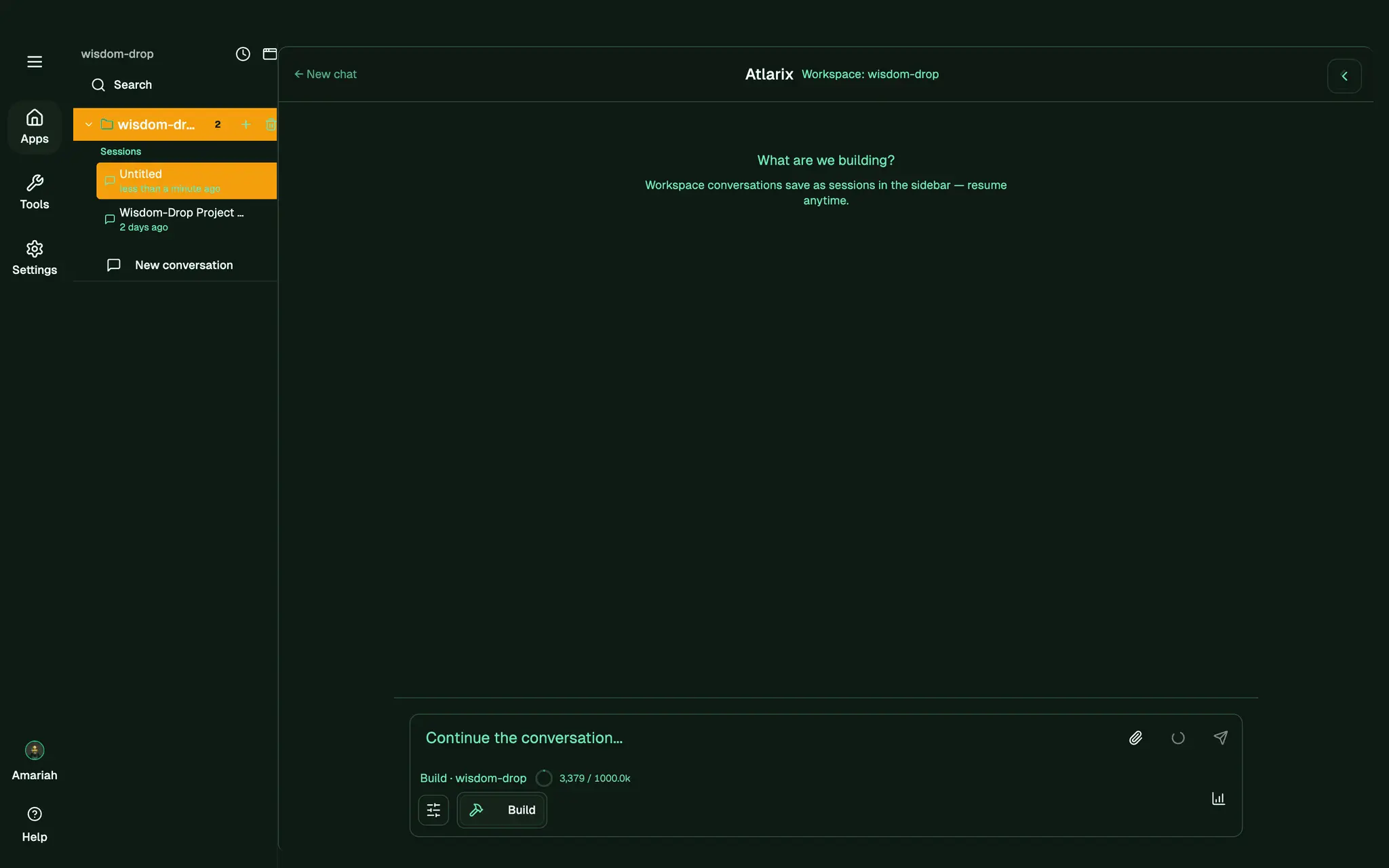
Atlarix is a private AI coding workspace where your development team plans a feature, builds it, reviews it, tests it, and refines it — with AI doing the heavy lifting, so a small team ships like a much larger one. It runs on your own machine. Your codebase never gets uploaded to anyone's servers to get AI help — the work stays local, and the app reaches out only where you tell it to. Nothing indexes your repo and no embeddings are built: search is bundled ripgrep, so there is no index to build or go stale. For teams handling proprietary or sensitive code, that's the difference between adopting an AI tool and not being allowed to. What you get: - One workspace for the whole build — plan a feature, build it, review it, test it, refine it, without leaving the app or stitching tools together - Nothing runs until you approve it — every file change arrives as a diff you accept hunk by hunk, and shell commands run inside a per-OS write-confining sandbox - It learns your codebase — Atlarix keeps notes on your project as you work, so it gets sharper on your system the longer you use it - Watch it work in real time — see each step as it happens, approve or redirect as it goes - Set-and-forget runs — schedule unattended tasks with a hard budget, so nothing runs away - Connects to your other tools — any MCP server, plus skills you write as markdown files and commit alongside your repo - Talk to it — voice dictation through any audio-capable model or your own speech-to-text key The app is free. Every feature is on every plan — nothing is gated. What you pay for is inference on the models we host, as pay-as-you-go credit you top up from $10, and you can skip that entirely by bringing your own API key or running a local model through Ollama or LM Studio. Pro, at $19 a month, adds Atlarix Reviewer for pull-request review and includes Core for everyday work over one shared balance. macOS, Windows and Linux. Built in Nairobi, by one engineer, under NorahLabs. Not venture-backed, not trying to be the biggest — just the best-built, most honest option for teams who want serious AI development without handing their code to someone else's cloud.
Product Video
Watch a video demo of Atlarix.
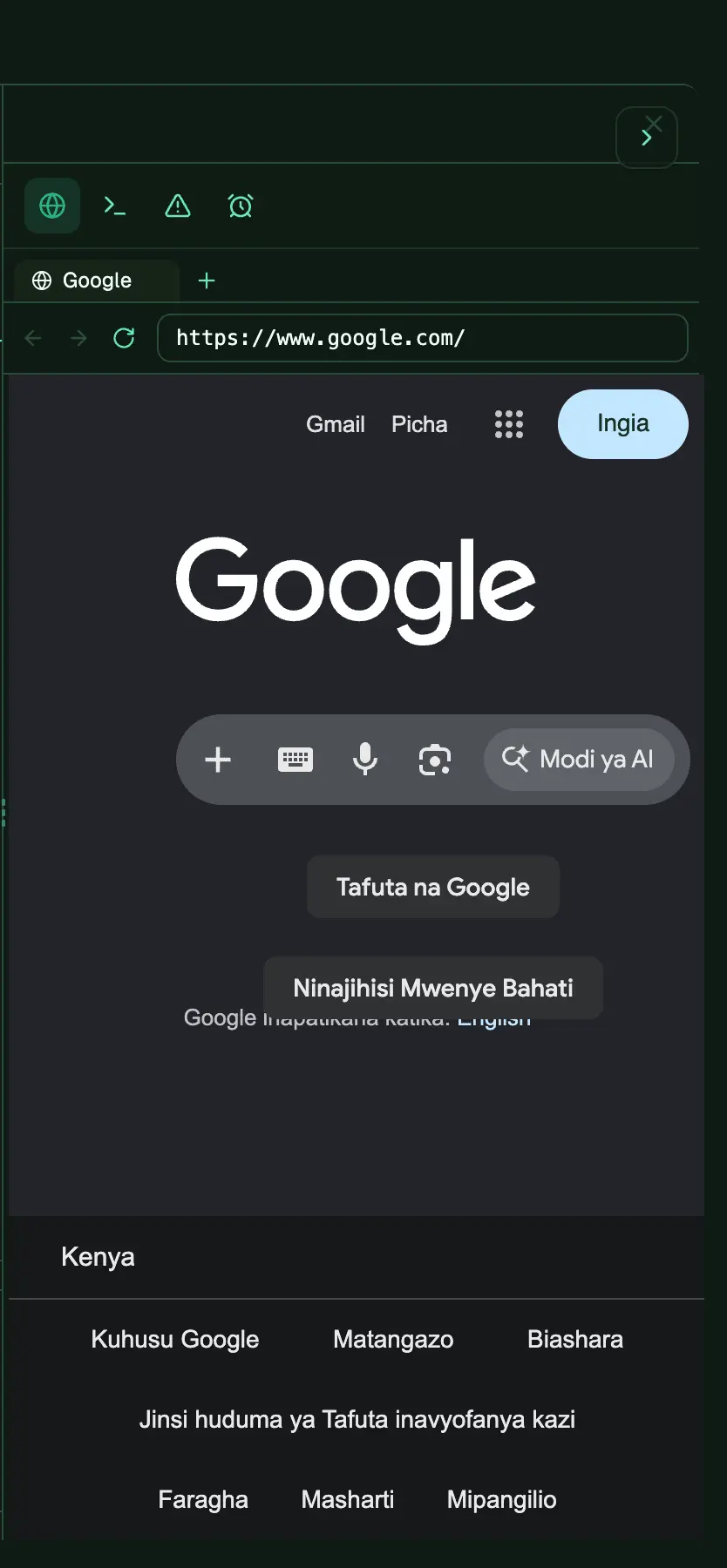
Screenshots


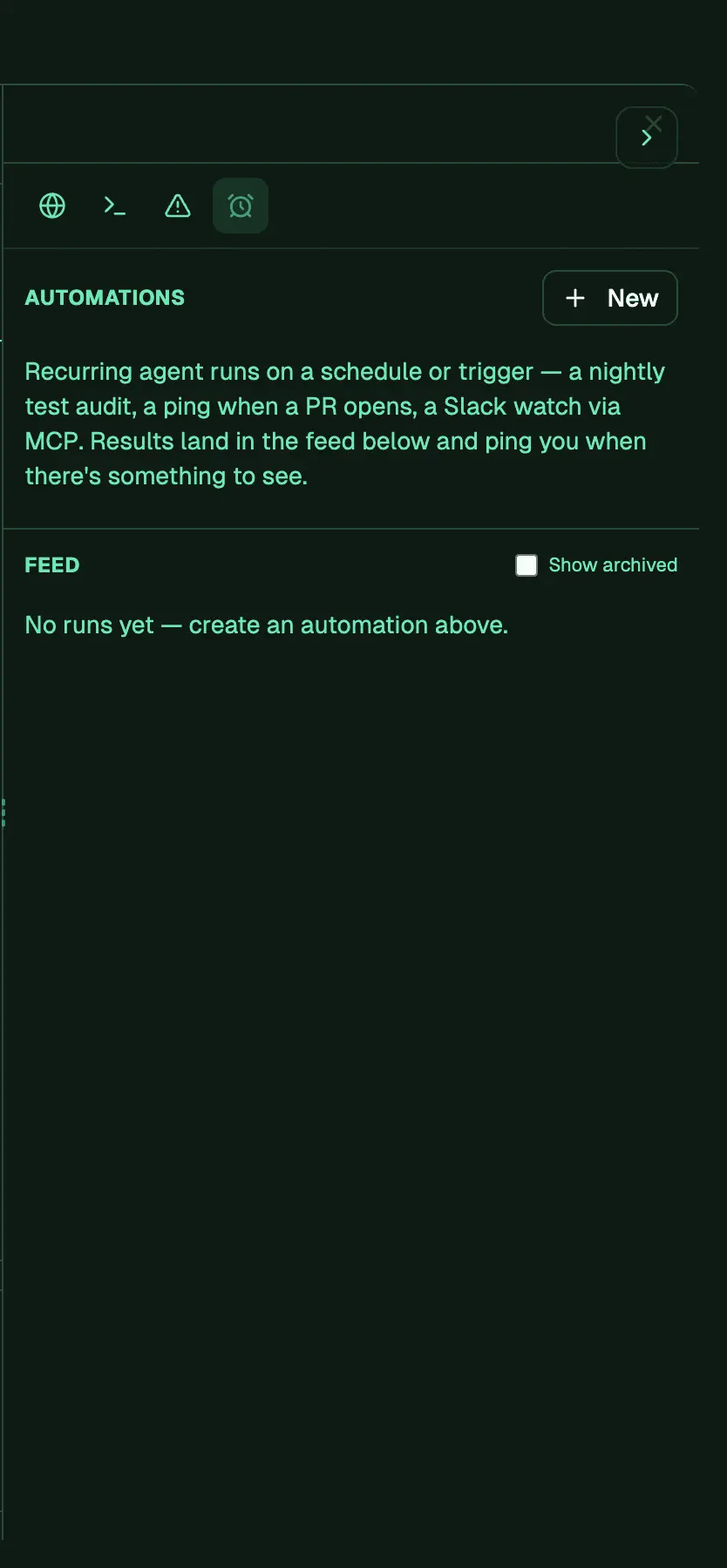
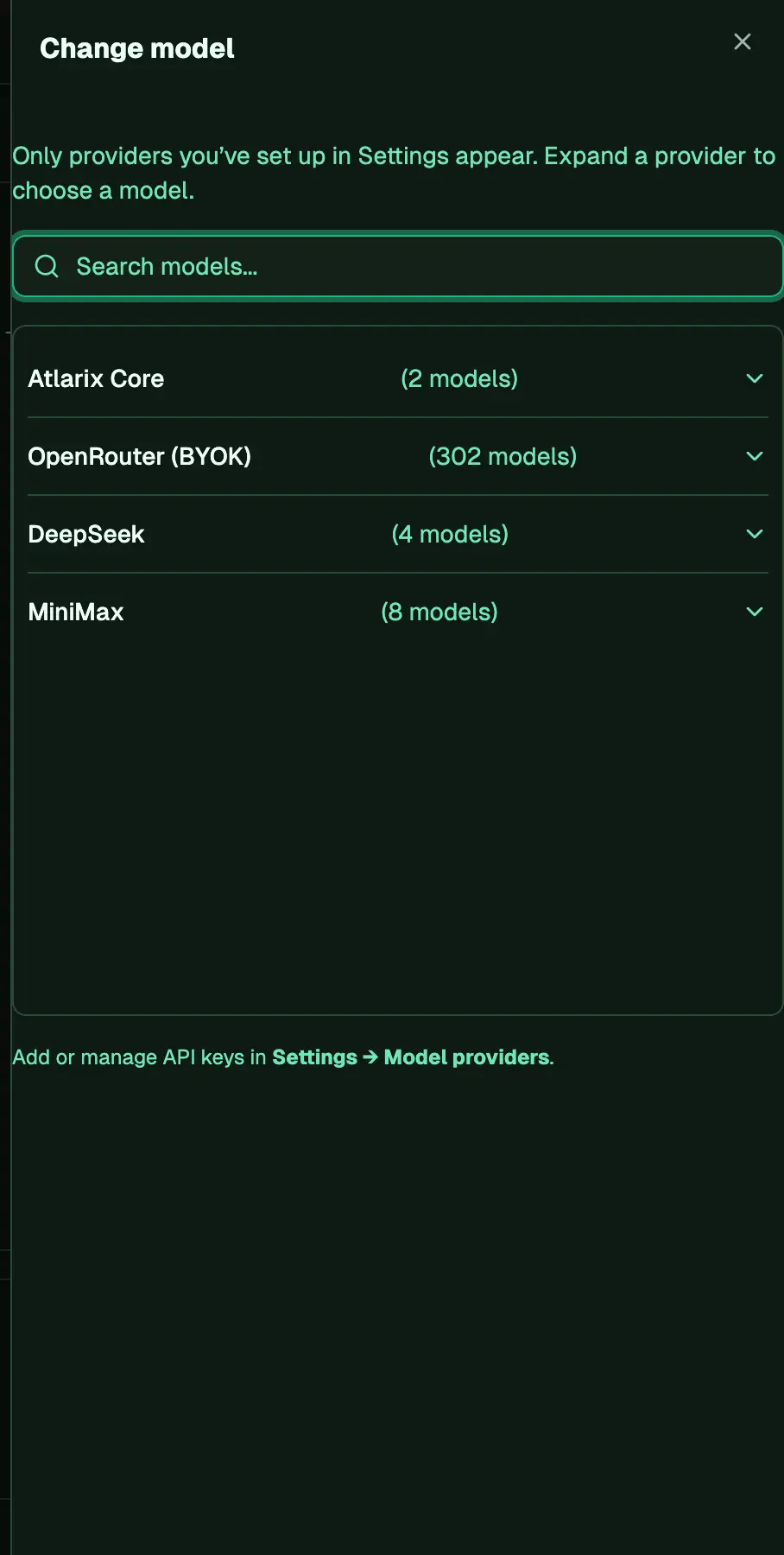
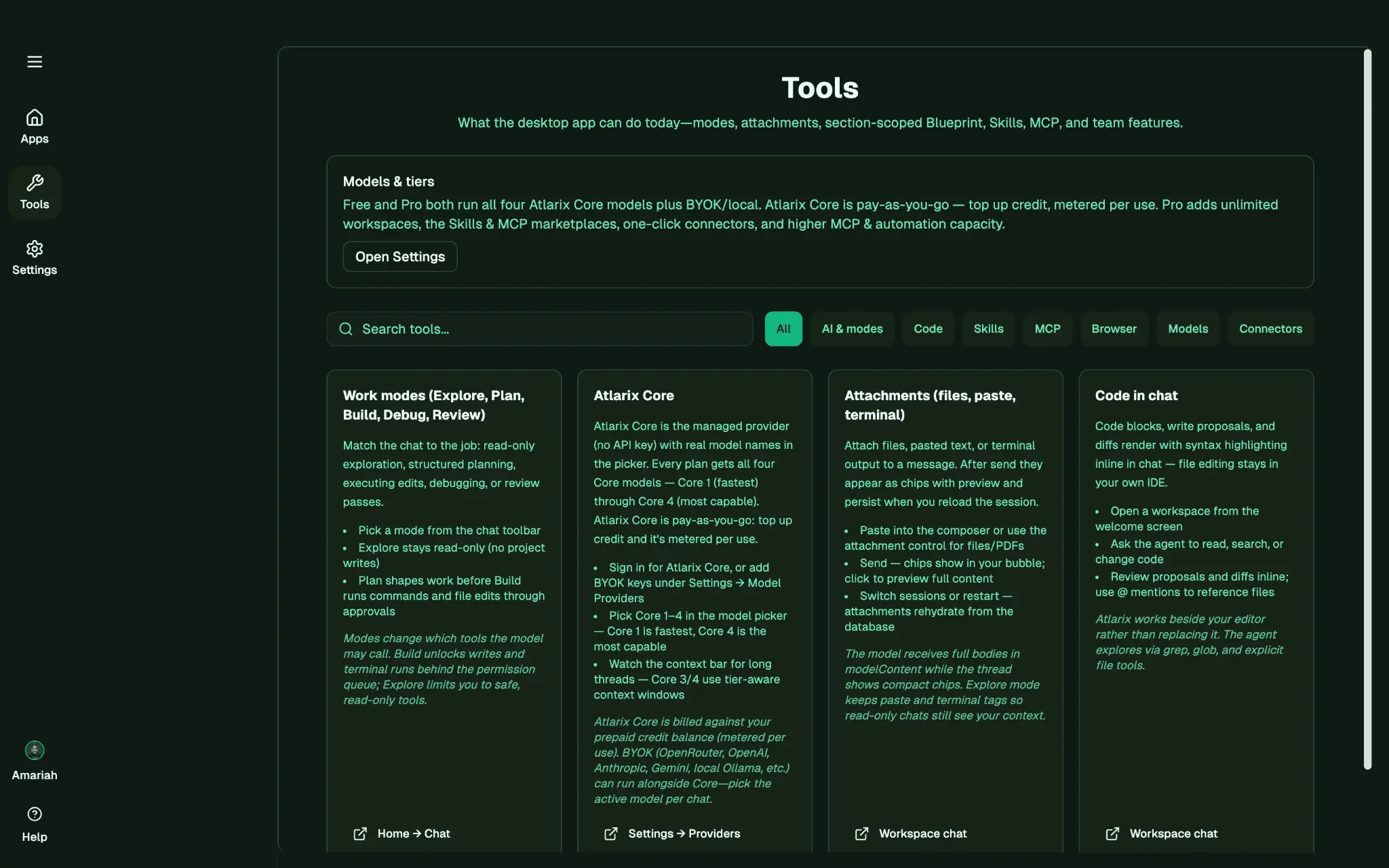
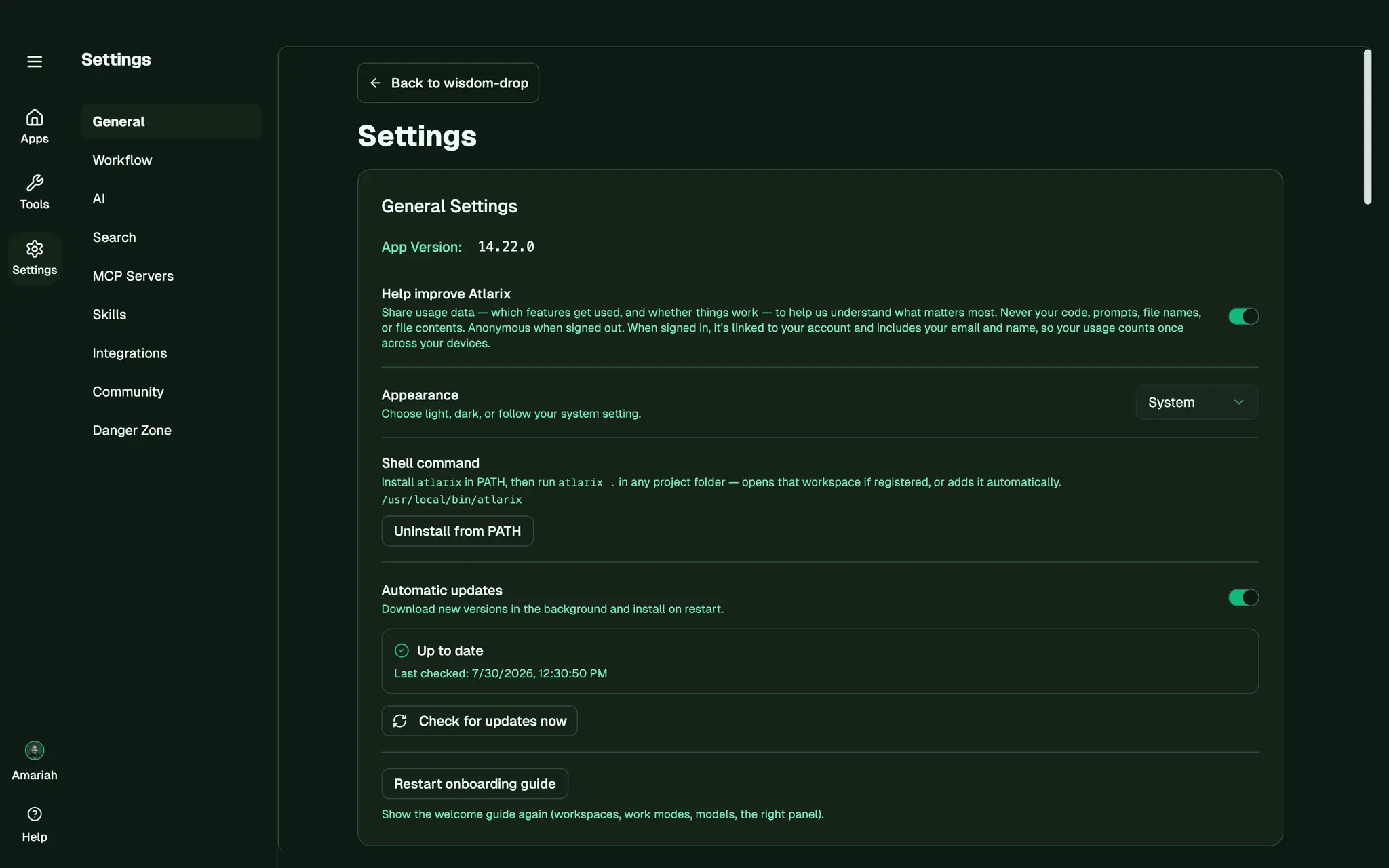
Product Updates (19)
Live sessions and /fork everywhere, safer approvals, compaction that works, and project memory
Atlarix 15.10 keeps one session in step wherever it's open. → Live sessions. When the CLI, the app, VS Code or Zed is running a turn, every other surface showing that session follows it as it happens, with Stop. What you type there goes to the running turn, and once it ends your next message runs where you are, with the full history. → /fork. Copy a conversation into a new session in the CLI, the app, VS Code and editors that support forking over ACP. The original is left as it was. → Approvals. A rule you save ("allow edits in src/") now answers the cards it covers straight away, and after each card one line says what you allowed. Risky git commands ask first, however they're written. → Compaction that works. /compact counts what your tools returned and keeps what each turn found, and a request too long for the model is compacted and retried instead of failing. → Project memory. Atlarix remembers what it learns about a project as short notes, and brings back the ones a message needs. Every edit and command still waits for your OK. Start with Atlarix Auto, or bring your own key.
Comments (0)
No comments yet. Be the first to share your thoughts!
Effort control, your own endpoints, and MCP servers from the official registry
Atlarix 15.6 to 15.9: everything since the last update. → /effort. One control for how hard the model thinks, in the app, the CLI, VS Code, Cursor, Zed and JetBrains. On your own key you get the model's own levels; on paid Atlarix Auto the levels choose the models. → Bring any endpoint. Add a provider of your own as OpenAI-compatible or Anthropic-format, company gateways and proxies included. Thinking, effort levels and prompt caching work as they do directly. → The official MCP Registry. The marketplace is now the MCP Registry, with verified servers on top, added in one click with a browser sign-in. Web servers follow you to every surface, and Atlarix offers to connect the server a task needs. → Automations that wake the agent. A finished automation wakes the agent in its folder, and it acts on the result. → Lighter and quicker. The fixed part of every request is smaller, Build mode reads its prompt from the cache from the second message on, and `atlarix` opens at once. Also: your activity stats on every surface, web search in the terminal and your editor on paid models, and a welcome screen in the CLI. Every edit and command still waits for your OK. Free to start with Atlarix Auto, or bring your own key.
Comments (0)
No comments yet. Be the first to share your thoughts!
Your keys and MCP servers, everywhere, and a redesigned editor extension
Atlarix 15.5 is mostly about the things you already set up somewhere else. → Your own API keys, managed properly. Every key is checked with its provider, before it's saved too, so a revoked key now says so instead of failing halfway through a task. Each provider has a page with its models' prices and what they can do. Switch a provider off without losing its key, add any OpenAI-compatible endpoint, and optionally plan with one model and build with another. → Your MCP servers, found. Servers you set up in Claude Code, Cursor, VS Code, Kiro, Windsurf, Zed or Claude Desktop now show up in Atlarix with an Add button, in the app, the CLI and your editor, and once added they're shared by all of them. Nothing is added without your click, and no keys from those configs are ever shown. → The extension for VS Code, Cursor, Kiro and Windsurf, redesigned. A task card with tokens, cost, context and the live plan; edits and commands as cards; a checkpoint after each turn with Compare and Restore; approvals above the message box that say why a command is risky; @ for files, folders, Problems, terminal output and git; past chats you can search, star and rename. → Zed and JetBrains get /keys, /mcp add, and your skills as commands. Every edit and command still waits for your OK. Free to start with Atlarix Auto, or bring your own key.
Comments (0)
No comments yet. Be the first to share your thoughts!
Atlarix now works inside your editor and your browser
The same Atlarix agent now runs in Zed, JetBrains and VS Code, and approvals appear in the editor's own interface. Your sessions can hand work to each other: the terminal can send a task to Atlarix in Chrome or Brave, and you can watch and steer it there. Each Atlarix session in an editor shows up to your other sessions, so they can coordinate. Every edit and command still waits for your OK. It's free to start with Atlarix Auto's daily allowance, or you can use your own key. Demo: https://youtu.be/wAppNvGwSSM
Comments (0)
No comments yet. Be the first to share your thoughts!
Atlarix is in your terminal now, and it works while your computer is off
Since the last update here, Atlarix left the desktop window. → The Atlarix CLI. The same agent as the app, in your terminal: run atlarix in any folder. It shares sessions, keys, models, MCP servers and automations with the desktop app, so you can start a task in one and finish it in the other. Five modes on shift+tab, every edit a diff you approve, commands in a per-OS sandbox. Install: npm i -g atlarix, brew install amariahak/atlarix/atlarix, or curl -fsSL https://atlarix.dev/install | sh (PowerShell on Windows). → Sub-agents you can watch. Each one gets a row under the prompt box: what it is doing, how long it has run, its tokens. Pick one and watch it work, live. → A plan you read before anything is built. Plan mode pins the plan above the box; say what to change, then Build it. → The cloud agent. Ask from Slack or atlarix.dev/cloud and Atlarix works on the repository in its own GitHub Actions, then comes back with a pull request and an Approve & merge button. Nothing merges until the person who asked approves it. → Relics: reports, plans and designs Atlarix makes as pages you can share. → Email and password sign-in, for anyone who'd rather not use Google, GitHub or Discord. A one-minute look at the CLI: https://youtu.be/1LbKogLPP8Q
Comments (0)
No comments yet. Be the first to share your thoughts!
Free models, no key required — and the browser gets out of the way
Since the last update here, the biggest change is who can start. Trying Atlarix used to mean bringing an API key, running a local model, or buying credit. Not any more. Atlarix Auto picks the model for you. It's the default for new installs and routes each step by what it is: exploring and building to one model, planning and review to a stronger one, sub-agents to the cheapest, and images or PDFs to a model that can read them. The composer just says whether a turn is Free, Included or on Credits. On a free account, Auto in the desktop app costs nothing, with a fair daily share that resets every day. The trade, stated plainly, because privacy is why this product exists: free Auto runs on OpenAI's shared-data allowance, so those requests can be used to train OpenAI's models. The app says so once, before your first free turn, and you decide. Paid Auto (Pro or credit) is never used for training, and your own keys and local models work exactly as before. "Try with a stronger model" reruns a failed paid turn one level up, instead of making you rephrase and hope. The visible browser panel is gone. The agent's browser runs out of sight; the Errors and Network tabs stay. Anything that needs your logins goes to your real Chrome through the extension, which can now take screenshots. Also fixed: provider search that only filtered two providers, a new session showing the previous session's context percentage, and unreadable amber hovers in light mode. Voice now shows it's listening. Full notes: atlarix.dev/changelog Free Auto, BYOK, run local, or Pro. → atlarix.dev
Comments (0)
No comments yet. Be the first to share your thoughts!
It can drive the browser you're already signed into
Last update teased a browser extension that was nearly out. It's out — on the Chrome Web Store, free — and the more interesting half shipped with it: the desktop app can now act on your browser, not just its own. Your logins, your cookies, your tabs. The browser tools take a target now. The default is unchanged — Atlarix's own built-in browser. Point them at Chrome instead and they work through the extension, in your real session. "Am I signed in to GitHub, and as who?" finally has an answer, because the page being read is the one your session actually loads. The transport for this had existed and been tested for weeks; what was missing was the seam. The function joining the two sides had zero production callers, so your browser and your agent could not meet. It works beside you, not on top of you. This is the part I care most about. It keeps its own tab group and prefers its own tabs over whichever one you just switched to. It reuses a tab instead of opening one per navigation. It never takes focus, and it never closes a tab it didn't open. Every page it touches carries a green frame, and its clicks and typing draw a visible pointer, so you can always see what it's doing and where. Real keystrokes, and the page's own console. Enter actually submits a form and hover menus actually open. It can read what a page logged and what it requested — and it reports "couldn't watch this tab" separately from "the page produced nothing," because an empty console read that silently means the first is the worst answer a debugging tool can give. Also fixed: four defects that were each a silent wrong answer rather than an error — scroll only ever going down, page text that could hand back the contents of script tags, and a "working here" frame that was created invisible in background tabs while every layer reported success.
Comments (0)
No comments yet. Be the first to share your thoughts!
It speaks thirteen languages now — and a few rough edges I'd been ignoring got fixed
Since the "app is free" update, the work has been less about big bets and more about the things that were quietly broken. No manifesto this time — just the useful stuff. Atlarix answers in your language. Thirteen of them — English, 简体中文, Français, Deutsch, हिन्दी, Italiano, 日本語, 한국어, Polski, Português (Brasil), Русский, Español, Türkçe — set in Settings or left to follow your system. Code, paths, shell commands and identifiers stay in their original language, because translating those gives you code that doesn't run. And it's free of overhead if you're on English: the instruction is only sent when you're not. This also fixed something embarrassing underneath — session names and attachment filenames used to be cleaned by a rule that only understood A–Z, so a Russian conversation got named after its one Latin word and отчёт.pdf became _____.pdf. Every script we ship now survives intact. Onboarding runs. It hadn't, for anyone, since v10. The first-run wizard checked "are you onboarded?" at the one moment every new user is signed out — and read the signed-out answer as "already done," marked itself complete, and never opened. One ordering bug took out the wizard and the guided tour for every user for about a year. It's fixed, and the tour now finishes in the chat screen pointing at the real controls instead of shipping you off to other screens to read about them. Light mode has surfaces now. Cards, popovers and the page were all effectively the same white — the whole app was one flat plane held together by a hairline border. Dark mode always had real depth, which is why it looked the more finished of the two. Light mode has a real elevation ladder now, and the muted text is a neutral slate instead of a green that made every caption read like a link. Saving your own API key now offers
Comments (0)
No comments yet. Be the first to share your thoughts!
The app is free now — you pay for the model, not the tool
Since the last update here (the 14.3x line — self-testing, session survival, phone view), the biggest change isn't a feature. It's the pricing. Atlarix the app is free: every feature, every plan, no tier gating. What you pay for is inference on the models we host, and nothing else. Why give the app away. The honest version: charging for the harness was never where the value is. Claude Code, Codex, opencode — none of them charge for the harness; they charge for the intelligence, and the harness being free is what lets people actually try it. So the app is free, your own API key is free to plug in, a local model (Ollama, LM Studio) is free forever. The only thing metered is Core inference, and even a heavy user can skip that entirely by bringing their own key. The trade is deliberate and it's mine to carry: I'm betting adoption is worth more than app revenue, and that the people who'd never have paid for the app are exactly the ones worth reaching. The model lineup is current. Core 1 is GLM 5.3; GPT-5.6 Terra and GPT-6 Astra are both in the picker, no key required — sign in and pick one. Reach for Astra on deep reasoning, Terra for lighter everyday work. Your own keys run alongside Core across 200+ providers, chosen per chat. The limits that remain are cost ceilings, not paywalls. Free draws on a credit balance from the start; Pro includes Core for everyday work and only draws on credit beyond that. The resource caps that exist (workspaces, automations) are there so a runaway automation can't quietly cost you money — not to push you to upgrade. Every actual feature is on every plan. Full notes: atlarix.dev/changelog BYOK, run local, or Core credits. → atlarix.dev
Comments (0)
No comments yet. Be the first to share your thoughts!
Ten releases in three weeks: it tests its own work, survives all-day sessions, and now sees a phone
Since the last update here (the Network tab, v14.31), Atlarix has shipped through the 14.3x line. This is the through-line — full notes for every version are on the changelog. It checks its own work now. After building something, Atlarix hands a separate worker the requirement and the running URL — not the diff — and has it exercise the app independently, with a real terminal and browser but no ability to change a file. It reports what it saw with evidence: a status code, a console line, a log excerpt. Everything it claims, Atlarix reproduces before acting on it. Debug mode also got the full build loop, so it runs your project's own checks and won't call itself done while they report errors. Long sessions stop rotting. Compaction was three implementations with three thresholds, two of which threw their work away every turn. It's now one system: it summarises before deleting anything, scales to the model you're on instead of a fixed token count, and keeps the last thing you said intact. A new session_search tool reads back through the full transcript on disk — a path you gave once, an error string, a decision twenty turns ago — so the agent looks it up instead of asking you to repeat yourself. A dropped connection no longer ends a run. A provider hiccup used to skip the retry logic and kill the whole turn half-finished. Those now hit the retry that was always meant to catch them; genuine faults still stop the run. Work mode belongs to the conversation, not the window. Plan in one session and Build in another used to be impossible. Each session remembers its own mode now. Plus: a Diagnostics screen, deep thinking that reaches the provider, honest web search, readable scanned PDFs, and Core 1 on GLM 5.3. Full notes: atlarix.dev/changelog
Comments (0)
No comments yet. Be the first to share your thoughts!
The reviewer ships, and it never runs your code
New product, same account: Atlarix Reviewer reads every pull request on the repositories you pick and posts its findings as a review — file, line, what's wrong, and the fix — as review comments, not a score. Two decisions carry it, and one of them is a refusal. It never executes your code. It reasons about the diff and never builds, runs, or tests it — there is no runner to compromise and no build step to poison. The cost is real: anything that only shows up at runtime, it structurally cannot catch. The trade is deliberate. A reviewer that quietly reports a pull request clean because its test harness failed to start is worse than one that says plainly it only read the code — so this one only ever claims to have read the code, and says so when a review didn't finish instead of calling the PR clean. The second decision is about crying wolf. Every candidate finding is checked a second time before it posts. The ones that don't survive that check are counted, not shown. A reviewer that flags everything suspicious gets muted, and a muted reviewer reviews nothing — so the second pass exists to protect the one thing the product is for. It's also the roughest edge right now, and the part I most want stress-tested: false-positive tuning is exactly where an early reviewer is weakest. What it asks GitHub for is narrow: read on contents, write on pull-request reviews. It never pushes, never merges, never runs tests. $19 per developer per month, unlimited repositories — per developer, never per repository, because charging per repo punishes the teams with the most PRs and the most to gain from reviewing them. Installs on your own repos in a couple clicks. Throw a PR at it and tell me where it over-flags. → atlarix.dev/reviewer
Comments (0)
No comments yet. Be the first to share your thoughts!
v14.31 — a real Network tab, and the browser stops blocking your turns
Two changes this release, and the second is what made the first worth building. Nothing the browser sees can end a turn any more. A failed request or console error in a page used to be able to stop the agent and nag it to fix what it found — but Atlarix can't tell whose error it is. A frontend on :5173 calling its own API on :8080 is one app across two origins; an embedded payment script is someone else's code until the day it's yours. Every rule we could write was wrong in one direction. In practice it went wrong the expensive way: the agent opened YouTube just to read it, hit Google's signed-out 401, and was told to go fix a third-party login handshake. It refused — correctly — then burned turns arguing with something that couldn't hear it. So now the agent is told, not blocked: one line per turn, counts and where to look, and it reads the detail itself only if it matters. Settings → Browser decides what it's told — everything, only failures, or nothing. A real Network tab. Every request each browser tab made — method, status, type, duration, size — with headers and response bodies when you expand a row. One card per tab, so what YouTube did and what GitHub did can never be read as the same thing. Send to Atlarix on a row, a tab, or everything shown — added behind a separator so it never eats what you were typing. The Console tab groups by tab too, and navigating no longer clears it: comparing two page loads is often the whole point. Fixes: "Restoring your session…" no longer hangs forever when you started signed out. A Linux crash from desktop notifications is gone. Reconnect retries now jitter instead of firing in lockstep, and sub-agents start staggered so they share the prompt cache instead of each paying to write it. BYOK, run local, or Core credits. → atlarix.dev
Comments (0)
No comments yet. Be the first to share your thoughts!
Atlarix 14.29 — now on the Microsoft Store, and updates ship themselves
→ Atlarix is live on the Microsoft Store. One-click install, no "unknown publisher" wall — Store installs keep your existing workspaces, chats and credentials, and update through the Store instead of the in-app updater. → Store submission is now fully automated — every release tag ships to the Store on its own, so updates land faster and more reliably than the old manual path. → Windows sandbox hardened — toolchain caches outside your user profile (npm, pnpm, yarn, Go, Deno) are writable again, and LocalLow is resolved properly so redirected-AppData machines stop hitting "cannot create a temp file." Bring your own key, run local, or use Core credits. → apps.microsoft.com/detail/9p3rr11dvzpw
Comments (0)
No comments yet. Be the first to share your thoughts!
v14.27 — your credentials and workspaces stop disappearing
This release is mostly about Atlarix no longer doing things to you that it shouldn't. Signing out no longer logs you out — or wipes your setup. Two quiet bugs got fixed for good: when the OS keystore was briefly busy, Atlarix could read that as "no data" and overwrite the real thing — costing you your session or your saved API keys. And signing out used to clear every workspace, chat, and automation under a "fresh start" that nobody asked for. Both are gone. Unreadable never means deleted now, and wanting your data cleared is an unchecked box, not the default. Nothing you didn't ask to remove gets removed. On Windows, search actually works. Three path-handling bugs meant grep could silently find nothing, folder listings returned your whole project, and file globs errored out — all only on Windows, all now fixed. If you're on Windows, the assistant now sees your code the way it should. The AI understands your automations and your plan. Scheduled tasks, triggers, and runners are now visible to the agent, so it can actually reason about them — and it always tells you whether an automation will wake the AI (and cost a turn) or just run quietly on its own. It also knows your plan's limits now, so "you can't add another" comes with a clear reason instead of looking like something broke. Automations got a real schedule editor, too — no more hand-writing cron. Lighter and more honest under the hood. The context meter now counts what the model actually holds instead of guessing, skills load as a lightweight index rather than dumping everything into every message, and a big pile of dead code came out. Faster on large repos, and clearer about what it's doing. Pasted-text sessions get real names now, @ leads with your files, and the agent's terminal output stays in chat where it belongs.
Comments (0)
No comments yet. Be the first to share your thoughts!
v14.16 — the app keeps working when the world around it doesn't
Two releases since 14.15, and they share a theme: no network, a background tab, a provider returning half a list — none of those should be your problem. The browser agent grew up. It can hold several tabs open at once, so opening a second page no longer destroys the first one's state — a signed-in session, a scroll position, a half-filled form. It can find an element by describing it ("login button", "search box") instead of reading the whole page first. And — embarrassing in hindsight — it can now press Enter. It couldn't before: no submitting a search box, no Escape to close a modal, no Tab between fields. You can also watch it work now: a cursor glides to each target and stays on screen, with a label naming what it just did. The app opens offline, in the time it takes to draw a window. It used to hang for minutes on a captive-portal or hotel wifi, which reads as "the app won't open". And an offline Pro user is no longer quietly dropped to Free for the session. Model lists can't shrink. A public model catalog is now the floor under every provider, so a truncated response from a provider can no longer make models vanish from your picker. Dictation is materially more accurate — bigger on-device model, the mic's call-tuned processing turned off, and your spoken language passed in rather than guessed at. 14.16.1 on top of that: you stay signed in across restarts (a 14.16.0 regression, my fault), a provider's models appear the moment you save its API key, sign in with Discord alongside Google and GitHub, and a new Settings → Community with the Discord invite and a link back here.
Comments (0)
No comments yet. Be the first to share your thoughts!
What's new — 14.15
→ One surface for your running app. The separate Preview tab is gone — your dev server now opens in a regular Browser tab the agent can navigate, click, fill, and screenshot. One place to learn instead of two that did the same thing. → Runtime errors with real stack traces. The Errors tab now captures uncaught exceptions and unhandled rejections with their stack, straight from the running page — so the agent sees and fixes what actually broke, not just that something did. → Clickable URLs. Links in chat and the terminal — including bare localhost:PORT — open in a Browser tab (⌘/Ctrl-click for your system browser). → Sandbox that doesn't fight your toolchain. When a real tool needs to write somewhere new, Atlarix asks once, grants that exact path, and re-runs the command still sandboxed — so a first-run yarn/pnpm install no longer dies on a missing cache dir. No enumerated cache list to keep complete. → Live countdown on background jobs. Long-running commands moved to the background now show a wake timer you (and the agent) can see and adjust — set it, watch it tick, re-check when it fires. → Quieter + cleaner. New keyboard shortcuts (Cmd+T/W/J/I/O), device-spec awareness so the agent sizes parallel work to your machine, and a code-block render fix. Download for Mac, Linux & Windows → atlarix.dev (Windows unsigned; signing coming.)
Comments (0)
No comments yet. Be the first to share your thoughts!
What's new — 14.14
→ Web search on Atlarix Core. Core models can now search the web themselves, pay-per-use through your credit wallet — no separate setup, no always-on plugin. (Citation strip lands in the next patch; results already work.) → Work across repos, not just one folder. The workspace is now a smart default, not a wall — the agent can read, grep, and edit files outside the current workspace (edits still go through the approval gate). No more shell-edit workarounds for dependency or cross-repo work. → Auto-update actually works now — all three platforms. macOS, Linux AppImage, and Windows auto-update were rebuilt on the correct native path for each OS. (One-time catch: installs on 14.13.2 or older need a single manual update to 14.13.3+, then it self-heals forever.) → Real model names on Atlarix Core. The Core provider page shows live names for Kimi , Qwen, DeepSeek, MiniMax , instead of "Core N" placeholders. Core badge now reads "Setup Complete" (no key needed). → Cleaner chat + honest tool cards. Injection-defense envelopes no longer leak into the UI. Markdown tables and inline code render correctly. Negative wallet balances explain themselves. → Reliability batch. Permission writes can't wedge a turn on a full disk; sandbox respects custom pnpm/cargo/etc. stores (fixes stalled installs); dead Core metering error removed; leaner agent prompting. → Faster model list. The 167-provider catalog no longer rebuilds on every window focus.
Comments (0)
No comments yet. Be the first to share your thoughts!
What's new 14.13
-> Pricing reframe — Free + Pro + PAYG credits. No tier bundles AI. Atlarix Core is now pay-as-you-go prepaid credit on every tier — top up a wallet, spend it across any model. Free tier (BYOK/local), Pro ($19), and PAYG credits that work on all of them. Team tier removed. -> Real model pricing in the picker. Every provider's live per-token cost (via models.dev + OpenRouter's own pricing) now shows as a real $/M badge, so you see what a model actually costs before you run it. -> edit_file overhaul. Atomic multi-edit support plus Cursor-style merge with `// ... existing code ...` markers — deterministic stitching that refuses rather than corrupts. -> Co-author, not author. Commits are authored by your own git identity; Atlarix is credited only via a `Co-authored-by:` trailer, and it's fully toggleable. -> Harness reliability batch. Smarter wait/stall handling, an always-on live token counter, graceful image-model fallback, and paste/first-run fixes — tuned for driving weaker open-weight models without stalls. -> Security hardening. Plaintext-keychain hardening (chmod 600 + re-encrypt-on-recovery), privileged-IPC gating, and workspace-boundary read/write confinement.
Comments (0)
No comments yet. Be the first to share your thoughts!
v14.11.0
New pricing model. No more capped free token pool. Run Atlarix free with your own model — DeepSeek, Qwen, or local via Ollama — or top up pay-as-you-go credits and pay only for what you use. Pro unlocks unlimited workspaces and the full tooling set. Voice-to-text. Talk to your codebase — free and local via Whisper. Performance. Message virtualization and a faster streaming pipeline keep the UI responsive on large repos and long sessions. Also in this release: live token counters, attachment dedup, and a range of stability fixes.
Comments (0)
No comments yet. Be the first to share your thoughts!
Reviews (6)
Average 4.5 out of 5
Based on 6 reviews


Comments (3)
good luck !
@supahmation thanks
The structural code retrieval approach is brilliant - avoiding embeddings for context handling is smarter for coding tasks where exact matches matter. Built-in approval workflow before execution is a great safety feature. This is what local
@omribenshoham yes indeed, it was quite a big idea in mind for us to build while thinking about devs who want everything to go local & private
Really impressed by the focus on open-weight models like DeepSeek and Qwen. The code-retrieval approach with structured lexical engine seems well thought out for handling context better than traditional approaches. Definitely trying this ou
@galdayan1895 thanks, would love to hear your experience with it when you do